
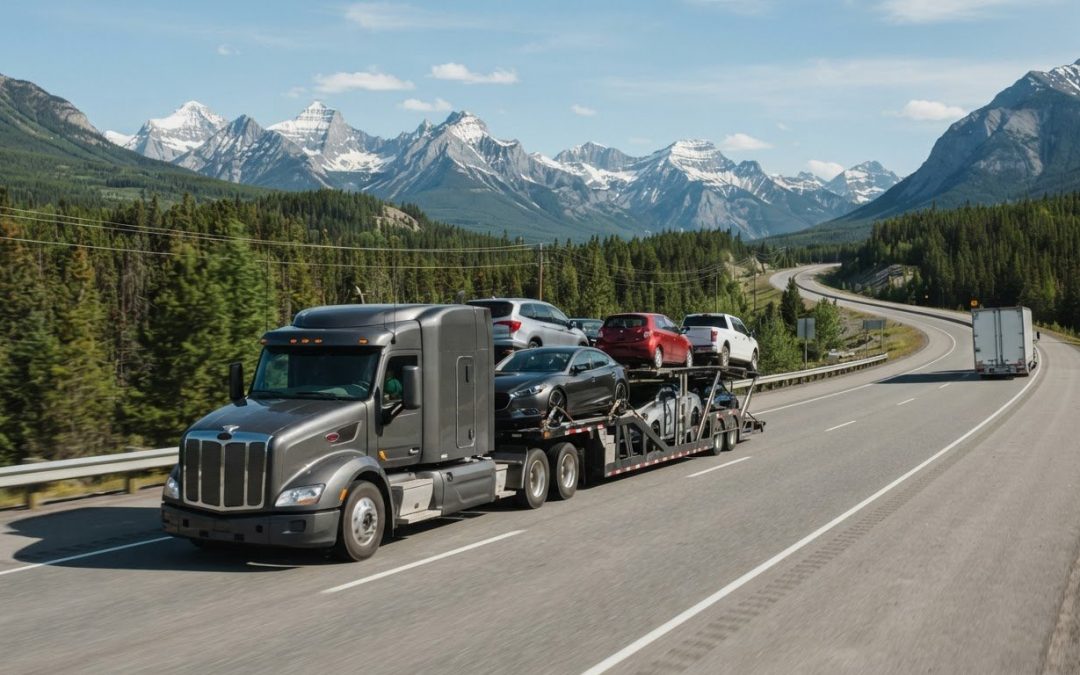
The carrier arrangement can affect the cost of shipping a car across Canada. Price depends on the route, vehicle size and condition, fuel costs, and transport option; you’ll receive a quote after sharing the shipment details. Knowing how to ship a car across Canada also means comparing open transport with enclosed service, which offers more protection at a higher cost.
It’s natural to focus on price first. But the delivery method, pickup access, and your vehicle’s condition can all affect the plan. Understanding these details helps you compare options with confidence.
This guide explains what affects shipping costs, how open and enclosed transport compare, and what to consider when arranging delivery. You’ll also learn how to prepare your vehicle and choose a transport company, so you can plan the move with fewer surprises.
Key Takeaways
- Route, vehicle size and condition, and transport method all influence the cost. Compare the details of each shipping plan, not just the headline quote.
- Prepare your car by removing personal belongings, cleaning it, checking its condition, and taking time-stamped photos before pickup.
- Review your own insurance and understand the carrier’s liability coverage so you know how protection applies during transport.
- Door-to-door delivery aims to collect and deliver your vehicle as close to your door as access allows; terminal delivery follows a different pickup and drop-off plan.
- Open carriers transport several vehicles together and expose them more to road debris than enclosed transport, so weigh cost against the protection your vehicle needs.
Preparing a car for transport
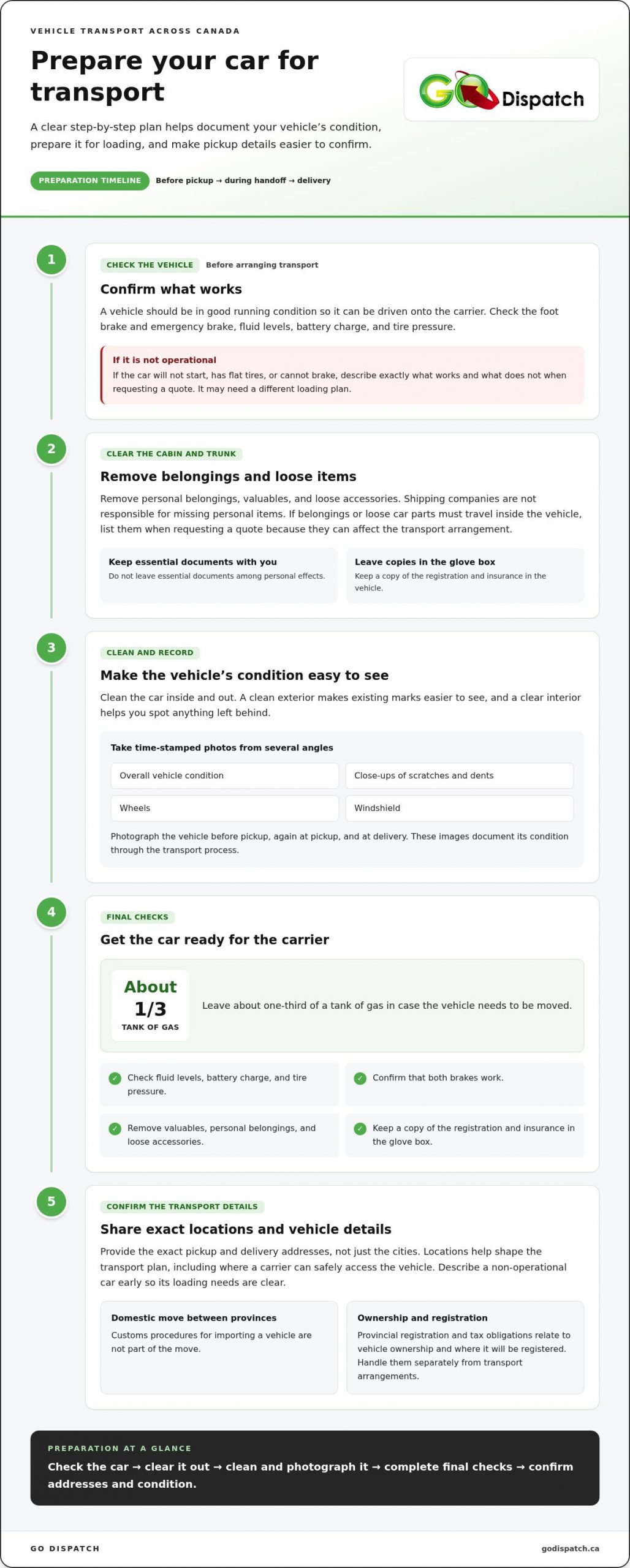
A clear preparation plan helps protect your vehicle and simplify pickup. Before arranging transport across the country, document the car’s condition, remove loose items, and tell the carrier about anything that could affect loading. These steps matter whether the route is short or crosses several provinces.
Start with the vehicle’s condition. A car should be in good running condition so it can be driven onto the carrier. Check that the foot brake and emergency brake work, and inspect the fluids, battery charge, and tire pressure before pickup. If the vehicle won’t start, has flat tires, or can’t brake, disclose that when requesting a quote. A non-operational vehicle may need a different loading plan, so describe exactly what works and what doesn’t.
Clear out the cabin and trunk. CARFAX Canada advises removing personal belongings and valuables because shipping companies aren’t responsible for missing items. If belongings or loose car parts must travel inside the vehicle, list them when requesting a quote. They can affect the transport arrangement. Keep essential documents with you instead of leaving them among personal effects.
Clean the car inside and out before transport. A clean exterior makes existing marks easier to see, while a clear interior helps you spot items left behind. Take time-stamped photos from several angles, including close-ups of scratches, dents, wheels, and the windshield. Photograph the vehicle again at pickup and delivery. CARFAX Canada recommends time-stamped photos to document its condition before transport.
Use this checklist before the carrier arrives:
- Leave about one-third of a tank of gas. CARFAX Canada advises keeping this amount in case the vehicle needs to be moved.
- Check fluid levels, battery charge, tire pressure, and both brakes.
- Remove valuables, personal belongings, and loose accessories.
- Keep a copy of the registration and insurance in the glove box.
- Photograph the car’s condition before pickup and at delivery.
For nationwide vehicle transport, provide the exact pickup and delivery addresses, not just the cities. The route and locations help shape the transport plan, including where a carrier can safely access the vehicle. If you’re shipping a non-operational car, describe its condition early so the loading needs are clear. That helps keep the plan practical from pickup through delivery.
For a domestic shipment between Canadian provinces, customs procedures for importing a vehicle aren’t part of the move. Provincial registration and tax obligations relate to vehicle ownership and where it will be registered, so handle those separately from transport arrangements.
Choosing a licensed and insured car shipping company
Watch for a quote that changes without explanation, unclear carrier details, or pressure to pay before you receive written terms. Reduce risk by confirming who arranges the shipment, what the quote includes, how payment works, and which company’s insurance applies during transport.
For a Canadian vehicle-shipping booking, start with the route, vehicle, and delivery arrangement. A compact car travelling between nearby cities has different transport needs from a large SUV moving across the country. Vehicle size affects shipping costs, and larger vehicles generally cost more to transport. Distance, make and model, condition, and fuel costs also influence the quote.
Canadian shipping costs vary with those details, so compare quotes for the same service rather than choosing by headline price. You’ll receive a quote after providing the shipment details. Include the route, vehicle information, pickup and drop-off arrangements, and any belongings or parts to be transported. This gives you a clearer basis for comparing plans without assuming different shipments are equivalent.
Online booking usually begins with shipment details. Enter the pickup and delivery locations, vehicle make and model, condition, and preferred timing. Review the written terms before accepting. Check that the document identifies the transport arrangement, explains payment, and describes how to report the vehicle’s condition at pickup and delivery. Keep a copy of the booking and messages about any changes.
Terminal delivery can affect the overall plan. With terminal-to-terminal transport, you drop off the vehicle at a designated location and collect it at another. Door-to-door service aims to pick up and deliver as close to your requested addresses as practical. Compare the total cost and effort, including travel to a terminal, before choosing. Large transport trucks may not reach every residential street, so pickup or drop-off may require an accessible meeting point.
Before booking, use this checklist:
- Confirm the carrier or dispatch arrangement and the company responsible for each part.
- Read the written quote and terms, including route, delivery method, and payment details.
- Provide accurate vehicle dimensions and condition, especially if it cannot run.
- Ask how changes to pickup, delivery, or vehicle details affect the written quote.
- Keep booking documents and shipment communications together.
Winter can bring lower rates as fewer people ship vehicles, while poor weather can delay delivery. Build flexibility into the schedule if your route crosses areas affected by winter conditions. For a more coordinated booking process, explore vehicle transport planning before setting your pickup and drop-off details.
Checking insurance and liability coverage
Before shipping a vehicle, review your own auto insurance and ask the shipping company about its liability insurance. These are separate checks. Your policy may describe protection for your vehicle, while the shipper’s liability coverage relates to its responsibility during transport. Read the policy wording and shipment terms rather than relying on a general claim that you’re “covered.”
Ask for written details about the carrier’s coverage before confirming the booking. Clarify which company provides it, what events it applies to, and how to open a damage claim. Ask whether limits, exclusions, deductibles, or vehicle-condition requirements affect your shipment. These details can determine how a claim is handled. Keep the answers with your booking documents.
Cargo insurance and additional coverage deserve a direct conversation, especially for a vehicle with substantial value or a specialized condition. Ask whether the arrangement includes cargo coverage, how it differs from liability insurance, and whether additional protection is available. Don’t assume that a phrase such as “fully insured” explains the coverage. Request the relevant terms in writing and compare them with your own policy.
Use this checklist to make the coverage easier to understand:
- Read your own policy and note any wording related to transport or vehicle shipment.
- Ask the shipping company for its liability coverage details and claims process.
- Clarify limits, exclusions, deductibles, and any conditions affecting the vehicle.
- Ask whether cargo insurance is included and what additional coverage would change.
- Save written responses, booking documents, and condition records together.
Vehicle tracking serves a different purpose from insurance. A location update can help you follow a shipment across the country, but it doesn’t explain whether damage is covered or how to make a claim. Ask what shipment updates are provided and how delays are communicated. Keep those updates with your coverage documents, so it’s easy to distinguish transport progress from insurance terms.
At pickup, document the vehicle’s condition with clear photos and written notes. CARFAX Canada advises taking time-stamped pictures before transport, and owners should photograph the vehicle at pickup and delivery. These records provide a useful comparison if you need to report a change in condition. Report concerns promptly through the stated claims process, and keep copies of every message and document.
For enclosed transport, confirm that the coverage terms apply to the selected shipping method. A more protective carrier option and insurance coverage answer different questions: one concerns the transport arrangement, the other financial responsibility. Understanding both helps you decide before the vehicle leaves.
Door-to-door and terminal-to-terminal delivery
Pickup and drop-off arrangements shape how a vehicle reaches its destination. Door-to-door transport aims to collect and deliver the car as close to your requested addresses as possible. Terminal-to-terminal service uses designated locations instead. Compare both options when arranging delivery, especially for a route spanning thousands of kilometres across Canada.
Door-to-door service reduces the need to travel to a depot, but access matters. Large transport trucks and trailers may not fit on narrow residential streets or enter apartment complexes. If the driver cannot safely reach your address, you may need to meet at an accessible parking lot. Provide the pickup and destination addresses when requesting a quote, and mention gates, low clearances, or restricted access.
Terminal-to-terminal delivery means you handle part of the journey. You drop off the vehicle at the departure terminal and collect it from the destination terminal. This can suit customers who live near both locations or can arrange rides. GO DISPATCH ensures that a shipped vehicle is driven only a few hundred metres within terminal yards. Ask which terminals apply and how the vehicle handoff is arranged.
Compare quotes using the same details. A door-to-door quote and a terminal-to-terminal quote may cover different pickup work, access needs, or delivery arrangements. Check whether the quoted destination is your address, a nearby meeting point, or a terminal. Then weigh the transport price against your own time, travel, and coordination. The lowest quote may not mean the least overall effort.
Use these steps to arrange a workable handoff:
- Provide complete pickup and destination addresses, including access notes.
- Choose door-to-door or terminal-to-terminal based on your location and travel plans.
- Confirm the specific pickup and drop-off points in the written booking details.
- Plan how you will reach a terminal or accessible meeting place, if needed.
- Keep your phone available for delivery coordination and schedule updates.
For example, a driver may be unable to enter a tight apartment complex in a busy urban core. Meeting at a nearby accessible parking lot can give the carrier room to load or unload. On a long transcontinental route, the handoff location at each end can affect how easily you coordinate the shipment.
Canada’s coast-to-coast distance is 9,306 km, so pickup convenience can matter as much as the delivery point. Choose the arrangement that fits your access, schedule, and ability to travel. Clear addresses and agreed handoff points help prevent confusion on transport day.
Open auto carriers
An open carrier moves vehicles on an exposed trailer rather than inside an enclosed space. Auto carriers commonly transport 6-10 cars at once. This shared arrangement makes open transport a practical choice for standard vehicles and many long-distance routes. The vehicle travels with other cars, so the carrier’s route and loading plan shape the shipment.
There’s a trade-off. An open carrier leaves a vehicle more exposed to road debris and potential dents. Enclosed transport offers more protection, but can cost significantly more. That added protection may matter for a classic or vintage car, a sports or race car, or an expensive model. For a standard daily driver, open transport may be the lower-cost option if you’re comfortable with the greater exposure.
If you’re deciding how to ship a car across Canada, start with the vehicle’s value, condition, and intended use. A daily driver with existing wear may have different priorities from a restored classic. With open transport, document the car’s condition before loading and compare it with the inspection at delivery. Photos of body panels, glass, wheels, and bumpers create a useful record of visible marks.
Route and access matter, too. For example, a vehicle travelling from Vancouver to Toronto needs a carrier arrangement that works at both ends. A large trailer may not reach a narrow residential street, so the handoff point may need to be more accessible. Share the vehicle’s dimensions and condition when arranging transport, especially if modifications affect its size or ground clearance.
Before booking an open carrier, consider these points:
- Choose open transport when its exposure trade-off fits the vehicle and your priorities.
- Consider enclosed transport for classic, vintage, sports, race, or expensive model cars.
- Share accurate vehicle details so the carrier can plan the loading arrangement.
- Record the car’s condition before pickup and compare it at delivery.
- Discuss accessible pickup and drop-off points for large transport trailers.
To decide how to ship a car across Canada, weigh protection against your transport needs. Open transport and enclosed shipping involve different levels of exposure. Enclosed transport offers more protection, while an open carrier can suit a standard vehicle if that balance works for you. Consider the vehicle, route, and level of protection you want during shipment.
For help arranging vehicle transport around your route and carrier choice, plan your car transport.
GO DISPATCH: Car Transport
GO DISPATCH arranges car transport by connecting customers with suitable auto carriers and managing the logistics process. Its one-stop transport dispatching service can help coordinate a vehicle shipment across Canada. The team also arranges transport for trucks, SUVs, and vans. Share your route and vehicle details to begin planning. Clear information about pickup, destination, and vehicle condition helps shape a practical transport plan. To discuss moving a car, truck, SUV, or van, contact GO DISPATCH or visit godispatch.ca.
Set Your Vehicle Move in Motion
Deciding how to ship a car across Canada is also an opportunity to plan around your next move. Consider when you’ll need the vehicle at its destination, who can receive it, and how transport fits with your other travel arrangements. A clear plan makes the next decision easier and gives you a practical starting point for arranging the shipment.
GO DISPATCH arranges car, truck, SUV, and van transport. Its one-stop transport dispatching service helps coordinate vehicle hauling and delivery logistics, so you can focus on the move itself. Share the vehicle type, route, and preferred timing to get started.
Contact GO DISPATCH about car shipping to discuss your transport needs and take the next step with confidence.
Frequently Asked Questions
How much does it cost to ship a car?
Canadian car-shipping quotes depend on route distance, vehicle size and weight, make and model, condition, and fuel prices. A larger SUV or a vehicle that can’t run may need a different transport arrangement from a standard car. Compare quotes using the same pickup, destination, and delivery method. This makes differences in the transport plan easier to spot than when comparing headline prices alone.
Can I transport a non-runner or non-operational vehicle?
A non-runner needs a transport plan that accounts for its condition and loading requirements. Tell the shipper whether it starts, steers, rolls, and brakes, rather than describing it only as “not running.” For example, a car that starts but has a flat tire presents different loading needs from one that won’t steer. Clear details let the carrier arrangement reflect the vehicle’s actual condition.
How long does shipping take?
Local car transport can take up to 3 business days, while long-distance transport averages 5 to 7 working days. Those timeframes aren’t interchangeable: route length and delivery coordination affect the schedule. For instance, a move between nearby communities follows a different transit plan from a shipment crossing several provinces. Build room into your own travel or vehicle-replacement plans instead of scheduling around the shortest possible estimate.
How much does it cost to transport a car?
A transport quote reflects the vehicle and the specific shipment, not just the kilometres travelled. A heavier vehicle takes up more carrier capacity, while condition, fuel prices, and route also affect pricing. Delivery arrangements can change the overall plan, too. For a meaningful comparison, provide identical vehicle and route details for each quote, including whether the car is operational and where pickup and drop-off should happen.
What’s the difference between open and enclosed transport?
Open transport carries vehicles on an exposed trailer; enclosed transport places them inside a covered carrier. Open carriers commonly carry 6-10 cars, while enclosed transport offers the most protection from exposure. Enclosed shipping can cost significantly more. A standard daily driver may suit an open carrier, while a classic or vintage vehicle may warrant the added protection. Choose based on the vehicle’s value, condition, and exposure concerns.
What are the steps to ship a car across Canada?
To ship a car across Canada, first collect the vehicle’s make, model, condition, and pickup and destination details. Use this information to request a quote and compare equivalent delivery plans. Then review the booking terms and arrange the handoff. Keep shipment documents accessible and inspect the vehicle when it arrives. This sequence helps you move from planning to delivery with the key information in hand.
How much does it cost to ship a car across Canada in 2026?
In 2026, the cost is based on the route, vehicle dimensions and weight, condition, and fuel prices. A province-to-province move generally costs less than a coast-to-coast shipment, but the route alone doesn’t determine the quote. Open or enclosed transport and delivery arrangements also shape the plan. Provide exact locations and vehicle details to receive a quote relevant to your shipment.
How long does cross-country car shipping take in Canada?
Cross-country shipping can take up to four weeks, depending on the route and transport schedule. As examples, Edmonton-to-Toronto shipments can take up to 6 days, while Vancouver-to-Toronto shipments can take up to 10 days. These routes illustrate how geography affects delivery timing. Winter weather can also delay transport, so avoid making essential plans around an early arrival estimate.