
Did you know that over 90% of all vehicles shipped across North America travel on open car carrier services? It’s the backbone of the automotive industry for a reason. Shipping a vehicle across Canada often feels like a logistical nightmare. You’re likely worried about hidden brokerage fees, unpredictable weather, and the stress of vetting a reliable driver. It’s a lot to manage while you’re trying to run a business or organize a move.
We understand that your vehicle is a major investment. You need it handled with professional care. This guide shows you why open transport is the most cost-effective and efficient way to move cars, trucks, and SUVs nationwide. You’ll gain a clear understanding of the price-to-value ratio and the professional insurance standards that keep your asset safe. We’ll walk through the entire process. You’ll learn how to streamline your booking through a single dispatch point and move your vehicles with total confidence.
Key Takeaways
- Learn why open car carrier services are the industry standard for cost-effective national transport without sacrificing safety.
- Understand how professional carriers use specialized non-abrasive wheel straps rather than frame chains to secure your vehicle safely.
- Follow a comprehensive checklist to prepare your car, truck, or SUV for hauling while adhering to carrier weight and safety regulations.
- Discover the benefits of using a single dispatch point to vet carrier insurance and safety ratings across the country.
- Compare open and enclosed hauling to see how the price-to-value ratio favors open transport for most standard vehicle moves.
Understanding Open Car Carrier Services in the Canadian Market
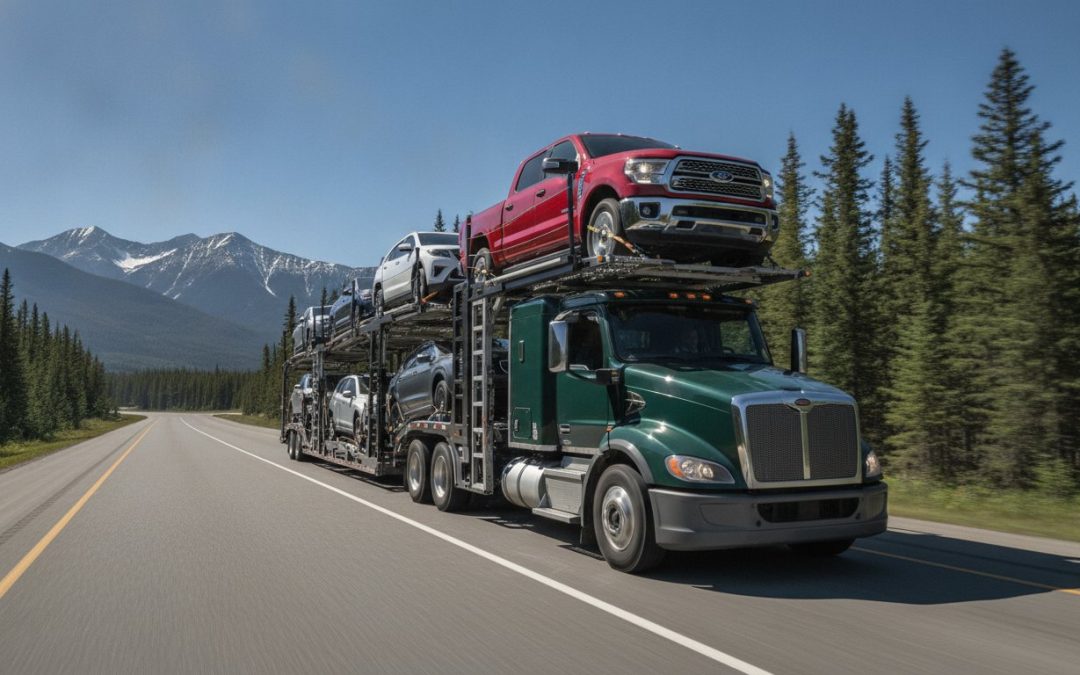
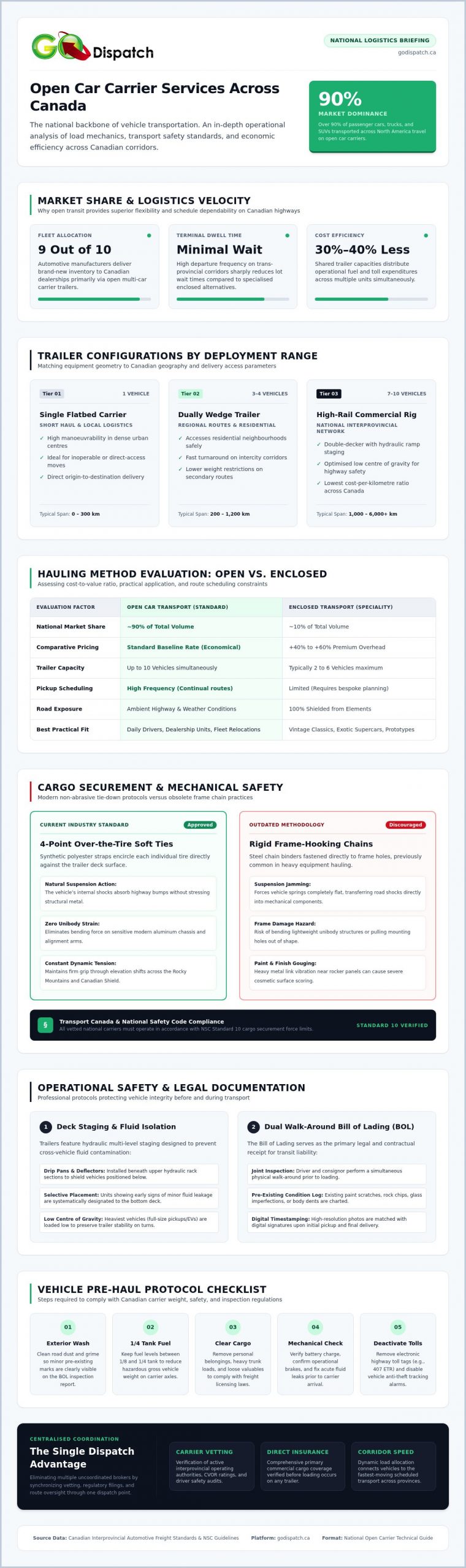
Open car carrier services represent the standard for vehicle transport across Canada. These services utilize specialized trailers designed to carry multiple vehicles at once. Unlike enclosed transport, these trailers are skeletal and open to the air. This design allows for maximum efficiency and lower operating costs. It’s the primary reason why about 90% of all vehicles in the Canadian market move this way. It’s the same method used by the world’s leading automotive manufacturers to deliver cars to your local lot.
Dealerships rely on these carriers to move new inventory from ports to showrooms. Fleet managers use them to reposition company trucks and vans across the country. Even private individuals moving between provinces find this method to be the most practical solution. The value proposition is simple: you get professional hauling at a price point that makes sense. You aren’t paying for the overhead of an enclosed box when a standard open deck provides the same level of mechanical security.
The Different Types of Open Trailers
Not every haul requires the same equipment. Carriers select trailers based on distance and volume. Single-vehicle flatbeds are common for short-distance trips or specialized local deliveries where manoeuvrability is key. For national routes, you’ll see commercial car carrier trailers known as high-rail units. These massive double-decker rigs use hydraulic ramps to transport 7 to 10 vehicles simultaneously. Regional routes often use dually trucks pulling three-car trailers. These smaller setups offer more flexibility and can often reach residential areas or smaller lots that larger rigs can’t access safely.
Why Frequency Matters for Your Timeline
Speed in logistics depends on volume. Because open car carrier services are so prevalent, there’s always a truck moving on major Canadian corridors. This high volume translates directly into more flexible pickup windows for you. You aren’t stuck waiting weeks for a specialized enclosed trailer to become available in your area. The network is massive. It works for your schedule, not against it.
High carrier availability also reduces dwell time. This is the period your vehicle spends sitting at a terminal or lot waiting to be loaded. More trucks mean faster loading and quicker departures. If you’re working with a tight delivery schedule, open transport is usually the most reliable choice. It keeps your timeline on track by leveraging the sheer scale of the national carrier network. You get your vehicle where it needs to be without unnecessary delays or logistical bottlenecks.
The Mechanics of Safe Open Vehicle Transport
Open car carrier services rely on more than just a large truck. It’s a system of precision engineering and strict safety protocols. Vetted carriers follow rigorous standards to ensure every vehicle remains stationary during transit across rugged Canadian highways. This process begins with the structural design of the trailer itself. Modern multi-level trailers use hydraulic ramps to optimize space while maintaining a low centre of gravity. To prevent “fluid leak” damage, professional drivers sequence vehicles carefully. They often use drip pans or ensure that any vehicle with potential leaks is positioned on the bottom deck to protect the paint of other cars.
Safety starts before the engine even starts. A thorough pre-transport inspection is mandatory. The driver performs a dual walk-around with the client to document the vehicle’s exact condition. This is recorded on the Bill of Lading (BOL). The BOL is your definitive legal shield. It notes every existing scratch, paint chip, or dent. Many drivers now use digital BOLs with timestamped photos to provide an undeniable record of the vehicle’s state at pickup and delivery.
Securing the Vehicle: Straps vs. Chains
Industry standards have evolved significantly. Professional carriers now prioritize over-the-tire synthetic straps. These “soft-ties” provide a secure 4-point connection without stressing the vehicle’s frame or suspension geometry. Frame-hooking with heavy chains is becoming obsolete in professional hauling. Chains can damage modern unibody constructions and sensitive aluminum components. These polyester straps maintain constant tension even as the truck navigates the variable elevations of the Canadian Shield or the Rocky Mountains. This method ensures the vehicle’s own suspension handles the road’s natural vibrations without risk of structural damage.
The Role of Regulatory Oversight
Every interprovincial carrier must adhere to Transport Canada commercial vehicle regulations. These rules establish the National Safety Code (NSC) standards for cargo securement and driver hours of service. For example, NSC Standard 10 requires specific force thresholds for vehicle restraints to prevent movement during sudden stops. GO Dispatch verifies that every carrier in our network maintains these high standards. We handle the vetting of safety ratings and insurance validity so you can focus on your business. If you are looking for a reliable partner for one-stop transport dispatching, our team is ready to streamline your logistics.
Open vs. Enclosed Hauling: A Cost-Benefit Analysis
Choosing between transport methods often comes down to the balance of budget and protection. Open car carrier services are the most popular choice because they provide an exceptional price-to-value ratio. On average, open hauling is 30% to 50% more affordable than enclosed options. This price gap exists because open trailers can carry more vehicles per trip. This efficiency spreads the fuel and labour costs across multiple units. When you look at the vehicle transport cost Canada, the logistical advantages of open decks are hard to beat for standard relocations.
Enclosed hauling certainly has its place for specific needs. It is essential for low-clearance exotic cars, non-running antiques, or high-value museum pieces that require a fully shielded environment. However, for the vast majority of Canadian drivers, the extra expense of a box trailer doesn’t translate to a significant increase in safety. Most consumers find that open versus enclosed auto transport is a choice based on the specific vehicle’s ground clearance and rarity rather than a general fear of road damage.
When to Choose Open Transport
Open transport is the practical winner for most scenarios. It works best for daily drivers, SUVs, and trucks with typical ground clearance. It is also the superior choice for fleet relocations where budget and volume are the primary drivers. If your priority is a fast pickup, open carriers are the way to go. Their high frequency on national routes means you won’t be left waiting for a specialized trailer to become available in your area.
Debunking Common Safety Concerns
Many owners worry about weather and road debris. It’s a common myth that open transport is inherently dangerous. In reality, your vehicle faces the same environmental exposure on a trailer that it would during a standard drive down the highway. Modern trailer designs use specialized shielding and strategic vehicle placement to minimize “road rash” from kicked-up gravel. Statistically, vehicles are safer on a professional trailer than they are being driven thousands of kilometres across the country. Professional dispatching adds another layer of security. We filter out carriers with poor safety records. This ensures your car, truck, or van is always in the hands of a vetted expert who understands the unique challenges of the Canadian climate.
Preparing Your Vehicle for National Open Transport
Successful transport starts with proper preparation. While open car carrier services handle the heavy lifting, your involvement ensures a smooth transition. Start by thoroughly cleaning your vehicle’s exterior. A clean car allows for a precise condition report. It’s much easier to spot a small paint chip on a polished hood than on a mud-caked one. Remove all loose parts, such as bike racks or aftermarket spoilers, to prevent wind damage during the haul. Fold in side mirrors and retract antennas to save space and minimize risk.
Fuel levels and battery health are critical for the loading process. Keep your tank between 1/8 and 1/4 full. This provides enough fuel for the driver to move the vehicle on and off the trailer without adding unnecessary weight to the rig. Ensure your battery is fully charged and the car is in good running order. If your vehicle fails to start during the loading sequence, it can cause significant delays and often results in surcharges for inoperable handling. Check for any fluid leaks. A leaking car can damage other vehicles on the trailer, leading to liability issues for the owner.
Carriers are strictly prohibited from hauling household goods inside the vehicle. This is a matter of weight limits and federal regulations. Insurance policies for auto transport only cover the vehicle itself. Any personal items left inside are not insured and can lead to fines for the carrier if they exceed gross weight limits. Keep the interior empty to ensure a hassle-free experience.
The Canadian Winter Checklist
Shipping during a Canadian winter requires extra steps. Apply a high-quality wax coating to protect the paint from road salt and grime. Ensure your anti-freeze levels are rated for the coldest temperatures in your destination province. If you’re moving a vehicle to a region with mandatory winter tire laws, ensure they are installed before pickup. Drivers must also manage ice build-up on ramps during the loading process. A prepared vehicle makes this task safer for the professional handler.
Insurance and Documentation
Peace of mind comes from knowing your asset is protected. GO Dispatch vets every carrier to verify they carry adequate cargo insurance. This is separate from your personal auto policy. Carrier insurance covers damage caused specifically during transit. If you notice new damage upon delivery, you must note it immediately on the Bill of Lading. Take photos and contact your dispatcher to begin the claim process. To get started with a vetted professional, book your transport dispatching today and let us handle the details.
Why Professional Dispatching is Essential for Open Hauling
Many people confuse direct carriers with dispatch services. A direct carrier owns the trucks. A professional dispatcher like GO Dispatch owns the logistics network. This distinction matters because it gives you a “one-stop” advantage. Instead of calling dozens of individual drivers to find a spot for your truck or van, you make one call to us. We handle the search. We manage the scheduling. We ensure your open car carrier services are handled by the right person at the right time. It is about reducing your workload while increasing reliability.
For businesses, this is a game-changer. We act as the expert facilitator for dealership auto transport logistics. Moving multiple vehicle types with varying timelines requires a centralized hub. We provide that hub. You get professional scheduling and clear communication without the administrative headache of managing third-party contracts yourself. We take the complexity of the road and turn it into a simple, dependable result for your showroom or fleet.
Vetting Carriers: The GO Dispatch Standard
We don’t just pick any truck. Our vetting process is rigorous. We check safety ratings. We verify insurance validity. We inspect equipment quality. We monitor carrier performance across the entire national network to ensure consistency. This means every driver we dispatch is compliant with Canadian transport regulations and specific provincial requirements. Our long-standing relationships with reliable hauling partners mean we know who delivers on time. We know who handles vehicles with the care they deserve. You benefit from a network that has already been tested and proven.
Streamlining National Logistics
Moving vehicles across thousands of kilometres involves complex variables. Managing the complexity of vehicle delivery logistics Canada requires local knowledge and real-time data. Dispatching reduces the administrative burden for fleet managers and dealerships significantly. You focus on your core business. We focus on the trucks. It is a simple cause-and-effect relationship: our logistical expertise leads to your peace of mind. We handle the paperwork, the vetting, and the tracking so you don’t have to.
Simplify your next move with GO Dispatch and experience a streamlined, professional approach to national vehicle hauling.
Streamline Your National Vehicle Logistics
Choosing the right transport method doesn’t have to be a source of stress. Open car carrier services provide the perfect balance of reliability and cost-efficiency for moving vehicles across Canada. You now understand that these services are the industry standard for a reason. They offer the highest frequency of departures and utilize specialized safety protocols to protect your investment. Whether you’re moving a single SUV or an entire fleet of trucks, the key is professional oversight.
GO Dispatch acts as your proactive partner. We handle the complex vetting of carrier insurance and safety ratings behind the scenes. This allows you to focus on your core business while we manage the logistics. Our national network of vetted carriers ensures your vehicle is handled by experts who understand the unique challenges of the Canadian landscape. Don’t let logistical hurdles slow you down. You can Get a Professional Quote for Open Car Carrier Services today and experience a simplified, stress-free move. We’re ready to get your vehicles on the road with total confidence.
Frequently Asked Questions
How much do open car carrier services cost in Canada?
Open car carrier services are the most cost-effective way to move vehicles nationally. Your final price depends on several factors, including the total distance, the size of your car or truck, and current fuel surcharges. Larger vehicles like heavy-duty trucks occupy more space on a trailer and often cost more than compact sedans. Seasonality and route demand also play a role in determining the total logistical fee for your specific move.
Is my vehicle insured while on an open car carrier?
Yes, your vehicle is covered by the carrier’s commercial cargo insurance during transit. GO Dispatch performs a rigorous vetting process to ensure every dispatched driver maintains valid and adequate insurance coverage. This policy specifically protects against damage caused by the carrier’s equipment or handling. We recommend reviewing the carrier’s specific coverage limits and comparing them against your personal auto insurance policy for complete peace of mind before the move.
Can I ship personal items inside my car on an open trailer?
You should not ship personal items inside your car on an open trailer. Federal regulations and carrier weight limits strictly prohibit the transport of household goods within a vehicle. Auto transport insurance only covers the vehicle itself, not any loose contents. Leaving items inside can lead to fines for the carrier or damage to your vehicle’s interior. It’s best to remove all personal belongings and aftermarket accessories before the scheduled pickup date.
How long does it take to ship a car across Canada using an open carrier?
Shipping timelines vary based on the total distance and the specific route’s volume. Shipping a vehicle thousands of kilometres across the country typically takes between one and two weeks, while regional moves may only require a few days. Factors like weather conditions, driver hours of service regulations, and the loading sequence of a multi-car trailer can influence the delivery date. We provide estimated windows for pickup and delivery to help you manage your schedule.
Will my car get dirty on an open transport trailer?
Your car will likely accumulate some road dust and grime during an open transport haul. Because the trailer is exposed, your vehicle faces the same environmental elements it would encounter if you were driving it yourself. This includes rain, dust, and standard road debris. Most clients find that a quick car wash upon delivery easily resolves this. Many owners choose to apply a protective wax coating before transport to make the cleaning process simpler.
What is the difference between a car transport broker and a direct carrier?
A direct carrier owns the trucks and performs the physical hauling, while a dispatcher like GO Dispatch manages the logistics. We act as your single point of contact, leveraging a national network of vetted carriers to find the best fit for your needs. This model offers more flexibility and better availability than working with a single carrier. We handle the carrier vetting, scheduling, and communication, providing you with a streamlined, one-stop solution for your transport.
Can an open carrier haul oversized trucks or vans?
Open carriers are well-equipped to haul oversized trucks and vans. These trailers are designed with adjustable ramps and heavy-duty decks to accommodate larger dimensions and higher curb weights. Whether you’re moving a commercial delivery van or a lifted pickup truck, we can match you with a carrier that has the appropriate specialized equipment. It’s important to provide accurate dimensions during the booking process so we can ensure the trailer has the necessary clearance and weight capacity.
Do I need to be present for the pickup and delivery of my vehicle?
You or a designated representative must be present for both the pickup and delivery of your vehicle. This is necessary to perform the dual walk-around inspection and sign the Bill of Lading. This document is a critical legal record of your vehicle’s condition. If you can’t be there personally, you can appoint a friend or colleague to act on your behalf. They must be authorized to inspect the vehicle and sign the final condition report.