

In the high stakes world of Canadian logistics, a brokerage fee isn’t a hidden markup; it’s a premium for risk mitigation and carrier accountability. Mastering the art of understanding auto transport brokerage fees canada is the best way to avoid the “bait and switch” quotes that often plague the industry. You might worry about hidden surcharges appearing after you book or feel overwhelmed by Transport Canada insurance requirements. It’s a common stressor. You want a safe, damage-free delivery without the administrative headache.
We realize that you need a price that stays the same from the first quote to the final delivery. This 2026 guide explains exactly what these fees cover and how they protect your vehicle investment. We’ll look at the breakdown of distance-based rates, fuel surcharges, and the provincial taxes that apply to your shipment. You’ll learn how to secure a reliable partner and ensure your vehicle arrives exactly as it should with minimal effort on your part. Our goal is to provide the clarity you need for a smooth, predictable move.
Key Takeaways
- Learn why professional brokerage fees are an investment in risk mitigation that covers essential carrier vetting and National Safety Code compliance.
- Master the process of understanding auto transport brokerage fees canada to protect yourself from hidden surcharges and unverified carriers.
- Identify the warning signs of “low-ball” estimates that often lead to failed pickups or unexpected price hikes after booking.
- Understand how 2026 market factors like vehicle dimensions and operability status influence the final cost of your national move.
- Discover how a dedicated dispatch partner streamlines the logistics for cars, trucks, SUVs, and vans while providing personalized human support.
What Are Auto Transport Brokerage Fees and Why Do They Exist?
A brokerage fee is the professional cost for expert dispatching and national logistics management. It isn’t a random surcharge. It represents the specialized work required to bridge the “Value Gap.” Finding a reliable carrier yourself is often a full-time job. It requires hours of phone calls, background checks, and logistics coordination that most people simply don’t have time for. When you focus on understanding auto transport brokerage fees canada, you realize this payment covers more than just a booking. It covers the active search, vetting, and scheduling of a professional hauler.
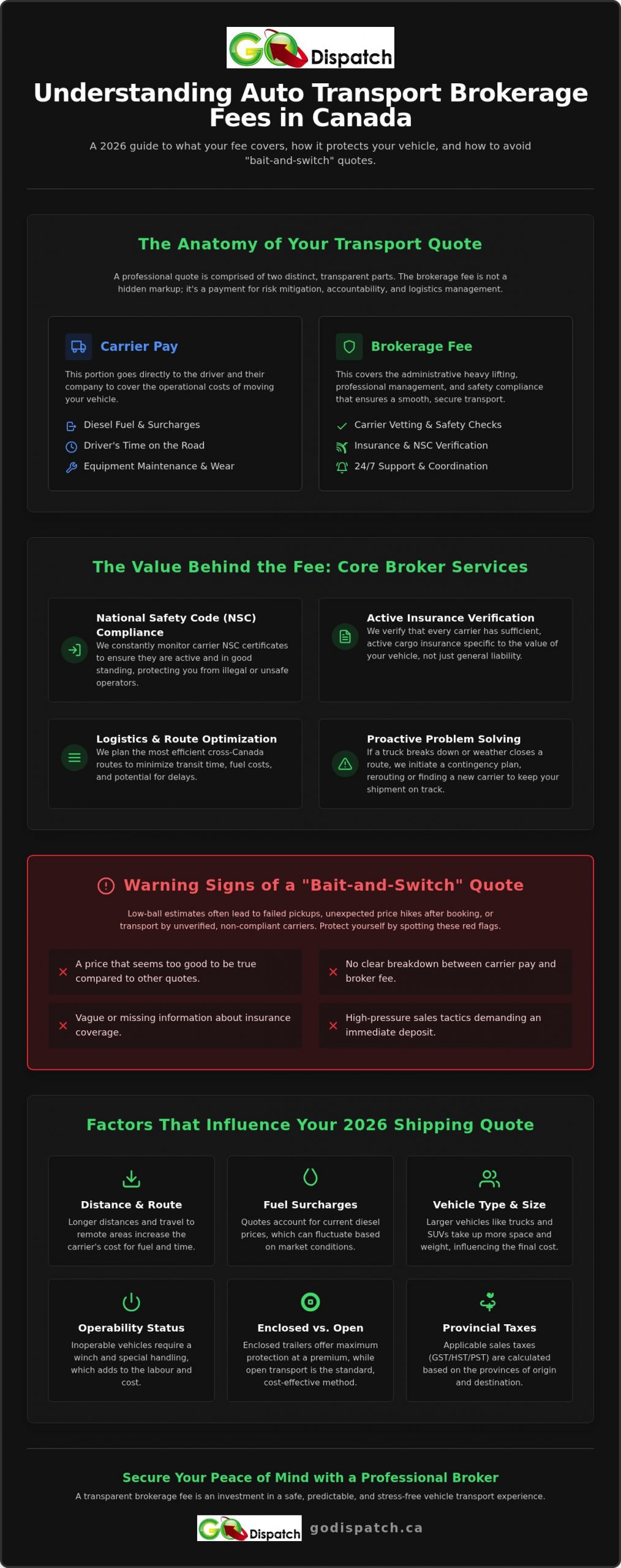
It’s helpful to view your transport quote in two distinct parts. The “Carrier Pay” goes directly to the driver for diesel, equipment maintenance, and time on the road. The “Broker Fee” is the management cut. This covers the administrative heavy lifting that ensures your vehicle is handled by a professional with a clean safety record rather than a fly-by-night operation. It’s the price of peace of mind.
The Difference Between a Broker and a Direct Carrier
Direct carriers own the trucks and trailers you see on the highway. In contrast, brokers own the network and the logistics technology that connects those trucks to customers. What is an auto transport broker? Essentially, they are the intermediary that manages the flow of information and safety data. A broker offers significantly more flexibility than a single-truck operation. If a specific driver faces a mechanical delay or a route change, a broker can quickly tap into their national network to find a replacement. They also act as your advocate if a dispute arises, providing a layer of protection you don’t get when dealing with a driver directly.
Why Direct Booking Isn’t Always Cheaper
Going direct often feels like a way to save money, but it frequently introduces hidden costs. You’ll spend significant time on paperwork and vetting that could be better used elsewhere. Brokers leverage volume discounts that individuals simply can’t access. Because they provide carriers with consistent work, they can negotiate better rates. There is also the “Empty Nest” factor. Carriers often have one or two spots left on a trailer that they need to fill quickly to maximize their route. A deep dive into understanding auto transport brokerage fees canada shows that these professionals see these openings in real time. They can secure those spots at a competitive rate, passing the efficiency and savings on to you.
Breaking Down the Costs: What Your Fee Actually Covers
When you pay a brokerage fee, you aren’t just paying a finder’s fee. You’re funding an administrative safety net that handles the heavy lifting of Canadian transport regulations. This is the core of understanding auto transport brokerage fees canada. One of the most critical tasks is managing National Safety Code (NSC) compliance. Every commercial carrier in Canada must maintain an active NSC certificate to operate legally. Brokers monitor these ratings constantly. If a carrier’s safety rating drops or their certificate expires, a professional broker pulls them from the rotation immediately. This level of oversight protects your vehicle from being loaded onto an unsafe or illegal trailer.
Your broker also serves as the single point of contact for the entire journey. They handle the real-time tracking and communication that would otherwise require you to chase down drivers across multiple time zones. If a truck breaks down or a mountain pass is closed by weather, the broker initiates a contingency plan. They find a replacement carrier or reroute the shipment without you having to manage the crisis. This proactive problem-solving ensures your move stays on track regardless of the hurdles on the road.
Carrier Vetting and Insurance Verification
A carrier’s “proof of insurance” isn’t always what it seems. Documents can be outdated or cancelled without the client’s knowledge. Brokers verify that insurance policies are active and sufficient for the specific value of your vehicle. They ensure the carrier has proper cargo insurance, which is distinct from general liability insurance. This verification process is a vital part of your consumer rights in Ontario and across the country. It ensures that if an accident happens, there is real financial recourse to repair or replace your vehicle. This vetting process is exhaustive and ongoing, providing a layer of security that individual bookings simply cannot match.
Logistics Coordination and Route Optimization
National moves across Canada are complex. Brokers plan the most efficient routes to minimize transit time and reduce the risk of wear on the carrier’s equipment. They coordinate pickup and delivery windows that align with your personal or business schedule. For dealerships or fleet managers, this coordination becomes even more vital. It involves managing multi-vehicle moves and tight inventory timelines across vast distances. Handling these moving parts requires constant attention to detail. Many clients choose to work with a dedicated dispatch partner to handle their national vehicle hauling. It turns a logistical nightmare into a streamlined, predictable process that requires minimal effort from you.
Factors That Influence Your Shipping Quote in 2026
A quote for moving a vehicle across Canada is never a one-size-fits-all figure. It’s a complex calculation based on equipment, space, and timing. When you are understanding auto transport brokerage fees canada, it’s vital to realize that the physical footprint of your vehicle is the primary driver of the price. A standard sedan is the baseline. However, a large SUV or a truck with a lift kit occupies the vertical or horizontal space of nearly two small cars. This reduces the carrier’s total capacity. Because the broker must find a specific trailer configuration to accommodate extra height or width, the logistical effort increases.
Operability is another major factor. A running vehicle can be driven onto a trailer in minutes. A non-runner requires specialized winches or even forklifts for loading and unloading. This adds time and equipment costs to the dispatch process. Similarly, the choice between open and enclosed hauling changes the fee structure. Enclosed trailers offer maximum protection from road debris but come with a higher premium due to limited availability and specialized equipment. Navigating remote delivery points also adds to the complexity, as these routes require more fuel and time for the driver.
Vehicle Dimensions and Trailer Space
Accuracy is your best friend when requesting a quote. If you have a truck with aftermarket modifications, like oversized tyres or a roof rack, you must provide these measurements upfront. Carriers face strict weight limits on Canadian highways. A heavy vehicle increases fuel consumption and can even force a driver to leave another spot empty to stay under legal weight thresholds. Providing precise data ensures your quote remains transparent and prevents “re-classification” fees at the point of pickup. This level of detail keeps the process moving without unexpected delays.
Fuel Surcharges and Seasonal Demand
In 2026, fuel price volatility remains a reality for the logistics industry. Brokers manage this through transparent fuel surcharges that fluctuate with the national average. This prevents drivers from losing money on long-haul routes. Seasonal demand also plays a massive role. The “Snowbird” effect creates a surge in demand during late autumn and early spring as vehicles move across the country. During these peaks, trailer space becomes a hot commodity. Resources like Consumer Protection Ontario offer guidance on your rights during these high-demand periods. Booking in advance is the most effective way to stabilize your rate. It allows the broker to secure a spot before the seasonal rush drives prices upward. Understanding auto transport brokerage fees canada means recognizing that timing is just as important as the vehicle itself.
How to Spot a ‘Bait-and-Switch’ Quote
In the Canadian logistics market, a “low-ball” estimate is often more than just a bargain; it’s a trap. When you are understanding auto transport brokerage fees canada, you have to look past the initial dollar amount. A common tactic involves a broker quoting a price that is significantly below the market average. They do this to secure your booking and often your deposit. However, the mechanics behind the scenes are flawed. The broker posts this low rate to national load boards. Because the pay is too low for the driver to cover their diesel and time, no carrier ever accepts the job. Your vehicle sits at the curb while the broker waits for you to become desperate enough to pay a “surprise” surcharge to finally get it moved.
This is the heart of the bait-and-switch. It’s a calculated move that uses your vehicle as leverage. A reliable partner won’t play these games. They provide a price that drivers actually want to take, ensuring your vehicle is picked up on schedule. Transparency isn’t just a buzzword. It’s the only way to guarantee a safe, predictable move without the stress of last-minute price hikes. You deserve a partner who values honesty over a quick booking.
Red Flags in Low-Ball Estimates
Identifying a scam early saves you from administrative headaches and financial loss. Watch for these specific warning signs during your search:
- The “Deposit-First” Requirement: If a broker demands a large fee before they’ve even assigned a carrier to your move, walk away. Professional dispatchers typically only collect their fee once the logistics are confirmed and a driver is secured.
- Vague Business Details: A lack of a physical Canadian office or a missing National Safety Code (NSC) profile is a major red flag. Always verify that you are speaking with a legitimate business.
- Prices Below Market Average: If a quote is 30% lower than every other estimate you’ve received, it’s likely because the broker has no intention of honouring it.
The Importance of Transparent Pricing
A professional quote should be easy to read and all-inclusive. It should clearly outline the carrier pay, the fuel surcharge, and the brokerage fee. You shouldn’t have to guess what “priority handling” or “tire fees” mean after you’ve already signed a contract. When you focus on understanding auto transport brokerage fees canada, you’ll realize that a firm price is always better than a low estimate. Ask for a total cost that includes all taxes and surcharges from the start. Verify the legitimacy of any dispatch service by checking for real human support and industry reviews. This clarity is the best indicator of a partner who values your time and your investment. To avoid the stress of hidden fees, get a transparent, all-inclusive quote from GO DISPATCH today. We prioritize human support and honest pricing for every national move.
Streamlining Your Move with GO DISPATCH
Moving a vehicle across Canada shouldn’t feel like a second job. We realize that your time is valuable. GO DISPATCH positions itself as the stress-relief solution for complex national logistics. We handle the administrative heavy lifting so you don’t have to. Our team manages the entire process for cars, trucks, SUVs, and vans. By prioritizing understanding auto transport brokerage fees canada, you ensure that your investment is protected by professionals who value transparency. We don’t just find a truck; we secure a safe passage for your vehicle with a partner you can trust. Our approach is built on reliability and efficiency.
One-Stop Dispatching for Peace of Mind
We manage the entire lifecycle of your move from the initial booking to the final delivery. Our process is designed to reduce your daily burden. We act as your dedicated logistics department, handling the scheduling and driver communication behind the scenes. Our network consists only of vetted professional carriers. This ensures that every vehicle is in expert hands throughout its journey. We take pride in our proactive problem-solving. If an issue arises on the road, we solve it before it reaches your desk. This human-centric approach sets us apart from faceless, automated quote engines. You get real support from real people who understand the industry.
National Coverage Without the Logistics Headache
Coordinating moves across all provinces requires deep industry knowledge and a high-capacity network. Canadian businesses and individual owners trust us for their inventory relocation and fleet moves because we deliver results. We understand the specific requirements for different vehicle types and regions. Whether you are moving a single SUV or an entire fleet of commercial trucks, our team provides the same level of care. You can learn more about our strategic approach to Vehicle delivery logistics in Canada. We remain committed to safe, timely, and transparent delivery for every client.
Our goal is to provide a streamlined experience that requires minimal effort from you. This allows you to focus on your own core business or the details of your move. Reliability is our standard. We maintain professional confidence in every dispatch we handle. Trust us to manage the complex details while you enjoy the peace of mind that comes with professional, human-led dispatching. We are your partner in national vehicle transport.
Secure Your National Vehicle Move with Confidence
National logistics in 2026 requires more than just a truck; it requires a partner who manages the complex details of insurance and safety compliance. By understanding auto transport brokerage fees canada, you’ve learned that a professional fee is an investment in your vehicle’s safety. This cost covers essential vetting and administrative oversight that protects your investment during a long distance move. It ensures your car, truck, or SUV is handled by a vetted national carrier network that respects your timeline and your budget. You now have the tools to spot low-ball estimates and avoid the stress of “bait and switch” pricing.
You don’t have to face the stress of logistics alone. Our professional one-stop dispatching service handles the heavy lifting, providing you with a transparent price that won’t change after you book. This approach eliminates the fear of hidden surcharges and administrative headaches. Focus on your move and let the experts manage the road. We are specialists in car, truck, and SUV transport, dedicated to human-led support for every client. Get a transparent, no-obligation transport quote today and experience a streamlined delivery process built on reliability. Your vehicle’s safe arrival is our top priority. We’re ready to get you moving with total peace of mind.
Frequently Asked Questions
Is the brokerage fee separate from the shipping price?
The brokerage fee is typically bundled into the total quote you receive. It reflects the cost of professional dispatching and logistics management rather than the fuel and equipment costs of the driver. When you focus on understanding auto transport brokerage fees canada, you’ll see that this transparency prevents hidden surcharges later. A professional quote includes everything from the carrier pay to the management cut, providing you with a predictable price for your move.
Can I save money by paying the carrier in cash upon delivery?
Paying in cash rarely saves money and often introduces significant risk. Most professional dispatch services manage payments through secure, digital channels to maintain a clear paper trail for tax and insurance purposes. Cash payments can lead to disputes over whether the full amount was received or if the service was completed as agreed. It’s better to stick with a verified payment schedule that protects both you and the carrier throughout the journey.
What happens if the carrier damages my vehicle during transport?
If damage occurs, your broker acts as your primary advocate during the claims process. Because we vet every carrier for active cargo insurance, there is a clear path for recourse. You should document the vehicle’s condition at both pickup and delivery on the Bill of Lading. This documentation is essential for a successful claim. We handle the communication with the carrier’s insurance provider to ensure a fair resolution for your vehicle investment.
Do brokerage fees change based on the time of year?
Total shipping costs fluctuate with seasonal demand, which can influence the complexity of the dispatching process. During peak times like the “Snowbird” migration, trailer space is limited and requires more intensive coordination. Booking in advance helps stabilize your rate and ensures your spot is secured before demand peaks. Understanding auto transport brokerage fees canada means realizing that timing affects availability, making early planning the most efficient way to manage your transport budget.
Why do some brokers require a deposit before the vehicle is picked up?
Deposits are often used to secure a specific spot on a carrier’s trailer. This commitment ensures the driver doesn’t lose money on an empty spot if a client cancels last minute. However, you should only pay a deposit once a carrier has been vetted and assigned to your move. Beware of brokers who demand large upfront fees before they have even secured a truck, as this is a common indicator of a “bait-and-switch” operation.
How do I know if a car transport broker is legitimate in Canada?
A legitimate Canadian broker will have a verifiable business presence and a clean National Safety Code profile. You should look for a service that provides direct human support rather than relying solely on automated quote engines. Check for industry reviews and ask about their vetting process for carriers. A professional dispatcher will be transparent about their fees and will be able to explain exactly how they protect your vehicle during a national move.
Does the brokerage fee cover the cost of insurance for my car?
The brokerage fee does not pay for your vehicle’s insurance policy, but it does cover the rigorous verification of the carrier’s insurance. We ensure that every driver in our network maintains active cargo insurance that meets Transport Canada requirements. This oversight is vital for your peace of mind. While your personal auto insurance might provide secondary coverage, the carrier’s policy is the primary protection for your car, truck, or SUV during transit.
Can a broker help me ship a non-running vehicle across Canada?
Yes, a broker is essential for shipping non-running vehicles because they require specialized equipment. Most standard trailers are designed for vehicles that can be driven on and off. A non-runner requires a winch or a forklift for loading, which not every carrier possesses. We tap into our national network to find a driver with the specific tools needed to handle your car, truck, or van safely, regardless of its operability.