
Entrusting your vehicle to a stranger for a 4,000-kilometre journey shouldn’t feel like a gamble. For most Canadians, the logistics of moving a car across provinces are notoriously stressful. You’re likely tired of the endless back-and-forth with multiple carriers, the uncertainty of hidden fees, and the constant worry about whether your insurance is truly comprehensive. It’s an exhausting process that takes up far too much of your valuable time.
You deserve a shipping experience that’s built on transparency and reliability. This guide is designed to help you master the vehicle shipping process canada from start to finish. We’ll show you how to navigate the 2026 logistics landscape with total confidence. You’ll learn how to identify verified carriers, secure clear timelines, and eliminate the communication gaps that often plague long-distance transport. We prioritize your peace of mind by simplifying every complex step.
We’re diving into every stage of the journey, from the initial dispatch to the final delivery at your door. By the end of this professional guide, you’ll have the tools to ensure your vehicle arrives safely and on schedule. Let’s simplify your transport needs and get your vehicle moving without the headache.
Key Takeaways
- Identify the three key players in the logistics chain to ensure total accountability throughout the transport journey.
- Discover how professional dispatching services vet carriers to guarantee your vehicle is handled by insured and reliable professionals.
- Master every stage of the vehicle shipping process canada to eliminate hidden fees and streamline your logistics experience.
- Streamline your pickup day by following essential preparation steps that get your vehicle ready to roll without delays.
- Ensure a successful delivery by learning the critical steps of the final walk-around inspection to verify your vehicle’s condition.
Understanding the Vehicle Shipping Landscape in Canada
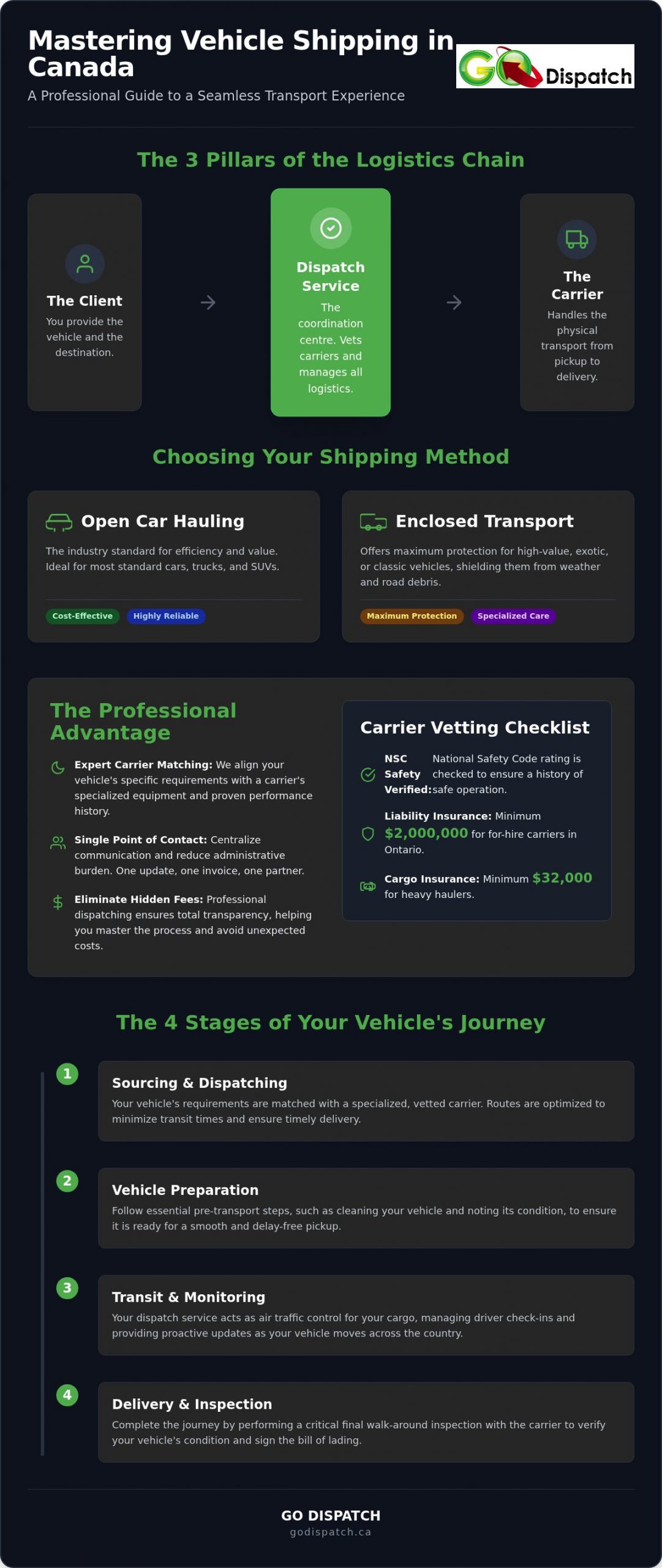
Moving a vehicle across provincial lines isn’t just a drive; it’s a managed logistics chain. The vehicle shipping process canada relies on three distinct pillars working in harmony: the client, the dispatch service, and the carrier. You provide the vehicle and the destination. The dispatch service coordinates the details. The carrier handles the physical transport. Mastering the vehicle shipping process canada means understanding that you aren’t just buying a spot on a trailer; you’re hiring a team to manage a complex journey from start to finish.
Businesses, especially dealerships and fleet managers, often find direct carrier hunting to be a drain on resources. Calling dozens of individual owner-operators is time-consuming and often leads to inconsistent results. A professional dispatch service acts as a single point of contact. This centralizes your communication and reduces the administrative burden significantly. You get one update, one invoice, and one partner who handles the vetting for you. This structure ensures that every move is professional, efficient, and reliable.
The Role of a Professional Dispatch Service
A dispatch service doesn’t just find a truck; it builds a bridge. By maintaining an established network of vetted auto carriers, dispatchers ensure your inventory is matched with the right equipment. This is vital for corporate inventory relocation where speed and reliability are non-negotiable. You focus on your core business while experts handle the background noise of logistics. It’s a proactive approach that solves problems before they reach your desk.
Common Shipping Methods: Open vs. Enclosed
Choosing the right method depends on your budget and the specific needs of your vehicle. Every transport type offers distinct advantages for different scenarios.
- Open car hauling: This is the industry standard for efficiency. It’s cost-effective and highly reliable for standard cars, trucks, and SUVs. It’s the preferred choice for most dealership inventory.
- Enclosed transport: This offers specialized protection for high-value, exotic, or classic inventory. It shields vehicles from road debris and weather during transit.
The vast Transportation infrastructure in Canada involves thousands of kilometres of highways and varying provincial regulations. National coverage is essential for seamless moves from one coast to the other. Sourcing vetted carriers who comply with the National Safety Code (NSC) ensures that your cargo remains safe. A professional brokerage doesn’t just move a car; it protects your investment through proactive problem-solving and human-centric support. This reliability is what allows you to ship with total confidence.
Sourcing and Dispatching: The Professional Advantage
The administrative middle mile is where most logistics plans fail. Sourcing a carrier requires more than just checking a price tag. It involves a rigorous matching process. We align your vehicle’s specific requirements with a carrier’s specialized equipment. A heavy-duty truck requires different securement than a low-clearance sedan. This precision is the core of a professional vehicle shipping process canada. By managing the constant back-and-forth with drivers, a dispatch service eliminates the noise from your daily schedule.
Carrier Vetting and Compliance
Safety isn’t a suggestion; it’s a requirement. We verify every carrier’s National Safety Code (NSC) number to track their safety performance, including collisions and convictions. For-hire carriers in Ontario must carry a minimum of $2,000,000 in liability coverage. We also confirm cargo insurance minimums, which start at $32,000 for heavy haulers over 37,000 kg. Monitoring these ratings ensures your inventory stays in safe hands. We don’t just look at the paperwork. We review past performance history to ensure consistent reliability. This human-centric approach builds trust that automated bidding platforms simply can’t match.
Scheduling and Route Planning
Timely delivery depends on smart load optimization. Dispatchers organize routes to minimize transit times by balancing pickup windows with driver availability. This is especially critical for multi-vehicle dealership trades and corporate relocations. Coordinating several units across different locations requires meticulous planning. We act as the air traffic control for your cargo. Our team manages the constant stream of updates and driver check-ins. This proactive monitoring prevents minor delays from turning into major setbacks. When weather or road conditions shift, your dispatcher is already working to keep the timeline on track. This level of oversight provides a layer of protection that ensures your vehicle shipping process canada remains smooth. If you want to streamline your next move, explore our dispatching solutions to see how we handle the complex details behind the scenes.
Preparing Your Vehicle for National Transport
Preparation is the foundation of a successful transport. It’s the stage where you take control of the logistics. Your vehicle needs to be “ready to roll” before the carrier arrives. Completing this preparation 24 to 48 hours in advance prevents last-minute stress. If a vehicle isn’t ready, it can delay the entire vehicle shipping process canada. This affects the carrier’s schedule and your delivery timeline. Professional dispatchers rely on you to ensure the vehicle is accessible and prepared for the journey.
The Pre-Shipping Checklist
A clean vehicle is essential for a smooth pickup experience. Wash the exterior thoroughly to ensure the carrier can perform a detailed damage inspection. Road salt and dirt can hide minor scuffs or dents. Removing these allows both parties to agree on the vehicle’s condition with total confidence. You must also remove all personal items and loose accessories. Carriers are prohibited from transporting personal belongings due to strict weight regulations and liability issues. Items left inside can shift during transit, potentially causing damage to the interior. Finally, maintain your fuel level at approximately one-quarter tank. This provides enough fuel for loading and unloading while reducing unnecessary weight on the trailer. It’s a simple step that improves safety for the driver.
Documentation and Keys
Organized paperwork is the final step in your preparation. Have your registration and insurance documents ready for the carrier to review. You must also provide a functional set of keys. This includes the ignition key and any fobs required for entry. Without keys, the carrier cannot safely load the vehicle onto the transport trailer. The Bill of Lading serves as the primary legal contract between the client and the carrier. It documents the vehicle’s condition at pickup and delivery. Reviewing this document carefully ensures total transparency. It’s your record of the vehicle shipping process canada and protects your interests during the move.
The condition of your vehicle directly impacts the shipping process. If your vehicle is non-running, you must disclose this during the dispatch phase. Special equipment is required for vehicles that cannot move under their own power. Failing to mention this can lead to a cancelled pickup and additional fees. By following these professional standards, you ensure a streamlined experience. You protect your investment and help the carrier maintain a clear timeline for delivery. Taking these proactive steps allows you to focus on your business while we handle the heavy lifting.
Transit and Monitoring: What Happens on the Road
Once the carrier pulls away, your vehicle begins its journey across the Canadian provinces. This is the stage where professional oversight becomes most valuable. The vehicle shipping process canada involves navigating diverse terrains and unpredictable weather. From the Rockies to the Atlantic coast, road conditions can change in an instant. We monitor these factors behind the scenes so you don’t have to. You stay informed while the carrier focuses on the road.
Safety protocols are strictly enforced throughout the haul. Drivers must adhere to federal hours-of-service regulations. As of 2026, this includes a maximum of 13 hours of driving time and 14 hours of on-duty time per day. These rules prevent driver fatigue and ensure your cargo stays safe. We only work with carriers who maintain a valid National Safety Code (NSC) number to track safety performance. This proactive approach to safety allows you to focus on your core business while we manage the transit details.
Managing Transit Expectations
Long-haul delivery across Canada typically takes between 10 to 14 days for coast-to-coast routes. Factors like seasonal weather or heavy traffic can influence these windows. Professional dispatchers don’t just wait for delays to happen; they proactively manage them. If a driver encounters a closure on the Trans-Canada Highway, we work to find alternative solutions or provide immediate updates. Having a human contact for these updates is far more effective than an automated GPS ping. It provides context and peace of mind during the wait.
Insurance and Protection During Hauling
Understanding the difference between carrier cargo insurance and your personal auto insurance is vital. Your personal policy often doesn’t cover your vehicle while it’s on a commercial trailer. That’s why we verify that every carrier has the necessary cargo coverage before the wheels turn. For-hire carriers in Ontario must carry at least $2,000,000 in liability coverage. We ensure these policies are active and sufficient for your specific vehicle type. For a deeper look at how these elements fit into a broader strategy, review our guide on vehicle delivery logistics canada. Our role is to act as your advocate, ensuring all safety and insurance standards are met without exception.
If you’re ready to start your journey with a partner you can trust, contact our dispatch team today for a streamlined shipping experience that prioritizes your vehicle’s safety.
Delivery and Inspection: Completing the Process
The arrival of your vehicle marks the final phase of the logistics chain. It’s the moment where the physical transport ends and the administrative closure begins. At GO DISPATCH, we manage this entire loop to ensure you aren’t left handling the final details alone. Our role as your facilitator continues until the vehicle is safely in your hands and the paperwork is complete. This proactive oversight is designed to provide the stress-relief you need to focus on your core business. We take pride in handling the complex tasks behind the scenes so the final hand-off is a simple, successful event.
The Final Inspection and Bill of Lading
A thorough walk-around inspection is your most powerful tool for protection. This is not a step to be rushed. You must compare the vehicle’s current condition to the initial report created during pickup. Check the body, glass, and tires for any new scuffs or debris impact. If you notice any discrepancies, you must note them immediately on the Bill of Lading before the driver leaves. This document is the legal record of the delivery. Signing it without noting issues indicates you’ve accepted the vehicle in its current state. A detailed inspection ensures that the vehicle shipping process canada concludes with total transparency. It provides the documented evidence required should you need to reference the carrier’s insurance later.
Finalizing the Move
Closing out the transport order should be as simple as the initial dispatch. We prioritize a streamlined billing process that eliminates the need to chase multiple carriers for invoices. For corporate and dealership clients, our one-stop billing system consolidates all dispatching and transport fees into a single, clear transaction. This reduces the administrative burden on your accounting team and keeps your records organized. If you’re looking for more information on how these logistics impact your bottom line, review our vehicle transport cost canada guide for 2026 pricing context.
Completing the vehicle shipping process canada requires a partner who understands the high stakes of inventory relocation. We act as your reliable expert, ensuring every stage of the journey is managed with professional precision. Once the Bill of Lading is signed and the vehicle is accepted, your transport journey is officially complete. You can move forward with confidence, knowing your inventory arrived safely and your logistics were handled by professionals who value human connection and efficiency.
Move Forward with Logistics Confidence
Mastering the vehicle shipping process canada doesn’t have to be a solo effort. You’ve seen how professional dispatching eliminates the middle-mile noise and keeps your inventory moving safely. By prioritizing vetted carriers and thorough inspections, you protect your assets and your schedule. You can now approach your next transport with the certainty that every detail is managed by experts. Whether you’re relocating a single SUV or an entire dealership fleet, the right partnership makes the difference.
We handle the complexities behind the scenes so you can focus on your core business goals. Our expert national dispatching and vetted carrier network provide the reliability you deserve. We offer full-service logistics management that bridges the gap between initial pickup and final delivery. It’s about providing speed, safety, and human-centric support at every turn. We take pride in being the facilitator that clears your desk of logistical stress.
Don’t let transport coordination become a daily burden. Contact GO DISPATCH for professional vehicle hauling coordination and experience a streamlined journey. We’re ready to get your vehicles on the road today with total confidence.
Frequently Asked Questions
How long does the vehicle shipping process take in Canada?
The duration of the vehicle shipping process canada depends on the distance and route volume. For coast-to-coast hauls, you should typically expect a timeframe of 10 to 14 days. Regional moves often take less time, but factors like seasonal weather and driver hours-of-service regulations can influence the final delivery date. We work to provide clear timelines so you can plan your logistics with total confidence.
Do I need special insurance to ship my car across the country?
You don’t necessarily need a new personal policy, but you must ensure the carrier has valid cargo insurance. Carriers are required to have liability and cargo coverage that protects your vehicle while it’s in their care. We verify these insurance certificates before any wheels turn. It’s important to realize that your personal auto insurance may not cover damages that occur during commercial transport on a trailer.
Can I ship personal items inside my vehicle during transport?
Most professional carriers prohibit the transport of personal items inside the vehicle. This is due to strict weight regulations and the fact that carrier insurance doesn’t cover personal belongings. Items left in the car can also shift during transit and cause interior damage. To ensure a smooth vehicle shipping process canada, we recommend removing all loose accessories and personal goods before the scheduled pickup occurs.
What happens if my vehicle is damaged during the shipping process?
If you notice damage upon delivery, you must document it immediately on the Bill of Lading. This document is your primary legal protection and serves as the official record of the vehicle’s condition. You should then contact your dispatch service to initiate the claims process with the carrier’s insurance provider. Taking clear photos at both pickup and delivery is a proactive step that simplifies any potential resolution with the carrier.
Is door-to-door vehicle delivery available for all types of cars?
Door-to-door delivery is generally available for cars, trucks, SUVs, and vans, provided the locations are accessible for a large transport trailer. Some residential areas have restrictions that prevent heavy trucks from entering. In these cases, a nearby commercial lot or open space is used for the hand-off. We coordinate these details in advance to ensure the delivery is as convenient and streamlined as possible for your team.
How are car transport brokerage fees calculated?
Brokerage fees are calculated based on the complexity of the logistics, the vehicle type, and the total distance of the haul. These fees cover the cost of sourcing vetted carriers, verifying insurance, and managing the entire communication flow. For corporate and dealership clients, we provide a one-stop billing solution that consolidates these coordination costs into a single, transparent invoice. This simplified approach reduces your administrative workload significantly.
What is the difference between a direct carrier and a dispatch service?
A direct carrier owns the trucks and handles the physical transport, while a dispatch service acts as a professional facilitator. We coordinate with a vast network of third-party carriers to find the best match for your specific move. This gives you access to higher capacity and more flexible scheduling than a single carrier can offer. We handle the vetting and logistics behind the scenes so you don’t have to.
Can I ship a non-running vehicle between dealerships?
Yes, you can ship non-running vehicles, but you must disclose the vehicle’s condition during the booking phase. Transporting a car that doesn’t move under its own power requires specialized equipment, such as a winch, to load and unload it safely. Not all carriers are equipped for this, so early communication is essential. Disclosing this ensures we match your inventory with a professional hauler who can handle the job correctly.