
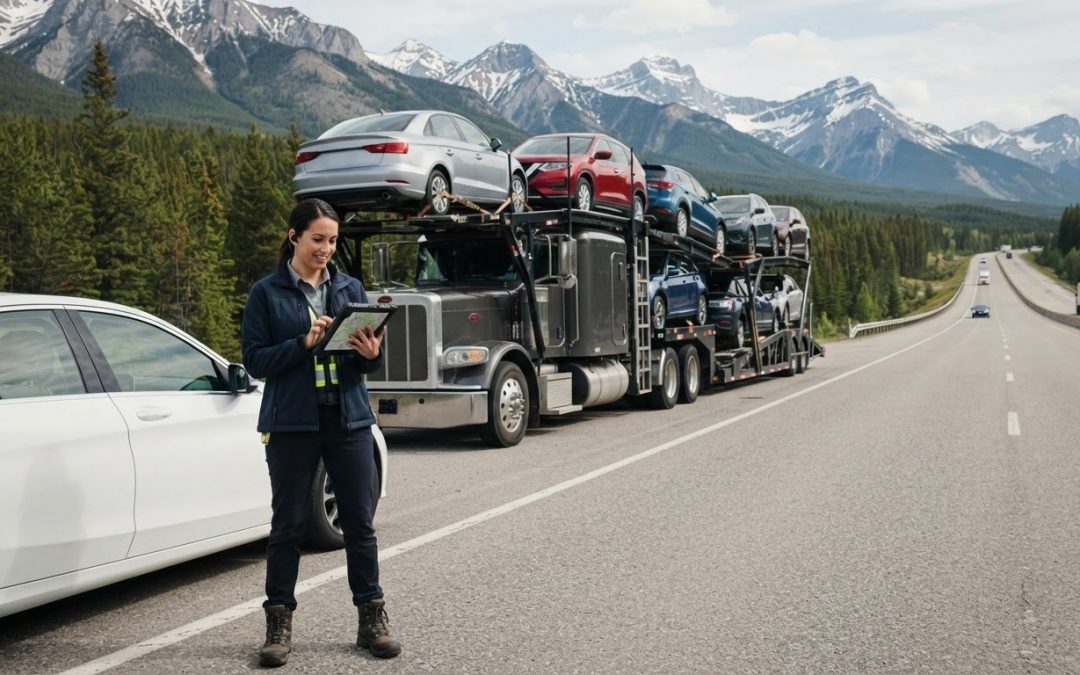
Finding a truck is the easy part of car transportation. The harder questions are why quotes and timelines vary, how your vehicle will be protected, and who will keep you informed. If you’re concerned about extra charges, damage during a long-haul move, or logistics terms that make a simple shipment feel complicated, those concerns are understandable.
A smooth move takes more than a carrier. It takes clear coordination and a suitable match for your vehicle and route. This article separates common myths from facts, explains what can affect timing, and outlines what to ask about insurance, carrier vetting, and quotes. You’ll also learn how one-stop transport dispatching can coordinate the logistics and communication, reducing the administrative work on your end. With a clearer picture of the process, you can compare options and know what to ask before arranging national vehicle transport.
Key Takeaways
- Car transportation across Canada involves route, weather, scheduling, and vehicle-specific logistics. Ask what could affect your shipment before choosing a provider.
- Don’t assume the lowest quote is the best value. Check what the price includes and whether additional charges could apply.
- Compare open and enclosed transport based on the vehicle’s needs and the level of protection you want, as enclosed transport typically costs more.
- Carrier insurance can vary. Confirm which carrier will handle your vehicle and ask what coverage applies.
- One-stop dispatching can coordinate the process and help source a suitable vetted carrier, reducing the logistics work you manage yourself.
The Landscape of Car Transportation in Canada
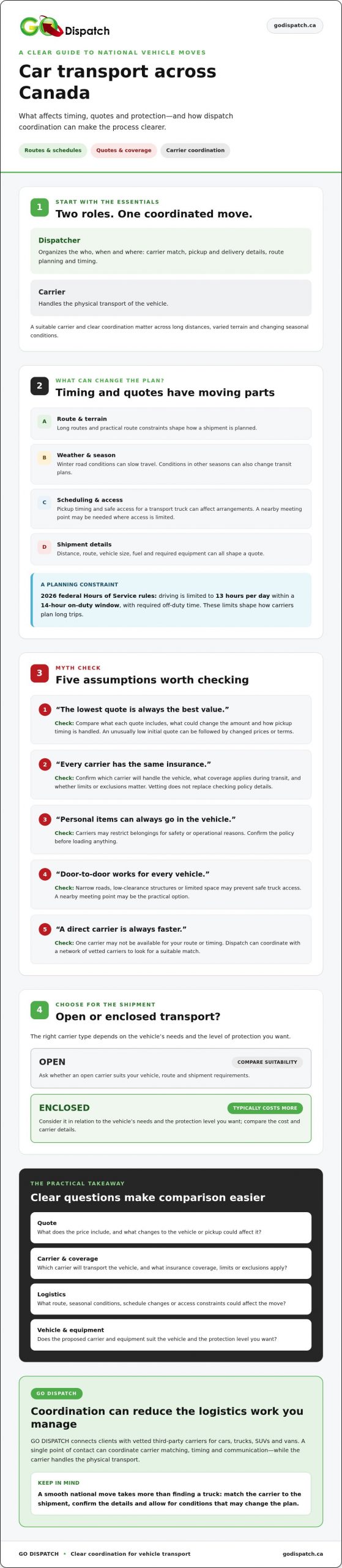
Moving a vehicle across Canada takes more than arranging a truck. Car transportation involves coordinating a suitable carrier, pickup and delivery details, route planning, and timing. The dispatcher organizes these moving parts, while the carrier handles the physical transport.
That coordination matters across long distances, varied terrain, and changing seasonal conditions. Winter weather can affect road conditions and slow travel, while conditions at other times of year can also change transit plans. A local tow usually moves a disabled vehicle a short distance. National vehicle hauling is different: it requires planning a longer route, matching the shipment with a carrier equipped for the job, and accounting for possible schedule changes.
Why Professional Logistics Matter for National Moves
Long routes need more than a starting point and a destination. A dispatcher can account for practical route constraints and seasonal conditions when coordinating a shipment. For example, a move through areas affected by winter weather may need schedule flexibility. No route plan can control the weather, but thoughtful coordination helps set realistic expectations and respond when plans change.
Vehicle hauling also operates within current commercial trucking requirements. In 2026, federal Hours of Service rules limit driving to 13 hours per day within a 14-hour on-duty window, with required off-duty time. These limits shape how carriers plan long trips. The changing demands of national transport are explored further in vehicle delivery logistics in Canada.
The Role of the Modern Auto Dispatcher
A dispatcher organizes the who, when, and where: which carrier may suit the shipment, when pickup can be coordinated, and how the vehicle should move towards delivery. GO DISPATCH connects clients with vetted third-party carriers for cars, trucks, SUVs, and vans. Carrier vetting can help clients make a more informed choice, while a single point of contact keeps coordination from becoming another full-time task.
Equipment is part of the planning, too. Open or enclosed car carriers are designed for vehicle transport, but the right option depends on the shipment and the level of protection needed. A dispatcher can coordinate a suitable carrier match rather than simply selecting the first available option. That coordination can bring clarity to a process involving schedules, routes, and unfamiliar logistics terms.
5 Common Car Transportation Myths Debunked
Confusing quotes and assumptions can make a vehicle move more difficult than it needs to be. Use these five myths as a reminder to check the details before choosing a transport arrangement.
- Myth 1: The lowest quote is always the best value. A quote that leaves out important details may not reflect the final cost or service. Ask what’s included, what could change the amount, and how pickup timing is handled.
- Myth 2: Every carrier has the same insurance coverage. Coverage can differ. Before booking, ask which carrier will transport the vehicle, what insurance applies during transit, and whether limits or exclusions affect your situation. Carrier vetting can help you make a more informed choice, but it does not replace checking the specific policy details.
- Myth 3: You can’t ship a car with personal items inside. Don’t assume belongings are permitted or covered. Carriers may restrict items for safety or operational reasons, so confirm the policy before loading anything.
- Myth 4: Door-to-door service is possible for every vehicle. Pickup and delivery depend on safe access for the transport truck. Narrow roads, low-clearance structures, or limited space may mean arranging a nearby meeting point instead.
- Myth 5: Direct carriers are always faster than dispatch services. One carrier may not be available for your route or timing. A dispatcher can coordinate with a network of vetted carriers and look for a suitable match instead of relying on the first option.
Price vs. Quality: The Real Cost of Cheap Hauling
Distance, route, vehicle size, fuel, and required equipment can all shape a quote. Compare quotes using the same shipment details, then ask how a change to the vehicle or pickup arrangements could affect the price. This guide to vehicle transport cost in Canada offers more context on the factors behind pricing.
A bait-and-switch occurs when an unusually low initial quote attracts a booking, then the price or terms change later. To assess a quote, ask what it covers, what conditions could change the amount, and whether the proposed carrier and equipment suit your vehicle.
For national car transportation, a clear quote and responsive coordination can be worth more than a low number with unanswered questions. If you’re comparing options, explore GO DISPATCH’s transport dispatching to see how carrier coordination may simplify the process.
The Reality of Transit Times
Cross-country vehicle transport isn’t an overnight delivery. Multi-car trailers carry several vehicles and follow coordinated pickup and drop-off schedules, so the route involves more than driving straight from one endpoint to another. Weather, road conditions, and scheduling can also affect timing. Ask for an estimated delivery window, what could change it, and how updates will be shared.
If a move crosses the border between Canada and the United States, transport timing is only one consideration. Review the relevant Canadian import regulations separately, since importing involves requirements beyond domestic vehicle hauling.
Open vs. Enclosed Car Transportation: Choosing the Right Method
The right trailer depends on the vehicle, your priorities, and how much exposure you’re comfortable with during transit. Open carriers transport vehicles on an uncovered deck. Enclosed carriers place them inside a covered trailer, adding protection from weather and road debris. Both methods can be safe when professional carriers use suitable equipment and handle loading and securement carefully. Neither option removes the need to confirm carrier details and insurance coverage.
Cost is another factor. Open transport is generally the more budget-friendly option, while enclosed transport typically costs more because it offers added protection and uses specialized equipment. Rather than choosing by price alone, consider the vehicle’s value, condition, and how important added protection is for your move.
When to Choose Open Car Hauling
Open hauling is a common, efficient choice for dealerships and fleets moving standard vehicles. A daily driver is often well suited to this method, particularly if practical transport is the priority rather than extra shielding from the elements. Carriers use vehicle restraints and appropriate loading procedures to secure cars on the trailer. Ask how the carrier will protect and document your vehicle at handoff, and review the condition report before and after transport.
Open trailers are widely used for vehicle hauling because they can carry multiple vehicles efficiently. GO DISPATCH coordinates with vetted third-party carriers, helping clients consider a suitable match for the vehicle and shipment rather than choosing on price alone. Ask which equipment the carrier proposes and what to expect at pickup and delivery.
The Benefits of Enclosed Vehicle Transport
An enclosed trailer surrounds the vehicle with a covered space, helping shield it from rain, snow, dust, and road debris. That added protection can make enclosed hauling a sensible choice for vintage cars, luxury vehicles, or other specialty vehicles where preserving the exterior is a priority. It can also suit a restored vehicle when the owner wants to limit exposure during transit.
Enclosed transport is a premium option, so weigh its added protection against the vehicle’s needs and your budget. “White-glove service” in enclosed hauling generally means more attentive handling and care throughout pickup, transit, and delivery. It describes an approach, not a guarantee, so ask what specific handling and communication the carrier provides.
For a standard daily driver, open transport may be a practical fit. For a rare or high-value vehicle, enclosed transport may offer welcome peace of mind. In either case, confirm the equipment, carrier arrangements, insurance details, and condition-report process before booking your car transportation.
The Strategic Advantage of a One-Stop Dispatch Service
A carrier moves the vehicle; a dispatcher organizes the move. That distinction matters when the route, schedule, or vehicle type makes the first available option a poor fit. A one-stop dispatch service connects clients with a network of vetted third-party carriers and coordinates the logistics, helping find a suitable match instead of relying on one carrier’s availability.
If a carrier is fully booked, a dispatcher can explore other options in the network. That flexibility can be useful for dealerships arranging inventory transfers or businesses moving a mix of cars, trucks, SUVs, and vans. Instead of contacting multiple carriers and tracking each conversation, clients have one coordination point for the transport arrangements.
The dispatcher coordinates on the client’s behalf but does not operate the carrier’s truck. The carrier physically transports the vehicle; the dispatch service helps organize the assignment and communication. For a dealership managing several vehicle moves, that support can reduce administrative work and make car transportation easier to oversee.
Carrier Vetting: What to Confirm
Carrier vetting is a key part of choosing who will handle a vehicle. GO DISPATCH has a professional carrier vetting process. Before a move is arranged, ask what checks are included and confirm the carrier’s insurance details and relevant safety information. These questions help clarify who is responsible for the vehicle and what coverage applies during transit.
Carrier suitability, matching the vehicle and route, and keeping the arrangement organized are all details clients may otherwise have to coordinate themselves. Dealership auto transport logistics depend on consistent coordination and informed carrier selection, especially when inventory moves involve multiple vehicles.
Managing the Logistics Chain
A dispatcher helps coordinate pickup and delivery details, including timing, handoff expectations, and updates from the carrier. If a breakdown or weather detour disrupts the original plan, the dispatcher can coordinate communication and discuss next steps with the parties involved. That won’t make delays disappear, but it gives clients a clear point of contact instead of leaving them to chase updates across separate conversations.
For clients moving different vehicle types, one-stop dispatching keeps arrangements within a single coordination process. The service fee covers logistics management, carrier selection, and delivery scheduling. To discuss coordinating car, truck, SUV, or van transport, connect with GO DISPATCH.
Streamlining Your Move with GO DISPATCH
Professional vehicle transport shouldn’t leave you managing a maze of calls and logistics on your own. GO DISPATCH coordinates national moves with vetted third-party carriers and provides a human point of contact. Share your shipment details, and the dispatch team can work to identify a suitable carrier and organize the next steps. Clear information up front helps set expectations and focus the arrangement on your vehicle and route.
From Cars to Trucks: Handling Your Entire Fleet
Vehicle size and weight affect which carrier and equipment are appropriate. GO DISPATCH coordinates transport for cars, trucks, SUVs, and vans, helping match different vehicle types with a suitable carrier. If you’re transporting a truck, share its make, model, dimensions, and any details that may affect loading. Accurate information helps the team assess the transport requirements.
Need to move more than one vehicle? One-stop dispatching can bring multiple arrangements into a coordinated process, rather than leaving you to manage separate carrier conversations. Dealerships and other clients moving a mix of vehicles can share the shipment details together, then work with the dispatch team on carrier matching and coordination. That means fewer separate arrangements for you to track.
Your Partner in National Vehicle Hauling
Professional dispatching can reduce the coordination work involved in a vehicle move, leaving you more time to focus on other plans. To get started, prepare the pickup and delivery details, vehicle information, and your preferred timing. GO DISPATCH can use those details to discuss the shipment and coordinate with a vetted third-party carrier. Confirm the arrangements and ask any questions about coverage, timing, or handoffs before the move proceeds.
From a single car to a fleet of trucks, SUVs, or vans, GO DISPATCH helps organize national vehicle transport. A dispatch service does more than find a truck: it coordinates the carrier and logistics around the move. Contact the team to discuss your shipment and the next steps.
Make Your Next Vehicle Move Easier
Confident car transportation starts with more than a quote. Compare the details, choose open or enclosed transport based on your vehicle’s needs, and confirm the carrier’s insurance and arrangements before booking. A dispatch service can coordinate the logistics and help find a suitable vetted carrier for your route.
GO DISPATCH brings one-stop national logistics management and professional carrier vetting together with human support. The team coordinates transport for cars, trucks, SUVs, and vans, helping take follow-up and planning off your plate. Dispatching can make the process more organized by giving you a contact for carrier coordination.
Ready to arrange your move? Contact GO DISPATCH to coordinate your national car transportation. Share your vehicle and route details to discuss carrier options and next steps.
Frequently Asked Questions
Is my vehicle insured during car transportation?
Insurance may apply during transit, but coverage and limits depend on the carrier and policy. Before the move, ask which carrier will transport your vehicle and request details of its insurance, including relevant exclusions and the process for reporting damage. GO DISPATCH connects clients with vetted third-party carriers, but confirm the specific coverage for your shipment rather than assuming every carrier’s policy is the same.
How long does it take to transport a car across Canada?
There isn’t one standard transit time for every cross-country move. The route, carrier schedule, multi-vehicle pickups and deliveries, weather, and road conditions can all affect timing. Ask for an estimated delivery window and clarify when the carrier will provide updates if plans change. A dispatcher can coordinate communication, but don’t treat an estimate as a guaranteed arrival time unless that commitment is clearly confirmed in your arrangements.
Can I leave personal belongings in my vehicle during transport?
It’s best to remove personal belongings before transport. Transport Canada guidance cited for vehicle shipping advises against leaving items inside for safety and legal reasons, and carriers may also have their own restrictions. Personal items could affect loading or create questions about responsibility if anything is damaged or missing. Confirm the carrier’s policy before pickup, and arrange another way to move belongings that aren’t permitted.
What is the difference between a car transport broker and a carrier?
A carrier physically picks up and transports the vehicle; a dispatch service coordinates the move and connects the client with a third-party carrier. GO DISPATCH provides one-stop transport dispatching, managing logistics and carrier coordination rather than operating its own vehicle-hauling trucks. Ask who will perform each role, who your contact is for updates, and how to reach the carrier handling the shipment.
How do I prepare my car for professional transportation?
Prepare your car by removing personal belongings, documenting its condition, and sharing accurate vehicle details with the transport coordinator. Photograph existing marks before pickup, and tell the carrier about any operating issues that could affect loading or unloading. Confirm whether the vehicle must be operable, what fuel level is preferred, and whether there are specific key or alarm instructions. Follow the assigned carrier’s guidance for your shipment.
Does GO DISPATCH offer door-to-door delivery?
GO DISPATCH coordinates national vehicle transport with third-party carriers, but door-to-door availability for a particular shipment depends on the arrangements. Access for a transport truck, road conditions, and safe loading space can affect pickup and delivery locations. Ask the dispatch team to confirm the proposed handoff points with the carrier before booking, including whether a nearby meeting location may be needed.
What documents are required for shipping a vehicle between provinces?
Document requirements can depend on the shipment and the provinces involved, so confirm what applies before pickup. Have the vehicle’s ownership and registration information available, along with the contact and pickup details requested by the carrier or dispatcher. Ask whether authorization is needed if someone else is releasing or receiving the vehicle. For province-specific registration or transfer rules, check with the relevant provincial authority.
How much does professional car transportation typically cost?
There isn’t one fixed price for professional car transportation. A quote can depend on distance, vehicle size and weight, route, transport method, and scheduling requirements. Request an itemized quote and ask what it includes, which conditions could change the amount, and whether the proposed carrier and equipment suit your vehicle. Comparing quotes based on the same details helps you assess value without relying on the lowest number alone.