
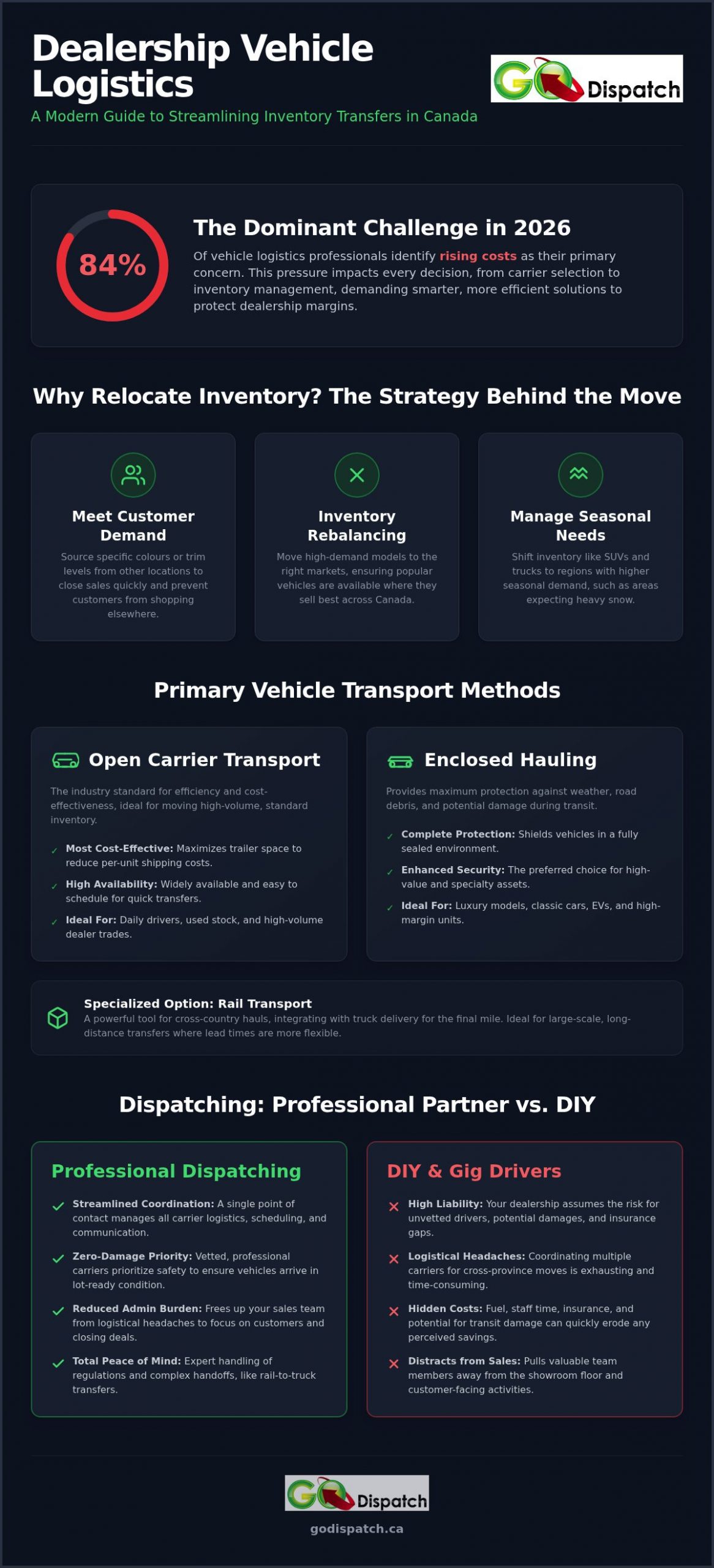
84% of vehicle logistics professionals now identify rising costs as their dominant challenge in 2026. You likely feel this pressure every time you seek reliable dealership vehicle logistics solutions to move inventory between lots. Coordinating multiple carriers for cross-province moves is exhausting. Managing the high liability of gig drivers is even worse. It’s a logistical headache that pulls your team away from the showroom floor. You need a way to protect your margins without risking your vehicles.
We understand that your inventory represents your capital. This guide shows you how to streamline your transfers using professional dispatching that prioritizes safety, speed, and cost-efficiency. You’ll learn how to achieve zero-damage transit and eliminate the administrative burden of organizing trucks and vans. We’ll explore the latest Canadian regulations, including the 2026 standards for interprovincial transport. We explain how a human-centric approach to logistics gives you total peace of mind. It’s time to stop worrying about the road and start focusing on your customers.
Key Takeaways
- Learn why strategic inventory rebalancing is essential for meeting customer demand and maintaining optimal stock levels nationwide.
- Identify the best dealership vehicle logistics solutions by comparing open carrier efficiency with the added protection of enclosed hauling.
- Protect your bottom line by avoiding the hidden costs and high liability associated with DIY driveaway services and unvetted gig drivers.
- Streamline your intake process with best practices for documenting vehicle condition and preparing inventory for safe, professional transit.
- See how a one-stop dispatching partner handles the heavy lifting of carrier coordination so your team can focus on closing sales.
The Logistics of Inventory Relocation: Why Dealerships Move Cars
Dealer-to-dealer transport is the strategic movement of new or used inventory between retail locations to meet specific customer demands. It’s more than just moving a car. It’s about putting the right asset in the right place at the right time. Inventory rebalancing helps Canadian dealerships maintain optimal stock levels across the country. This ensures that high-demand models aren’t sitting idle in one province while customers wait in another.
This process comes with distinct challenges that can impact your bottom line. Timing is the most critical factor. A delay often means a lost sale. You also have to manage transportation costs while ensuring every vehicle arrives in pristine, lot-ready condition. Using professional dealership vehicle logistics solutions ensures that these hurdles don’t eat into your margins. When you understand the different types of auto carriers available, you can better organize moves that protect the vehicle’s paint and interior. Maintaining this condition is vital because any transit damage requires immediate repairs, which delays the unit’s availability for the customer.
Meeting Customer Demand Through Dealer Trades
Closing a sale often depends on sourcing a specific colour or trim level that isn’t currently on your lot. If a customer wants a specific pearl white SUV and you don’t have it, they’ll shop elsewhere. Speed is your best tool to prevent this. Professional transport acts as the backbone of these trades. It moves vehicles quickly so you can finalize the paperwork before the buyer changes their mind. Effective dealership vehicle logistics solutions transform a potential “no” into a signed contract.
Managing Seasonal Inventory Fluctuations
Canadian weather dictates what sells. Moving SUVs and trucks to regions facing heavy snow or higher rural demand is a smart move. Bulk transport offers significant logistical benefits for these large-scale inventory shifts. It allows you to move multiple units at once for better efficiency and reduced administrative work. It ensures your lot reflects what your local market actually needs right now. Inventory relocation is a strategic tool for dealership profitability.
Primary Methods to Transport Cars Between Dealerships
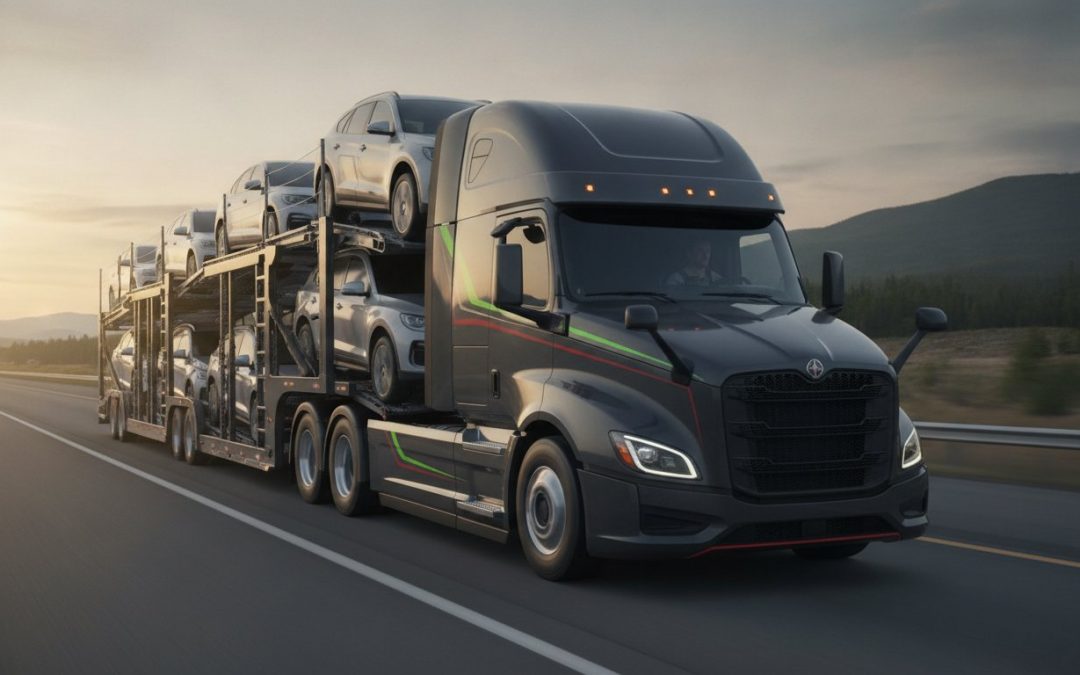
Open carrier transport is the workhorse of the automotive industry. It’s the most common and cost-effective method for moving standard dealership inventory. Most dealerships choose this for high-volume transfers because it maximizes trailer space and reduces the per-unit cost. These carriers are highly visible and easy to schedule. They’re the go-to choice for moving daily drivers and used stock quickly across the country.
Enclosed hauling is the preferred choice for high-value, luxury, or specialty vehicles. It provides a physical barrier against road debris, dust, and Canadian weather. For high-margin units, the added protection is a smart investment. Multi-car carriers maximize efficiency by moving several units at once, which is the primary goal for most dealership vehicle logistics solutions. If you have oversized trucks or vans that don’t fit on standard racks, specialized flatbed services provide the necessary clearance and weight capacity.
Open vs. Enclosed Hauling for Dealer Stock
Open-air transport is ideal for daily inventory moves. It’s fast, efficient, and readily available. However, luxury vehicles or electric vehicles with sensitive finishes deserve a higher level of care. Enclosed solutions shield these assets from the elements during long hauls. You can read more about Open vs. Enclosed Car Hauling: Making the Right Choice to see which method fits your current shipment. Professional carriers must adhere to strict safety standards, including FMCSA regulations, to ensure every vehicle is secured correctly regardless of the trailer type. If you’re looking for a reliable partner to manage these details, one-stop dispatching simplifies the entire process.
The Role of Rail in Long-Distance Transfers
Rail transport is a powerful tool for cross-country hauls. It often integrates with truck delivery for the final mile. This hybrid approach helps manage costs over thousands of kilometres. Lead times for rail in Canada are generally longer than road-only transport. You should expect extra time for processing at rail yards and terminal transfers. A professional dispatch service is essential here. They coordinate the complex rail-to-truck handoffs so your cars don’t sit in a yard for weeks. This level of coordination ensures your dealership vehicle logistics solutions remain timely and cost-effective.
Professional Dispatching vs. DIY: Choosing the Most Efficient Route
Deciding how to move inventory often feels like a choice between cost and convenience. Many dealerships consider driveaway services or gig drivers to save money on short hauls. However, the hidden costs of DIY transport quickly accumulate. You have to account for fuel, meals, and overnight stays for drivers. There’s also the unavoidable wear and tear on the vehicle. Understanding logistics at a deeper level reveals that these small expenses often exceed the price of a professional carrier. Efficiency is about more than just the lowest initial quote; it’s about protecting the asset’s value.
Customers expect their new vehicles to arrive with delivery mileage only. When you drive a car across provinces, you’re adding thousands of kilometres before the buyer even sits in the driver’s seat. This significantly reduces the resale value and can even sour a deal. Using dealership vehicle logistics solutions that utilize trailers ensures the odometer stays low. It keeps the vehicle in “new” condition. Administrative efficiency also improves when you have one point of contact rather than managing a fleet of individual drivers.
The Risks of Driveaway and Gig Services
Gig economy platforms might offer cheap rates, but they carry massive liabilities. Most gig drivers don’t have the specialized commercial insurance required to protect dealership inventory. If an accident occurs or a mechanical issue arises mid-trip, your dealership is often left holding the bill. Professional carriers provide superior protection because their business depends on maintaining high safety ratings and valid cargo insurance. It’s not worth the risk to save a few dollars when your entire asset is on the line. Long-distance drives also increase the potential for road-salt damage or stone chips during the winter months.
Why Professional Dispatching Saves Time
Managing individual drivers is an administrative nightmare. You have to track locations, verify insurance, and handle multiple invoices. A one-stop dispatch service provides a single point of contact for all your moves. Dispatchers do the heavy lifting by vetting every carrier in their network. They check safety records and ensure insurance policies are active and sufficient. This level of oversight is a core part of Dealership Auto Transport Logistics: The Power of Professional Auto Carrier Dispatch. It frees your team to focus on sales rather than chasing down truck drivers. When you choose professional dealership vehicle logistics solutions, you’re investing in reliability and administrative ease.
Best Practices for Streamlining Your Inventory Transfers
Efficiency starts before the trailer arrives on your lot. A well-organized transfer process protects your assets and keeps your team focused on sales. Implementing standardized dealership vehicle logistics solutions ensures that every move is documented and secure. Start by verifying carrier credentials the moment they arrive. Check the driver’s ID and ensure the equipment matches the dispatch order before handing over any keys. This simple step prevents unauthorized pickups and ensures your vehicles stay in professional hands.
Preparation is equally vital. Every vehicle must be ready for immediate loading to keep the schedule on track. Clear out all personal items, dealer plates, and loose documents from the cabin. This prevents loss and allows the driver to focus on a safe load-in. A clean vehicle also makes it easier to spot existing paint chips or dents during the initial inspection. When you eliminate these small delays, you create a faster and more reliable transport cycle for your entire inventory.
The Importance of the Bill of Lading
The Bill of Lading (BOL) serves as your primary defense against damage claims. Perform a thorough walk-around inspection with the carrier driver at both pickup and delivery. Use high-resolution digital photos to document the vehicle’s condition from every angle. These photos supplement the written BOL and provide undeniable proof for insurance purposes if a dispute arises. The BOL is the most critical legal document in transport. Always ensure both parties sign and date the document before the truck leaves your property.
Scheduling for Minimum Disruption
A large car carrier needs significant room to operate safely. Coordinate with your service and sales teams to ensure the loading zone is clear before the carrier’s arrival window. This prevents lot congestion and keeps your customer parking accessible. Providing a dedicated space for loading and unloading reduces the risk of accidental collisions on your property. For more insights on managing these timelines, consult our Vehicle Delivery Logistics in Canada: A 2026 Strategic Guide. Proper scheduling ensures that your dealership vehicle logistics solutions don’t interfere with daily operations. If you want to eliminate the stress of coordinating these windows yourself, book your next transport with GO Dispatch today.
Optimizing Your Dealer Trades with GO Dispatch
GO Dispatch acts as your dedicated logistics department, providing a human-centric approach to complex transport needs. We connect your lot with a national network of vetted carriers specializing in car, truck, SUV, and van transport. This isn’t just about moving a vehicle from point A to point B. It’s about providing dealership vehicle logistics solutions that prioritize your time and your inventory’s safety. Our team handles the heavy lifting behind the scenes so your staff can stay focused on closing deals and serving local buyers.
A Partner in Your Dealership’s Growth
Outsourcing your dispatching needs significantly reduces internal administrative overhead. You no longer need to spend hours on the phone vetting individual drivers or tracking down insurance certificates. We manage those details for you. Our process ensures that every carrier meets strict safety and insurance standards before they ever arrive at your gate. This professional selection process provides immediate peace of mind. It allows you to scale your inventory rebalancing efforts without adding to your team’s workload. GO Dispatch is the preferred choice for Canadian dealers who value reliability and high-capacity support. We understand that a streamlined supply chain is a competitive advantage in today’s market. By choosing professional dealership vehicle logistics solutions, you turn a potential cost centre into a driver of growth.
Getting Started with Professional Hauling
Booking your first transport move is a straightforward and efficient process. We’ve designed our system to be as direct as possible to match the speed of the automotive industry. To get started, you simply need to provide the vehicle’s year, make, and model, along with the VIN for tracking. We’ll also need the exact pickup and delivery locations and your preferred timing for the move. Once we have these details, our human experts go to work immediately. We match your load with a professional carrier that fits your specific needs, whether you’re moving a single luxury sedan or a fleet of heavy-duty trucks. We provide clear communication throughout the entire journey, ensuring you’re never left wondering about the status of your inventory. Ready to experience a more efficient way to manage your dealer trades? Contact GO Dispatch today to streamline your dealership transport!
Secure Your Dealership’s Competitive Edge
Managing dealer trades shouldn’t be a source of daily stress. By moving away from high-risk gig drivers and adopting professional dealership vehicle logistics solutions, you protect both your margins and your vehicles’ resale value. You now have the tools to streamline your intake with thorough documentation and strategic scheduling. These steps ensure your inventory remains in lot-ready condition without the hidden costs of added mileage or transit wear. Reliable transport is the backbone of a profitable showroom.
GO Dispatch provides a specialized one-stop dispatching service that handles the complex coordination of your moves. Our expertly managed national carrier network offers comprehensive transport for cars, trucks, and SUVs across Canada. We take the administrative burden off your desk so you can focus on closing sales. It’s time to simplify your supply chain with a partner that prioritizes human connection and professional reliability. Your inventory is your capital; we treat it with the respect it deserves.
Ready to move inventory? Get a professional dispatch quote from GO Dispatch!
Take the first step toward a more efficient lot today.
Frequently Asked Questions
How long does it typically take to transport a car between dealerships?
Transport times depend on the distance and the type of equipment used. Local moves often take 1 to 3 business days from pickup. Cross-province hauls can range from 5 to 10 days depending on weather and route efficiency. Our dealership vehicle logistics solutions focus on minimizing downtime by matching your load with the most direct carrier available. We always provide a realistic window so your team can plan for the arrival.
Are vehicles insured during the transport process?
Every vehicle is covered by the carrier’s cargo insurance policy during transit. Professional dispatching services vet carriers to ensure they maintain active, high-limit coverage that meets 2026 industry standards. We verify these documents before any pickup occurs. This gives you peace of mind that your capital is protected against unforeseen accidents or road hazards. Always review the carrier’s specific policy limits for high-value luxury units before shipping.
Is it cheaper to have someone drive the car or use a carrier?
Using a professional carrier is almost always more cost-effective than driveaway services. While a gig driver might have a lower upfront fee, you must account for fuel, meals, and overnight accommodation. You also face significant depreciation from added mileage and mechanical wear. Carriers allow you to move inventory without devaluing the asset. It’s a strategic choice that protects your bottom line while keeping your odometer readings low for the end customer.
What documents are required for cross-province dealership transport?
You primarily need a detailed Bill of Lading and proof of insurance for the vehicle. Cross-province moves in Canada may also require specific transport permits or registration documents depending on the destination’s regulations. It’s important to have the vehicle’s keys and any necessary gate passes ready for the driver. Our dispatchers help you organize these requirements in advance to ensure the truck isn’t delayed at the lot or during provincial inspections.
Can I ship multiple vehicles from different locations at once?
Yes, you can easily coordinate shipments from multiple locations simultaneously. One-stop dispatching is designed to handle complex logistics where inventory is sourced from various partner lots. We manage the scheduling for each pickup point so you don’t have to call multiple drivers yourself. This centralized approach reduces your administrative workload and ensures all units arrive within your required timeframe. It’s the most efficient way to rebalance your national stock levels.
How do I prepare a vehicle for professional hauling?
Start by giving the vehicle a quick wash so the carrier can accurately document its condition. Remove all personal items, loose change, and dealer plates from the interior. We recommend keeping the fuel tank at about a quarter full to reduce weight while allowing for loading and unloading. Disable any aftermarket alarm systems to prevent battery drain during the journey. These simple steps ensure a smooth handoff and help maintain lot-ready condition.
What happens if a vehicle is damaged during transit?
You must document any new damage on the Bill of Lading immediately upon delivery. Take clear, high-resolution photos of the affected areas before the driver leaves your lot. This documentation is essential for filing a successful claim with the carrier’s insurance provider. Our team provides support throughout this process by helping you communicate with the carrier and their insurers. Prompt reporting is the key to resolving transit issues and securing the necessary repairs.
Can GO Dispatch handle oversized trucks and commercial vans?
We provide comprehensive transport for oversized trucks, commercial vans, and heavy-duty SUVs. Standard car carriers can’t always accommodate these larger units due to height or weight restrictions. We utilize specialized dealership vehicle logistics solutions like flatbeds and heavy-duty trailers to move your commercial inventory safely. Whether you’re moving a single work van or a fleet of pickups, we have the capacity and equipment to handle the job professionally across Canada.