
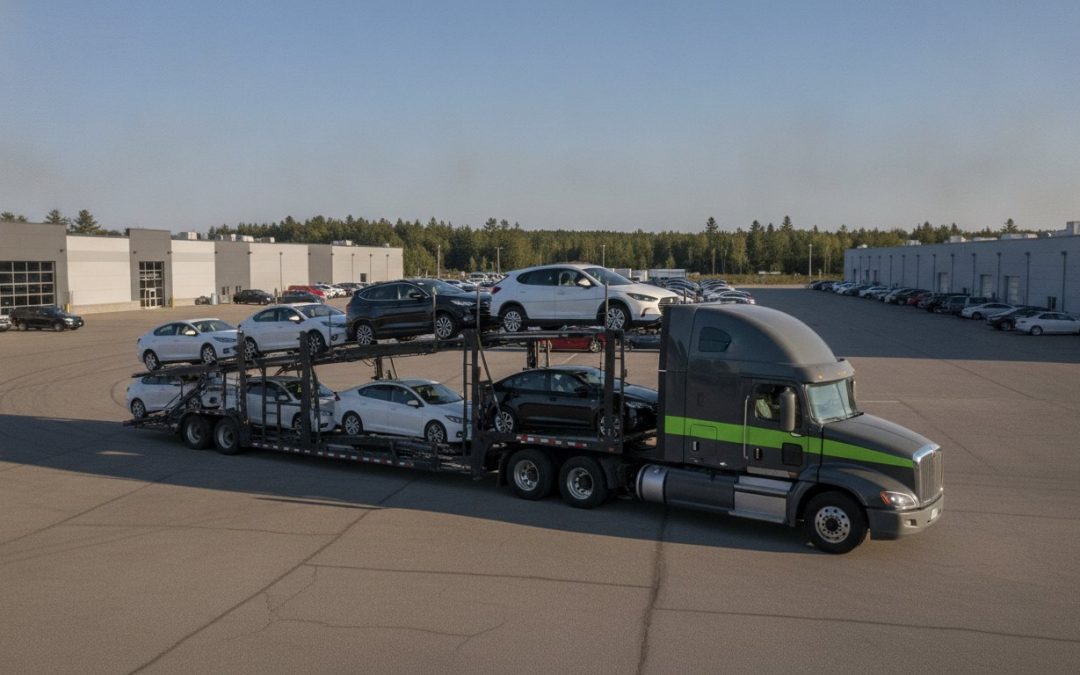
Every minute your auction win sits on a storage lot is money leaking from your dealership’s bottom line. You’ve done the hard work of winning the bid, but now the real headache begins. Managing auction to dealership vehicle transport shouldn’t feel like a second job. You’re likely tired of tracking down gate passes or worrying about auction storage fees that can reach $75 per day. It’s frustrating to realize that your inventory is stuck behind red tape while your floor plan interest continues to climb.
We agree that the logistics of moving cars shouldn’t stand in the way of your sales. This guide promises to help you master your inventory pipeline with professional dispatch solutions that prioritize both speed and security. You’ll learn how to eliminate pickup delays, stabilize your transport costs, and finally enjoy a hands-off management process from the auction gavel to your lot. We’ll show you how to streamline the entire release and delivery cycle so you can focus on what you do best: selling vehicles.
Key Takeaways
- Stop the drain on your profits by avoiding daily auction storage fees and mounting floor plan interest.
- Determine the most cost-effective hauling methods to protect your margins on every unit in your inventory.
- Master the logistics of auction to dealership vehicle transport to keep your pipeline moving without the manual scheduling headache.
- Ensure a seamless vehicle release by using a professional checklist to organize gate codes and payment verification.
- Leverage a one-stop dispatching solution that handles everything from compact cars to heavy-duty trucks nationwide.
The Critical Link Between Auction Gavel and Dealership Lot
Winning a bid is just the beginning of the journey. The real work starts the moment the gavel drops and the clock begins ticking. Specialized auction to dealership vehicle transport is the vital link that turns a purchase into a profit. It isn’t just about moving a car from point A to point B. It involves navigating the specific, often rigid rules of auto auctions to ensure your assets don’t get stuck in logistical limbo. This category of logistics requires a high level of coordination to bridge the gap between a successful bid and a retail-ready lot.
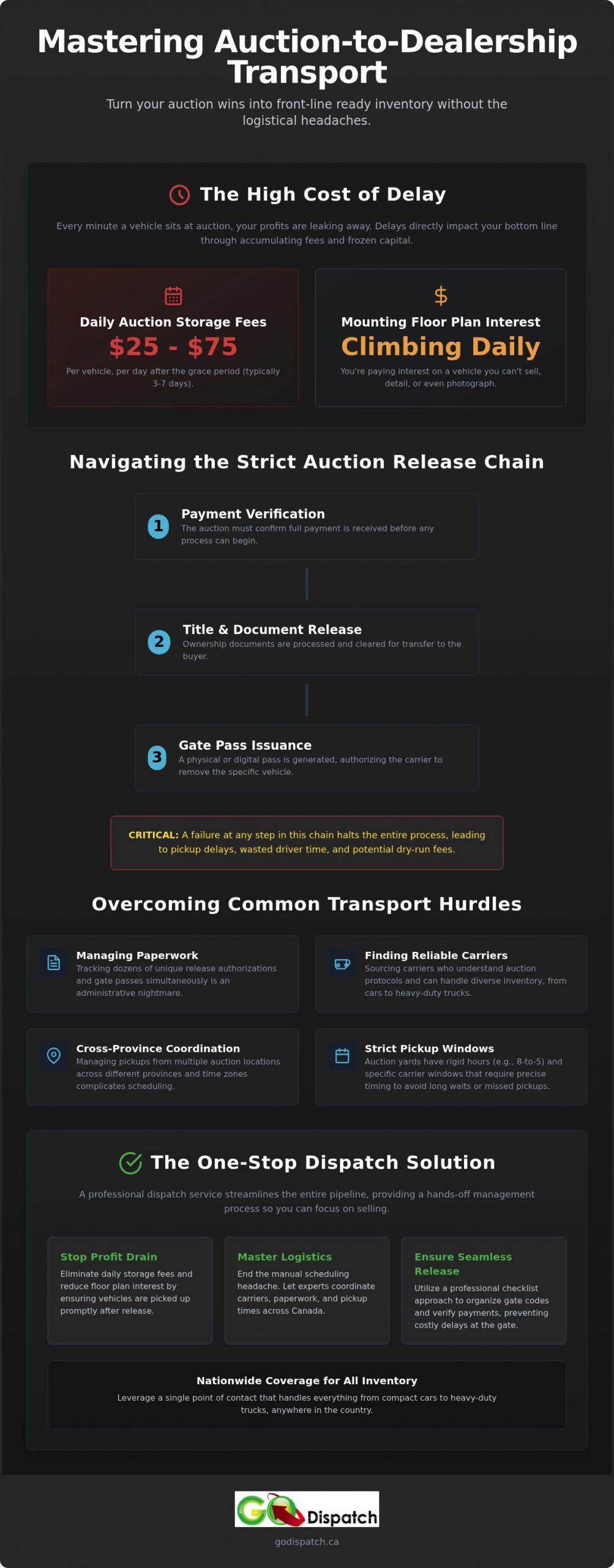
Speed directly impacts your dealership’s cash flow. When inventory sits on an auction lot, your capital is frozen in place. You’re likely paying floor plan interest on a vehicle you can’t even show to a customer yet. Delays also trigger immediate financial penalties. In Canada, daily auction storage fees usually kick in after a 3 to 7-day grace period. Paying $25 to $75 per day in storage is a fast way to erode your margins. A professional dispatch service acts as an essential bridge. It ensures your vehicles move before those fees start piling up, protecting your bottom line from unnecessary drain.
Why Timing is Everything in Auction Logistics
Your “days to lot” metric is a key indicator of your business health. Efficient auction to dealership vehicle transport ensures your reconditioning schedule stays on track. Every day a vehicle spends in transit is a day it isn’t in your service centre. You can’t detail it, photograph it, or list it online until it physically arrives. Reducing the window between the hammer fall and the customer test drive is essential for modern dealers. Faster transport means faster turnover. It keeps your inventory fresh and your sales team moving.
The Challenges of Modern Inventory Relocation
Managing purchases from multiple auction locations creates a massive administrative burden for any manager. Sourcing reliable carriers for specific national lanes across Canada is difficult and time-consuming. Standard car hauling services often struggle with the unique requirements of auction yards. They might not understand how to handle gate passes or verify vehicle release status properly. These hurdles include:
- Tracking release authorizations for dozens of individual units simultaneously.
- Finding carriers capable of handling everything from compact cars to heavy-duty trucks.
- Coordinating pickups across different provinces and time zones.
- Managing the paperwork required for a smooth exit from the auction yard.
These hurdles can quickly overwhelm a busy dealership. You need a partner who handles the behind-the-scenes complexity. A one-stop dispatch solution simplifies this entire pipeline, providing the human connection needed to organize moves and solve problems in real time. It allows you to step away from the phone and focus on selling cars.
Navigating the Logistics of Canadian Auto Auctions
Every Canadian auction site, from Adesa to Manheim, operates with its own specific set of rules. Successfully managing auction to dealership vehicle transport requires more than just a truck; it requires a deep understanding of how these facilities manage inventory. The process follows a strict sequence: payment verification, title release, and gate pass issuance. If one link in this chain breaks, your carrier sits idling at the gate. This leads to wasted time and potential dry-run fees that eat into your profit margins.
Securing the Gate Pass and Release Paperwork
Paperwork errors are the primary cause of pickup delays. A carrier cannot simply show up and claim a vehicle. They need a valid gate pass or release authorization that matches the VIN and the buyer’s information exactly. According to the National Auto Auction Association, standardized protocols help, but local variations still exist across different Canadian facilities. Common mistakes include outdated release codes or incorrect dealership names on the paperwork. We take the lead on this coordination. By managing the documentation on your behalf, we ensure the carrier has everything needed before they arrive at the yard. If you want to simplify your transport paperwork, a professional dispatcher is your best asset.
Auction Pickup Windows and Carrier Coordination
Auction yards don’t operate 24/7. Most maintain strict 8-to-5 schedules, and many have specific windows for carrier entry that change on sale days. Long wait times are common, especially during peak seasons. A dispatcher’s job is to verify vehicle availability before a carrier is sent. This prevents situations where a driver arrives only to find the vehicle hasn’t been processed or cleared for release. Carriers must also be equipped for the site requirements. Some yards require specific safety gear or certain trailer types for entry. We manage these details so your driver isn’t turned away at the gate.
Buying salvage or wholesale often means dealing with inoperable units. These vehicles require specialized equipment like winches or forklifts for loading. Transporting a non-operable vehicle from an auction typically adds $150 to $300 to your total shipping cost due to the extra equipment and labour involved. Coordination is even more critical here. The auction yard needs to know when to bring out the heavy equipment, and the carrier needs to be prepared to load a car that doesn’t move under its own power. Managing these moving parts is what keeps your auction to dealership vehicle transport pipeline flowing smoothly across the country.
Choosing the Right Transport Method for Your Inventory
Selecting the right trailer type is a commercial decision that directly affects your profit per unit. Not every auction win requires the same level of care, but every win requires a reliable move. Whether you’re moving a single luxury sedan or a fleet of heavy-duty work trucks, your choice of auction to dealership vehicle transport method should align with your budget and the vehicle’s value. Understanding these options is a core part of mastering vehicle delivery logistics canada.
Open vs. Enclosed Hauling: A Dealer’s Perspective
Open-carrier transport is the workhorse of the industry. It’s the most cost-effective way to move standard lot inventory. Most dealerships rely on this method for its high availability and speed. Current market data suggests open carrier transport averages $0.70 to $0.90 per mile. However, enclosed transport becomes a necessity for high-value, classic, or luxury vehicles. It protects the asset from road debris and harsh Canadian weather. While enclosed rates are higher, ranging from $1.40 to $2.00 per mile, the peace of mind for a high-end inventory item is often worth the investment. We help you balance these costs to ensure you aren’t overpaying for protection you don’t need.
Batch Shipping and Multi-Vehicle Logistics
Moving vehicles one by one is expensive. To truly optimize your pipeline, you need to leverage volume. Multi-car loads allow you to spread the transport cost across several units, significantly reducing your per-unit expenses. If you have several wins at the same auction house, coordinating a single pickup is much more efficient than managing multiple individual carriers. This approach minimizes administrative work and gets more inventory on your lot simultaneously.
A professional dispatcher finds backhaul opportunities that individual dealers often miss. These are routes where a carrier is returning empty and will offer a lower rate to fill their trailer. This strategy is especially effective for auction to dealership vehicle transport involving larger units. Trucks, SUVs, and vans have different weight and height requirements that impact trailer space. We source carriers with the specific equipment needed to handle these larger vehicles safely. This specialized approach ensures your heavy-duty inventory arrives without damage or delays, regardless of the vehicle’s size or configuration.
Streamlining the Release Process: A Dealer’s Checklist
Winning at auction is only half the battle. The other half is ensuring your auction to dealership vehicle transport doesn’t hit a wall due to simple administrative oversights. A structured internal process is the best way to keep your inventory moving. You need a clear sequence of actions that begins the moment you receive your invoice. This prevents your staff from wasting hours on the phone and keeps your carriers on the road.
Start by verifying that payment has cleared and the auction has officially released the unit. Never assume the release is automatic. Once confirmed, provide your dispatcher with every piece of information they need immediately. This includes the buyer number, the last six digits of the VIN, and any specific gate codes provided by the auction house. This proactive approach prevents carriers from arriving at a locked gate or a vehicle that isn’t ready for pickup. To keep your lot full and your staff focused, you can outsource your dispatch coordination to experts who handle these details for you.
Preparing for a Smooth Vehicle Handover
You must ensure the vehicle’s condition matches the original auction report. This begins with the Bill of Lading (BOL). The BOL is the most critical piece of paperwork in dealership auto transport logistics. It serves as your receipt and your primary evidence if a damage claim is necessary. Your carrier should perform a thorough inspection at the auction yard before loading. Any existing damage should be noted clearly on the BOL to protect your interest. This document is the foundation of a professional handover.
Managing Post-Delivery Inspections and Claims
The arrival of the truck at your lot should trigger an immediate inspection protocol. Don’t let the driver leave until your staff has walked around the vehicle. Compare the current state to the BOL notes from the pickup. If you find a new discrepancy, document it with high-resolution photos immediately. This standard practice ensures accountability throughout the entire journey.
Insurance plays a vital role in this process. Professional dispatchers only work with carriers who maintain proper cargo insurance. This protects your investment during the auction to dealership vehicle transport journey. Having this safety net allows your team to move the vehicle into the reconditioning bay with confidence. The goal is to have the car ready for sale quickly, not sitting in a corner waiting for a claim to be filed. Finally, set up status alerts for your sales team. When they know exactly when a high-demand unit arrives, they can pre-sell inventory and increase your turnover rate.
How GO Dispatch Optimizes Your Auction-to-Dealer Pipeline
GO Dispatch acts as your dedicated facilitator in a complex industry. We don’t just find a truck; we manage the entire lifecycle of your auction to dealership vehicle transport. By serving as the central point of contact for cars, trucks, SUVs, and vans, we provide a one-stop solution that eliminates the need for you to manage multiple carriers. Our model is built to remove the logistical burden from your shoulders so you can focus on your showroom floor.
Professional Dispatching as an Outsourced Advantage
Dealership staff should spend their time selling cars, not chasing transport updates. Outsourcing your logistics allows your team to focus on their core business while we handle the heavy lifting. We provide access to a verified network of professional carriers across Canada. This national reach ensures we can find the right equipment for any vehicle type, from compact units to heavy-duty work trucks. Using a professional car hauling dispatch service transforms a variable headache into a predictable, managed process. It provides the high capacity you need with the personal touch you expect.
The Human Touch in National Vehicle Hauling
In an industry increasingly dominated by cold, automated platforms, we believe in human connection. An algorithm can’t talk to an auction manager about a missing gate pass. It won’t proactively call you to discuss a winter storm delay or a holdup at the auction house. Our team provides proactive problem-solving for every move. We verify vehicle availability, coordinate with yard staff, and stay in constant contact with drivers to ensure timelines are met.
This human-centric approach ensures that your auction to dealership vehicle transport remains secure and efficient. We take pride in being the proactive partner that works behind the scenes. This allows you to maintain a steady flow of inventory without the daily stress of logistics coordination. Our focus is on reliability and peace of mind. When you partner with us, you aren’t just getting a dispatch service; you’re getting a dedicated logistics arm for your dealership. Simplify your national inventory moves today and experience the difference of a truly streamlined pipeline.
Take Control of Your Inventory Pipeline Today
A streamlined approach to auction to dealership vehicle transport protects your margins. By mastering the release process and choosing the right hauling methods, you eliminate the hidden costs of storage fees and floor plan interest. You deserve a logistics partner that understands the urgency of a sale day and moves with the same speed as your business. Coordination shouldn’t be your burden.
We provide a one-stop national dispatching service that takes the stress out of moving cars, trucks, SUVs, and vans. Our team handles the comprehensive carrier vetting and insurance verification required to keep your assets safe. We prioritize the human connection to ensure every gate pass is cleared and every delivery is on schedule. Our national network is ready to support your growth from coast to coast.
Stop spending your valuable hours on hold with auction yards or carriers. Let our experts handle the coordination while you focus on your customers. Get a Quote for Your Auction Transport Needs and discover how simple national logistics can be. We’re ready to help you move more inventory with total confidence.
Frequently Asked Questions
How long does it typically take to pick up a vehicle from an auction?
Pickup usually happens within 2 to 5 business days after the auction yard clears your payment. This timeline depends on the carrier’s schedule and the auction’s specific operating hours. Sale days can often cause delays due to high volume at the gate. We work to minimize this wait by verifying the vehicle’s release status before the driver arrives. This proactive coordination helps you avoid unnecessary storage fees and keeps your inventory moving.
What paperwork do I need to provide to GO Dispatch for an auction pickup?
You need to provide the last six digits of the VIN, your buyer ID number, and the official gate pass or release authorization. Accurate paperwork is the most critical part of auction to dealership vehicle transport. Without these documents, the auction yard will not allow the carrier to enter or load the vehicle. We manage these details for you to ensure a seamless transition from the auction lot to your dealership.
Can you transport multiple vehicles from different auctions on the same trailer?
We can certainly coordinate multi-stop loads that pick up vehicles from different auction houses. This strategy is an excellent way to reduce your per-unit shipping costs by filling a single trailer. While it might add a small amount of time to the transit schedule, the savings on logistics often outweigh the delay. Our dispatchers specialize in finding the most efficient routes to maximize your transport budget.
What happens if a vehicle won at auction is inoperable or won’t start?
Inoperable vehicles require specialized equipment like a winch or a forklift for loading and unloading. You should notify us immediately if a vehicle doesn’t start or has mechanical issues. Transporting a non-operable unit typically adds between $150 and $300 to the total cost because it requires extra labour and specific trailer capabilities. We ensure the assigned carrier is prepared to handle these salvage or wholesale units safely.
Are vehicles insured while being transported from the auction to my lot?
Every carrier in our network is thoroughly vetted to ensure they carry valid cargo insurance. This coverage protects your vehicle against damage during the auction to dealership vehicle transport journey. We verify these insurance documents personally before assigning any load to a driver. This provides you with peace of mind knowing that your investment is protected from the moment it leaves the auction yard until it arrives at your lot.
How are auction transport brokerage fees calculated?
Transport fees are determined by the distance of the haul, the size of the vehicle, and the current demand for that specific lane. Larger vehicles like heavy-duty trucks or commercial vans cost more because they take up more space and weight on a trailer. We provide transparent pricing based on these market factors. Our goal is to offer predictable costs that allow you to maintain your profit margins on every unit.
Can you coordinate deliveries to reconditioning centres instead of the main lot?
We can deliver your inventory directly to a reconditioning centre or any other third-party facility you specify. Many dealerships prefer to have vehicles detailed or serviced before they ever reach the main sales lot. Just provide the specific address and a contact person at the destination during the booking process. We coordinate the timing with the facility to ensure a smooth drop-off that fits your service schedule.
Do you handle transport for oversized trucks or commercial vans bought at auction?
Our dispatching service handles all vehicle types, including oversized trucks, SUVs, and commercial vans. These larger units require specific trailers and experienced drivers who understand height and weight restrictions across Canadian highways. We source carriers with the right equipment to move these heavy-duty assets safely. Whether you bought a single cargo van or a fleet of work trucks, we have the capacity to manage the move.