
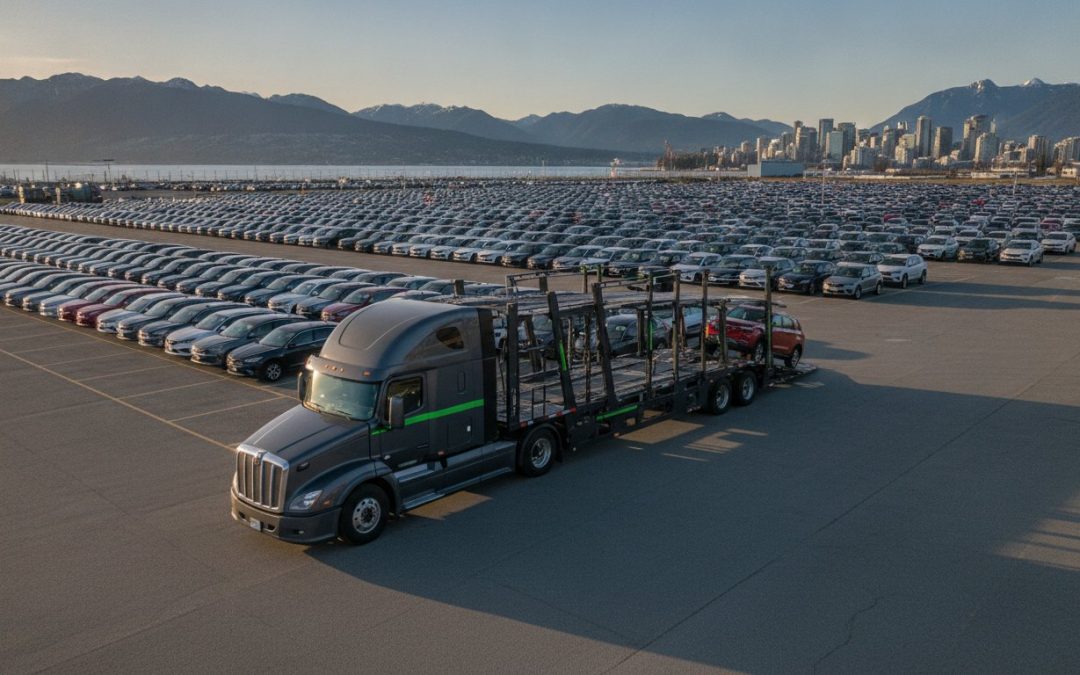
Why pay a premium for door-to-door delivery when your vehicle could be waiting for you at a secure hub for a fraction of the price? Moving a car across Canada is often a logistical headache, especially when you’re juggling a busy schedule and rising fuel surcharges. You want your vehicle safe, but you don’t want to pay for unnecessary surcharges that don’t fit your budget. We understand that coordinating pick-up times with carriers can feel like a full-time job.
This 2026 guide will help you master terminal to terminal car shipping to slash your transport fees and take total control of your drop-off timeline. By choosing the right logistics partner, you can turn a complex cross-country move into a streamlined process. You’ll learn how to navigate terminal security, avoid unexpected storage fees, and leverage professional dispatching to keep your move on track. We’ll show you how to reduce your workload while ensuring your car, truck, or SUV arrives exactly when you need it. Let’s look at how strategic terminal use can simplify your transport needs this year.
Key Takeaways
- Understand how terminal to terminal car shipping lowers your total transport investment through strategic hub-based solutions.
- Master the logistics of vehicle drop-off and why the Bill of Lading is your most essential document for a secure move.
- Identify when terminal shipping outperforms door-to-door delivery for better budget control and easier logistical access.
- Follow the exact preparation steps required by terminals, including cleaning protocols and strict fuel level mandates.
- Discover how professional dispatching simplifies carrier vetting and guarantees your vehicle reaches its destination safely.
Understanding Terminal to Terminal Car Shipping in the Canadian Market
Terminal to terminal car shipping is a transport method where vehicles move between designated secure hubs rather than residential addresses. This approach serves as the backbone of the Canadian logistics industry. It allows carriers to focus on high-volume routes without the delays of navigating narrow suburban streets. For many, working with a professional Auto transport broker is the first step to accessing this network. These hubs act as central consolidation points for national carriers, making the entire process more predictable and efficient.
This method is the primary choice for dealership inventory and large-scale fleet relocations across the provinces. It keeps logistics simple. Instead of a driver making ten separate residential stops, they make one stop at a secure facility. The primary distinction between terminal and door-to-door service is the “last-mile” delivery. In terminal shipping, you handle the first and last leg. The carrier focuses entirely on the long-haul transit between major Canadian centres.
The Economic Advantage of Consolidation
Carriers reduce fuel and labour costs by avoiding residential areas. Navigating a 75-foot car hauler through a tight cul-de-sac is expensive and slow. When carriers bypass these obstacles, they pass the savings to you through lower brokerage fees. Consolidation is the practice of grouping multiple vehicles for high-efficiency long-haul routes. This efficiency is why rail transport often becomes a competitive option for routes over 1,500 kilometres. It’s a direct cause-and-effect relationship: higher efficiency leads to lower prices for the end user.
Flexibility for Busy Schedules
You don’t have to wait around. Traditional delivery often requires you to be home for a specific four-hour window. Terminal shipping eliminates that stress entirely. The terminal acts as a temporary staging area for your logistics chain. You drop off the vehicle when it’s convenient for your schedule. You pick it up when you’re ready. It’s an ideal solution for clients who can’t be present for a residential delivery or those moving to remote areas where large transport trucks simply cannot go. Reliability shouldn’t depend on your ability to take a day off work to meet a driver.
The Logistics Chain: How Terminal Shipping Works Across Canada
Successful terminal to terminal car shipping relies on a precise sequence of events. It starts with expert dispatching. We source carriers that specifically service high-traffic terminal corridors to ensure your vehicle doesn’t sit idle. This coordination reduces the time your car spends in a staging area and gets it on the road faster. Every step is designed to maximize efficiency while keeping your costs low.
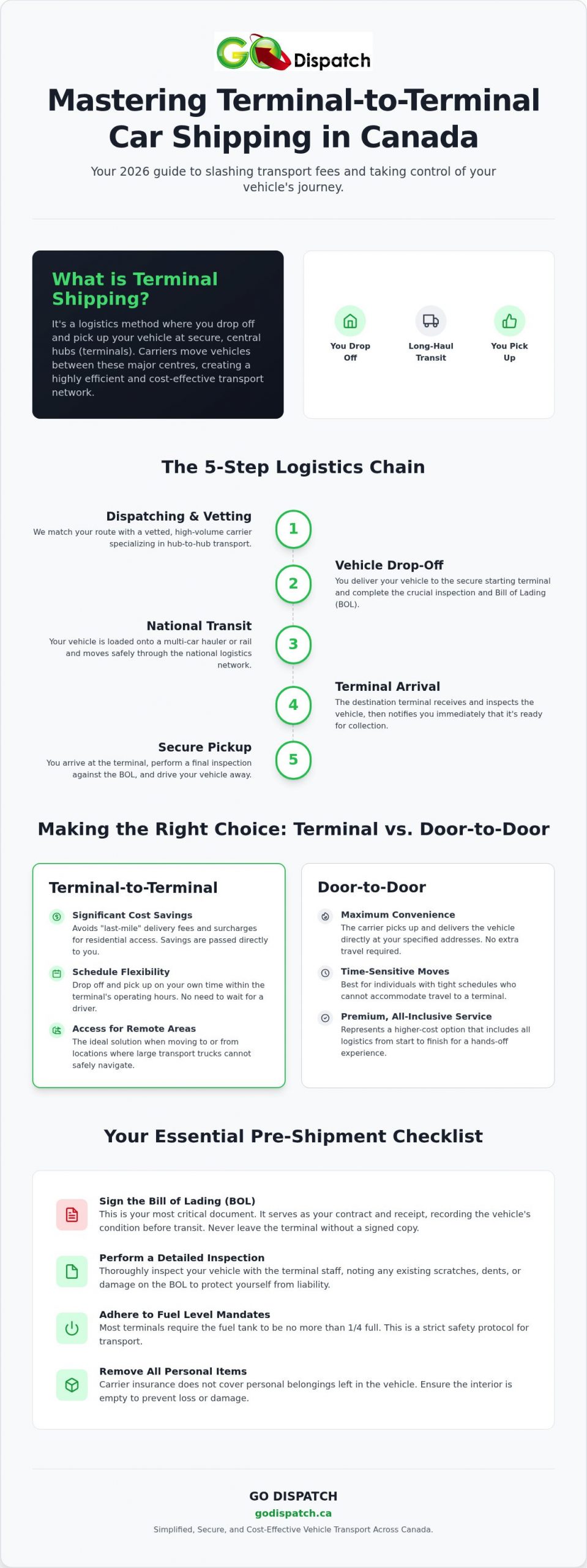
The process follows five clear steps:
- Step 1: Dispatching. We match your route with a vetted carrier specializing in hub-to-hub transport.
- Step 2: Drop-off. You deliver the vehicle to the starting terminal and complete a detailed inspection.
- Step 3: Transit. Your vehicle moves through the national network on a dedicated transport truck or rail line.
- Step 4: Arrival. The destination terminal receives the vehicle and notifies you immediately.
- Step 5: Pickup. You perform a final inspection and collect your vehicle within the allowed grace period.
The Dispatcher’s Role in Route Optimization
Timing is everything in logistics. A professional dispatcher manages the schedule to synchronize carrier arrivals with your drop-off. This minimizes storage fees and prevents delays. At GO DISPATCH, we bridge the gap between the terminal staff and the driver. We handle the technical coordination. This allows you to focus on your move. If you want to simplify your vehicle transport, our team ensures every handoff is seamless and documented. Timing is a critical factor in terminal to terminal car shipping, and we prioritize speed without sacrificing safety.
Vehicle Inspection and Documentation
Your protection starts with paperwork. The initial inspection report at the drop-off point is non-negotiable. It records the exact condition of your car, truck, or SUV before it enters the carrier’s care. The Bill of Lading (BOL) serves as your primary contract and receipt. Never leave a terminal without a signed copy. This document is your proof of condition if any issues arise during transit.
When reviewing your options, follow consumer protection tips to avoid common industry pitfalls. Security at these facilities is high. You’ll leave one set of keys with the staff; they follow strict protocols to keep your vehicle safe until the carrier arrives. This structured approach ensures that whether you’re shipping a van or a sedan, the handoff is professional and secure. We realize that peace of mind is just as important as the transport itself.
Terminal vs. Door-to-Door: Making the Right Strategic Choice
Choosing the right transport method requires more than a quick price check. It’s a strategic decision that affects your budget and your schedule. While terminal to terminal car shipping is often the most cost-effective path, you must account for the total logistics chain. This includes the cost of getting yourself to the hub and any potential storage fees if you miss your pickup window. GO DISPATCH focuses on providing clear options so you can make an informed choice without the stress of hidden surcharges.
Accessibility is a major factor in Canada’s diverse geography. Many residential streets in various Canadian urban centres simply cannot accommodate a full-sized car carrier. If a driver cannot safely reach your front door, they will ask you to meet at a nearby commercial lot. In these cases, using a terminal from the start is often more efficient. It provides a secure, monitored environment that is already integrated into the Canadian auto care sector logistics network. This infrastructure ensures your vehicle is handled by professionals in a facility designed for high-capacity transport.
When to Choose Terminal Shipping
This method is ideal for budget-conscious moves where your timeline has some wiggle room. It is the preferred choice for dealerships moving multiple units of inventory. If you don’t have immediate lot space, the terminal acts as a reliable staging area. It’s also the best option for those living in dense urban centres with strict parking regulations. Terminal to terminal car shipping allows you to drop off your vehicle on your own terms. You don’t have to coordinate with a driver’s unpredictable traffic delays. You simply realize the cost savings and move on with your day.
When Door-to-Door is the Better Investment
There are times when the convenience of home pickup justifies the higher rate. If you’re shipping a non-running vehicle or a high-value classic car, door-to-door service minimizes extra handling. It also saves you the trip to a remote terminal that might be hours away from your actual location. For a deeper look at these specific needs, see our Vehicle Delivery Logistics in Canada: A 2026 Strategic Guide. This resource helps you weigh the benefits of specialized handling against the raw savings of hub-based transport. Whether you choose the terminal or your driveway, GO DISPATCH ensures the coordination is handled by experts who prioritize your vehicle’s safety.
Preparing for Success: Drop-off and Pickup Requirements
Preparation is the foundation of a smooth terminal to terminal car shipping experience. It starts with a thorough cleaning. A clean exterior allows for an accurate pre-shipment inspection. Terminal staff and drivers must see every panel clearly to document the vehicle’s condition. If your car is covered in road salt or mud, you risk an incomplete inspection report. This report is your primary protection if damage occurs during transit. We recommend a professional wash just before your drop-off appointment.
Terminals follow strict safety and weight protocols. You must ensure your vehicle meets these four basic requirements before arrival:
- Fuel Levels: Maintain a maximum of a quarter-tank of fuel. This reduces weight and complies with fire safety regulations.
- Personal Items: Remove all loose items from the cabin and trunk. Carriers are not insured for personal belongings left inside the vehicle.
- Aftermarket Accessories: Remove or secure non-factory items like roof racks, bike carriers, or specialized spoilers.
- Operability: Your vehicle must be in good working order. Staff need to drive it onto the transport trailers without mechanical assistance.
Canadian Seasonal Considerations
Canadian weather presents unique challenges for terminal storage. If your vehicle is moving through hubs in provinces like Alberta or Manitoba during winter, extreme cold is a factor. Check your anti-freeze levels and ensure your battery is in peak health. A vehicle that won’t start at the destination terminal causes logistical delays and may result in extra handling fees. Winter tires should be installed prior to shipping if the destination is in a colder climate. Taking these steps prevents your vehicle from becoming stranded in a staging area due to a dead battery or frozen fluids.
Understanding Storage Grace Periods
Most major Canadian transport hubs offer a short grace period for free storage. This window typically lasts between 24 and 72 hours after the vehicle arrives. Once this period expires, terminals charge daily storage fees that can impact your total budget. We prioritize precise coordination to help you avoid these costs. At GO DISPATCH, we monitor the carrier’s progress and provide updates so you can align your travel with the vehicle’s arrival. If you’re ready to move your car, truck, or van, book your transport dispatch service with our team to ensure a seamless handoff. Realizing the timing of your pickup is the best way to keep your transport costs as low as possible.
Simplifying Your National Vehicle Transport with GO DISPATCH
Managing a cross-country move is a heavy lift. We take that burden off your plate. GO DISPATCH acts as your central hub for terminal to terminal car shipping. We don’t just book a driver. We vet every carrier in our network for active insurance and safety ratings. This one-stop approach saves you from the frustration of calling multiple companies or chasing down paperwork. We handle the vetting so you don’t have to; we ensure your vehicle is always in professional hands.
National logistics are complex. We realize that fuel surcharges and route availability shift constantly across the provinces. Because we maintain a wide network, we can manage brokerage fees to ensure you get competitive pricing without sacrificing reliability. You get the benefit of a high-capacity network without the rigid limitations of a single carrier. We find the most efficient path through the national carrier network to keep your move on budget and on time. It is about providing a stress-relief solution that works for your bottom line.
Direct human support is the core of our service. We avoid the cold, automated systems common in the industry. When you call us, you speak with a professional dispatcher who understands your specific needs. We solve problems in real-time. If a terminal has a delay or a weather system hits the Prairies, we handle the coordination behind the scenes. This proactive problem-solving allows you to focus on your own core business while we manage the heavy lifting. We take pride in being a high-capacity partner that maintains a personal, human-centric approach.
Expertise in All Vehicle Types
Shipping a sedan is one thing, but trucks, SUVs, and vans require specific terminal handling. Larger vehicle dimensions impact trailer space and weight limits. We ensure the right carrier equipment is dispatched for your specific needs. We understand the nuances of terminal to terminal car shipping for oversized units and ensure every unit is secured according to national safety standards. If you are moving a larger vehicle, read our How to Transport a Truck Across Canada: A Professional Logistics Guide for more detailed insights.
Start Your Move Today
Engaging with us is simple. You can reach out via email, our toll-free line, or a direct call. We reduce your daily burden by managing the entire logistics process from the first quote to the final pickup. Our national network is built on safety, efficiency, and a human-centric approach. We act as your proactive partner, allowing you to focus on your family’s relocation or your business goals. Our national network is safe, efficient, and ready to move when you are. Your peace of mind is our primary goal.
Streamline Your Canadian Vehicle Move
You now have the tools to navigate the national logistics network with confidence. Choosing terminal to terminal car shipping is a strategic decision that balances cost-effectiveness with professional security. By mastering the preparation requirements and understanding the logistics chain, you turn a complex task into a manageable process. Our expert logistics management reduces your workload and provides a reliable connection to a vast national carrier network. We take pride in being the facilitator that allows you to focus on your relocation while we handle the heavy lifting.
Reliable transport doesn’t have to be a source of stress. We provide one-stop transport dispatching for cars, trucks, and SUVs to ensure every handoff is seamless. You can realize significant savings and enjoy a more flexible schedule by leveraging our industry expertise. Let us handle the carrier vetting and coordination so you can focus on your move. Contact GO DISPATCH to coordinate your national car shipping today and experience a simpler way to move your vehicle across Canada. Your next journey starts with a secure and efficient transport plan.
Frequently Asked Questions
Is terminal to terminal car shipping actually cheaper than door-to-door?
Yes, terminal to terminal car shipping is generally the most budget-friendly option for national transport. Carriers save significant fuel and labour costs by avoiding residential streets. This efficiency allows them to offer lower base rates to customers. You avoid the surcharges typically associated with door-to-door delivery, though you must factor in your own travel to the hub. It’s a strategic choice for those prioritizing cost savings.
How long can my vehicle stay at the terminal before fees apply?
Most Canadian terminals provide a grace period of 24 to 72 hours once your vehicle arrives. After this window, daily storage fees apply. These fees vary by location and facility capacity. We prioritize proactive coordination to ensure you’re notified the moment your vehicle is ready for pickup. It’s best to plan your arrival within the first two days to avoid any unexpected surcharges on your final transport bill.
Can I ship a non-running vehicle using terminal-to-terminal services?
No, terminal shipping typically requires the vehicle to be in operable condition. Terminal staff must be able to drive the car, truck, or SUV onto the transport trailers and move it within the staging area. If your vehicle doesn’t start or steer, door-to-door service with a specialized winch is the necessary alternative. Always verify your vehicle’s mechanical health before booking a terminal-based route to ensure a smooth handoff.
What documents do I need to provide at the terminal drop-off?
You must provide the vehicle’s valid registration, proof of active insurance, and your government-issued photo identification. At the drop-off point, you will also complete and sign the Bill of Lading (BOL). This document acts as your receipt and records the vehicle’s pre-shipment condition. Keep a copy of the BOL throughout the transit process. It is the most critical piece of paperwork for your protection and any potential insurance claims.
Are terminals secure places to leave my vehicle?
Yes, professional terminals are secure, commercial facilities designed for high-volume vehicle staging. Most hubs feature gated access, perimeter fencing, and 24-hour surveillance to ensure safety. These facilities are used by major dealerships and fleet managers across Canada for inventory storage. While the environment is secure, we still require all personal items to be removed from the cabin to comply with carrier insurance and safety protocols. This keeps your vehicle safe and compliant.
How far in advance should I book my terminal shipping with GO Dispatch?
We recommend booking your transport at least one to two weeks before your desired drop-off date. This lead time allows our dispatch team to source the most efficient carrier and align with terminal capacity. During peak seasons like spring or autumn, booking earlier is even better. Early coordination ensures we can manage the logistics of terminal to terminal car shipping without rushing, providing you with more predictable timelines and better rates.
Can someone else pick up my car from the terminal on my behalf?
Yes, you can authorize a third party to collect your vehicle. You must notify us in advance and provide the person’s full legal name. The individual will need to present their own photo identification and sign the final inspection report at the terminal. We ensure this process is documented to maintain security. It’s a helpful option for clients who are still in transit while their vehicle reaches the hub.
What happens if my vehicle is damaged during terminal-to-terminal transport?
You must document any new damage on the Bill of Lading immediately upon pickup. Take timestamped photos before leaving the terminal premises. Once the damage is recorded on the BOL, contact us to begin the claims process with the carrier’s insurance. The signed inspection report from your drop-off serves as the baseline for comparison. Quick documentation is essential to ensure a fair and efficient resolution with the professional transport provider.