
What if moving a vehicle across three provinces was as simple as sending a single email? You already know that coordinating vehicle hauling services canada often feels like a full-time job. The fear of transit damage is a constant stress, and the complexity of managing multiple carriers can quickly become overwhelming. You want your vehicles delivered safely and on time, but the administrative burden of tracking logistics shouldn’t take over your day.
We agree that you deserve a transport process that is both transparent and reliable. This guide promises to help you master the complexities of national vehicle transport with a step-by-step approach to choosing and managing professional hauling services. We will preview the latest 2026 logistics trends, including mandatory Electronic Logging Devices and updated Ontario towing regulations. You’ll discover how to streamline your preparation and ensure a damage-free delivery every time. Let’s turn your logistical challenges into a simplified, stress-free routine that keeps your business moving forward.
Key Takeaways
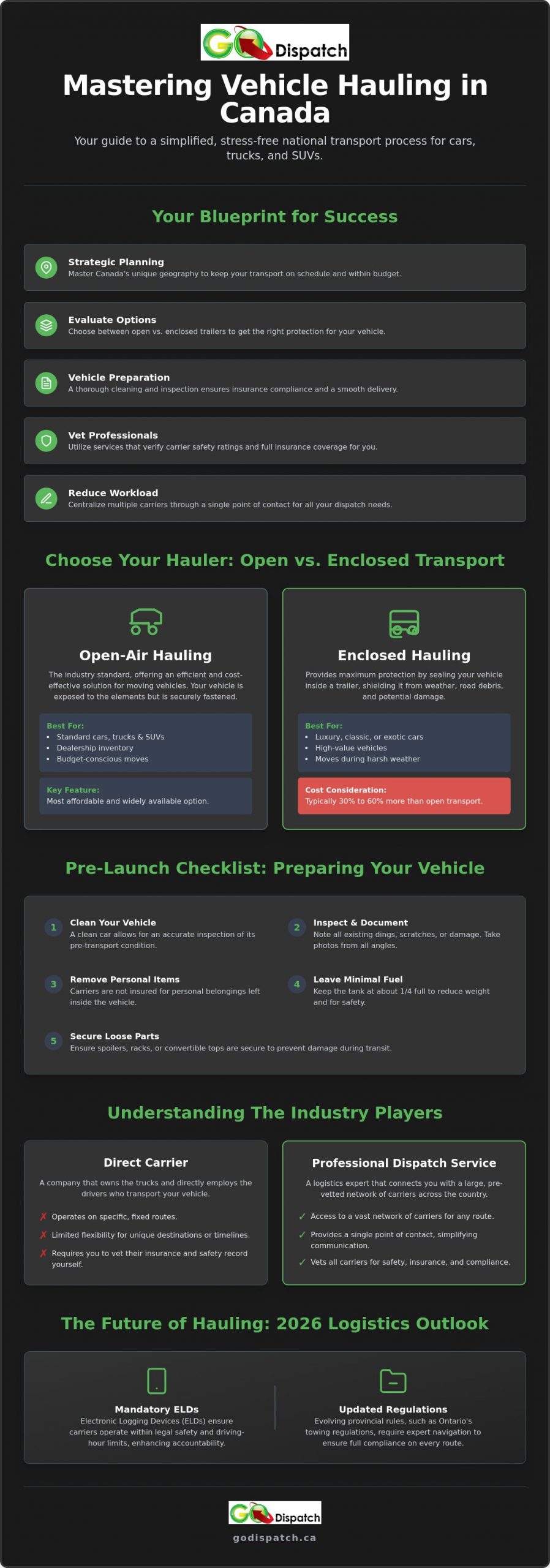
- Master strategic planning for Canada’s unique geography to ensure your national transport remains on schedule and within budget.
- Evaluate the cost-benefit ratio of open versus enclosed trailers to choose the right level of protection for your specific car, truck, or SUV.
- Prepare your vehicle for transport with a thorough cleaning and inspection process that guarantees insurance compliance and a smooth delivery.
- Simplify your logistics by utilizing professional vehicle hauling services canada that vet carrier safety ratings and insurance coverage on your behalf.
- Reduce your administrative workload by centralizing multiple carriers through a single, reliable point of contact for all your dispatching needs.
Understanding Vehicle Hauling Services in Canada: A 2026 Overview
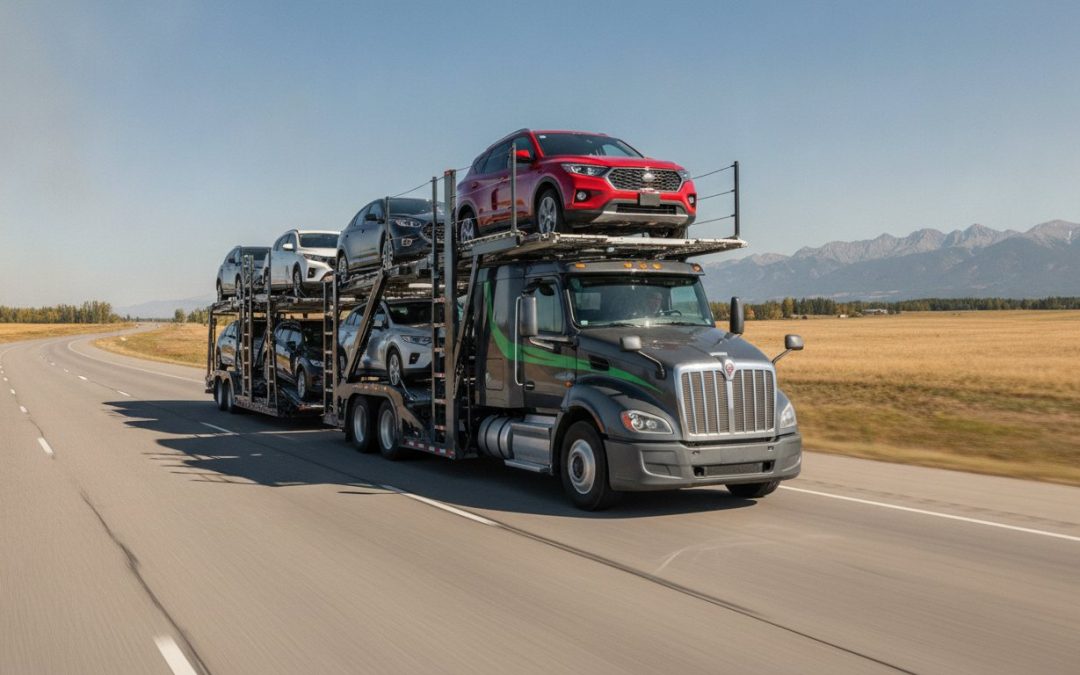
Professional vehicle hauling is more than just a move. It is a precise logistical operation. In Canada, this means moving cars, trucks, SUVs, and vans across thousands of kilometres of diverse terrain. When you search for vehicle hauling services canada, you’re looking for reliability across vast distances. This process requires a strategic approach that accounts for mountain passes, prairie stretches, and busy urban centres. You need a partner who understands that a move from Toronto to Vancouver isn’t just a drive; it’s a multi-day commitment to safety and timing.
You will encounter two main players in this industry: direct carriers and professional dispatching services. A direct carrier owns the trucks and drives the specific route. An auto transport broker or dispatcher acts as your central hub. They connect you with the most efficient carrier for your specific vehicle and timeline. This distinction is vital for your peace of mind. You also need to realize the difference between delivery methods. Door-to-door service brings the hauler directly to your location. Terminal-to-terminal requires you to drop off and pick up your vehicle at a central warehouse. One offers maximum convenience. The other provides a more budget-friendly alternative for those with flexible schedules.
The Core Components of Professional Hauling
Success depends on using the right tools for the job. Multi-car haulers are the industry workhorse for standard moves. Flatbeds handle oversized trucks or non-running vans, while enclosed trailers protect premium vehicles from road debris. Every move relies on the Bill of Lading. This is your primary legal document. It records the vehicle’s condition at both pickup and delivery. You, the dispatcher, and the carrier all rely on this document to ensure accountability and insurance compliance. In 2026, regulations like mandatory Electronic Logging Devices (ELDs) ensure your carrier is operating within legal safety limits.
Why National Logistics Require Expert Coordination
Canadian weather is notoriously unpredictable. Seasonal shifts can close highways or delay schedules in an instant. Expert coordination helps you navigate these risks without the administrative headache. When managing commercial vehicle hauling canada, the stakes are even higher. Businesses need to move multiple units efficiently to maintain their bottom line. A “one-stop” dispatching model simplifies this entire process. You get one point of contact and one clear update. This streamlined communication reduces your workload and keeps your focus on your own core business operations.
Evaluating Your Transport Options: Open vs. Enclosed Hauling
Choosing the right trailer is the most critical decision you’ll make when organizing vehicle hauling services canada. It’s a balance between cost, protection, and the specific needs of your vehicle. While open-air trailers are the standard for most moves, enclosed transport offers a premium shield against the elements. According to industry data from July 2026, enclosed transport typically costs 30% to 60% more than open options. Your choice depends on the vehicle’s value, the route’s environment, and your budget.
You need to realize that safety standards apply to every move regardless of the trailer type. All carriers must adhere to the regulations outlined in the Motor Vehicle Transport Act. This federal legislation ensures that carriers maintain specific safety and operational standards across provincial lines. Professional dispatchers use these standards to vet every truck in their network. This gives you peace of mind that your car, truck, or SUV is in capable hands. If you need to move multiple units, you can explore professional logistics options to find the best fit for your fleet.
When to Choose Open-Air Hauling
Open-air transport is highly efficient and remains the industry workhorse. These multi-car carriers move thousands of vehicles across Canada every day. Because they can carry up to ten vehicles at once, the cost per unit is significantly lower. This is the ideal method for daily drivers and dealership inventory. It’s also the most common choice for transporting a truck or a standard SUV. While the vehicle is exposed to the air, it is securely fastened and monitored throughout the journey.
The Case for Enclosed Vehicle Transport
Enclosed hauling provides a higher level of protection by sealing the vehicle away from road salt, gravel, and weather. This is essential for classic cars, high-end luxury vehicles, or brand-new inventory. During a harsh Canadian winter, an enclosed trailer is often a necessity for transits across the Prairies where wind and snow are relentless. Dispatchers add value here by sourcing carriers with specialized hydraulic lift gates. These gates allow low-clearance sports cars to be loaded without any risk of undercarriage damage. This specialized equipment ensures that even the most delicate vehicles arrive in pristine condition.
Step-by-Step: How to Prepare Your Vehicle for National Hauling
Effective preparation is the secret to a stress-free delivery. When you coordinate vehicle hauling services canada, your responsibility shifts from logistics to physical readiness. You want to ensure your vehicle is ready for the road and fully compliant with insurance standards. This isn’t just about tidying up; it’s about protecting your investment and ensuring a smooth hand-off to the carrier. Learning how to ship a car properly starts with these essential physical steps.
Start with a thorough exterior cleaning. A clean car allows for a precise damage inspection. Dirt and grime can easily hide small scratches or chips, which leads to confusion during delivery. You should also check your fuel levels. Keep the tank at approximately one-quarter full. This provides enough fuel for the driver to load and unload the vehicle while keeping the overall trailer weight to a minimum. Finally, remove all personal items and non-permanent accessories like bike racks or custom spoilers. These items are not covered by carrier insurance and can shift during transit, potentially causing interior damage.
The Pre-Transport Inspection Protocol
You need a clear, undeniable record of your vehicle’s state before it leaves your sight. Take high-resolution photos from every angle, including the roof and lower bumpers. Note any existing chips or dings in writing. This documentation is your best defence if a claim arises. When the driver arrives, you will perform a joint inspection to complete the Bill of Lading. Ensure the vehicle is in good running condition so the driver can safely drive it onto the trailer. If the vehicle is inoperable, you must disclose this to your dispatcher well in advance so they can send a truck equipped with a winch.
Administrative Preparation for Shippers
Success in logistics often comes down to the details. Ensure you have a spare set of keys ready for the driver, as they must have access to the vehicle at all times. Double-check that your pickup and delivery contact information is current and that someone is available at both ends of the journey. Most importantly, take the time to review the vehicle transport insurance requirements before the truck arrives at your door. Understanding your coverage limits ahead of time provides the peace of mind you need to let the professionals take it from here.
Vetting Professional Carriers: Insurance and Safety Protocols
“How do I know my vehicle is safe?” This is the first question every client asks when booking vehicle hauling services canada. You aren’t just handing over keys; you’re trusting a carrier with a significant asset. Safety isn’t a happy accident. It’s the result of rigorous vetting and strict adherence to federal and provincial protocols. You must realize that not all hauling services provide the same level of protection. While a cheap quote is tempting, it often masks gaps in insurance that could leave you vulnerable if an accident occurs.
It’s vital to understand the difference between your personal auto policy and the carrier’s cargo insurance. Your personal policy often doesn’t cover vehicles while they are being transported commercially. The carrier’s cargo insurance is specifically designed to protect your vehicle against transit-related damage. In 2026, professional dispatchers verify that every carrier in their network carries adequate limits to cover the full value of the load. This verification process is your primary safety net. Without it, you are essentially self-insuring your vehicle during the move.
Key Red Flags to Watch For
You can spot a low-quality operation by looking for specific red flags. If a carrier cannot produce a National Safety Code (NSC) or Commercial Vehicle Operator’s Registration (CVOR) number, walk away. These numbers are mandatory for legal operation in Canada. Other warning signs include a lack of a physical business address or a refusal to provide a written contract. A professional dispatching service eliminates these risks by doing the homework for you. We ensure that every truck on the road meets the highest industry standards for safety and reliability.
The Value of Professional Dispatching in Risk Management
We maintain a database of vetted, high-quality carriers. We monitor safety ratings and insurance expiry dates in real-time to ensure continuous compliance. This level of oversight is why truck transport for dealerships requires such high vetting standards. Dealers moving millions of dollars in inventory can’t afford a single mistake. By using a centralized dispatcher, you benefit from the same professional-grade risk management used by major automotive groups. This reduces your administrative burden and ensures that only the most reliable drivers handle your cargo.
If you want to ensure your move is handled by a fully vetted professional, contact our dispatch team today for a secure transport solution.
Simplifying Logistics with GO DISPATCH Solutions
Logistics shouldn’t be a burden. When you choose vehicle hauling services canada through GO DISPATCH, you gain a centralized hub for every transport need. You don’t have to call ten different carriers to find one available truck. We do that for you. Our “one-stop” model provides a single point of contact for multiple carriers across the country. This saves you time. It saves you money. Most importantly, it gives you peace of mind. You get the benefit of a vast network without the headache of managing it yourself.
Many carriers focus only on their own fleet capacity. If their trucks are full or their routes don’t match, you are left searching for alternatives. We solve this problem by sourcing the right professional for your specific vehicle and route. We match your needs with a vetted carrier who is ready to move immediately. This flexibility is the core of our service. We act as your proactive facilitator, handling the complexities behind the scenes so you can stay focused on your core business. We take pride in our ability to manage the details that often cause the most stress.
Comprehensive Fleet Management
Managing a diverse fleet requires high-capacity coordination and precision. Whether you are moving cars, trucks, SUVs, or vans, we handle the entire logistics chain through a single partnership. We manage everything from the initial booking to the final delivery signature. Dealerships and fleet managers realize significant administrative relief by outsourcing these tasks to us. You get the personalized, human-centric service that massive direct carriers often lack. We pride ourselves on being a reliable expert that maintains a human connection. You aren’t just a number in a database; you are a partner we help succeed.
Getting Started with Your National Hauling Request
Starting your national move is a straightforward process designed for speed. You provide the vehicle details, the pickup location, and your required timeline. We provide a clear, transparent quote and a methodical plan of action. We then match your specific requirements with a professional carrier from our vetted network. This eliminates the guesswork and the fear of transit damage. It removes the stress of vetting individual drivers or verifying insurance yourself. You focus on your core operations. We focus on the road. We ensure every delivery is damage-free and every communication is transparent.
Ready to experience a streamlined transport process? Contact GO DISPATCH today to organize your national vehicle hauling and let our experts handle the heavy lifting for you.
Take Control of Your National Vehicle Transport
You now have a clear roadmap for managing complex logistics with professional confidence. Success in the modern market requires a balance of thorough physical preparation and rigorous carrier vetting. By choosing the right trailer for your vehicle’s value and ensuring full insurance compliance, you protect your investment across every province. You don’t need to handle the administrative weight of vehicle hauling services canada on your own.
GO DISPATCH provides a one-stop transport dispatching service that covers all Canadian provinces. We offer expert coordination for cars, trucks, SUVs, and vans through a single, reliable point of contact. This centralized model allows you to focus on your core business while we manage the carriers behind the scenes. It’s time to replace logistical headaches with a streamlined, dependable solution that delivers peace of mind every time.
Ready to simplify your next move? Request a Professional Hauling Quote from GO DISPATCH today and let us handle the details for you.
Frequently Asked Questions
How much do vehicle hauling services in Canada typically cost?
The cost depends on the distance, the size of your vehicle, and your choice of trailer type. Open transport is the most economical option for daily drivers. Enclosed transport costs more because it provides specialized protection from the elements. Factors like seasonal demand and current fuel prices will also influence your final quote. Using a dispatcher ensures you find a competitive rate within a vetted network of professional carriers.
How long does it take to transport a vehicle across Canada?
Cross-country transport usually takes between 10 and 14 days depending on the specific route. Shorter regional moves, like Toronto to Montreal, can often be completed in just a few days. Delivery times are influenced by weather conditions and federal safety regulations that limit driver hours. Your dispatcher will provide an estimated timeline and keep you updated throughout the journey to ensure you can plan your schedule with confidence.
Is my vehicle insured during the hauling process?
Yes, your vehicle is protected by the carrier’s cargo insurance while it is on the trailer. This coverage is mandatory for professional vehicle hauling services canada and is separate from your personal auto policy. A professional dispatcher verifies that the carrier’s insurance limits are active and sufficient to cover the full value of your car, truck, or SUV before any loading begins. This verification provides a vital layer of financial security.
Can I ship personal items inside my car during transport?
No, you must remove all personal belongings from your vehicle before the carrier arrives. Carrier cargo insurance does not cover personal items, and most drivers are not licensed to transport household goods. Loose items can also shift during transit, which might cause damage to your vehicle’s interior. Keeping the car empty also helps maintain the trailer’s legal weight limits and ensures a smoother inspection process at both ends of the trip.
Do vehicle hauling services provide door-to-door delivery?
Yes, door-to-door delivery is a standard convenience offered by most professional dispatching services. The driver will pick up and drop off your vehicle as close to your specified address as safely possible. If your street is too narrow for a large multi-car hauler or has local weight restrictions, the driver will coordinate a meeting at a nearby parking lot. This ensures the safety of the equipment and your vehicle while maintaining a high level of convenience.
What is the difference between a direct carrier and a dispatching service?
A direct carrier owns the physical trucks, while a dispatching service acts as a centralized hub to connect you with multiple carriers. Using a dispatcher gives you access to a much larger network of equipment and routes. This means you aren’t limited by one company’s specific schedule or fleet capacity. A dispatcher handles the vetting, insurance verification, and communication for you, which significantly reduces your administrative workload and ensures a more reliable result.
Can I track my vehicle while it is being hauled?
Yes, you can receive regular updates on your vehicle’s progress through your primary point of contact. While some carriers use GPS, your dispatcher serves as the central link between you and the driver. They monitor the route and provide accurate arrival windows based on real-time conditions. This human-centric approach to tracking ensures you get clear, context-driven information rather than just a dot on a map, giving you peace of mind throughout the move.
What happens if my vehicle is damaged during transport?
You must record any new damage on the Bill of Lading immediately at the time of delivery. This document serves as the official legal record of the vehicle’s condition. If the delivery inspection reveals damage that was not present during the pickup inspection, you can then file a claim against the carrier’s cargo insurance. Having high-resolution photos from your pre-transport preparation will make this process much faster and more straightforward.