
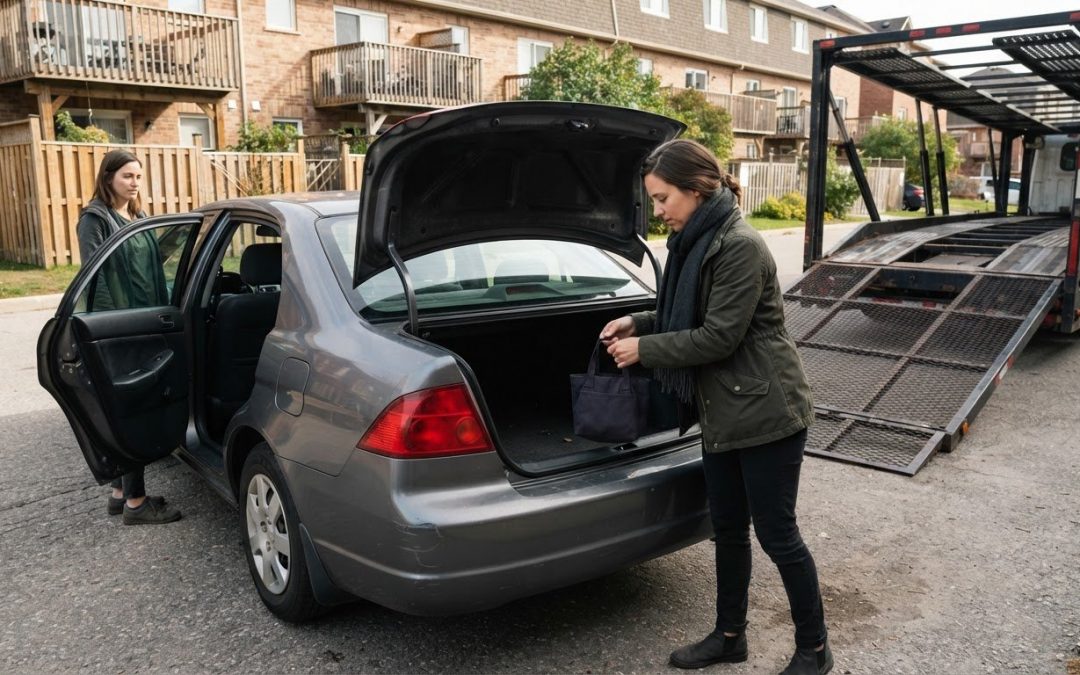
A lease doesn’t automatically prevent you from shipping your car. To understand how to ship a leased car, first review your agreement: the leasing company may require notice or approval before the vehicle is moved. The same applies to a financed car, as the lender may also set conditions.
Before arranging transport, clarify who can authorize the move, how to prepare the vehicle, and how to document its condition. Taking care of these details helps the pickup and delivery go smoothly.
This guide explains what to confirm with your lessor or lender, how to prepare for pickup, and how to arrange for someone else to release or receive the car if you can’t be there. It also covers factors that affect shipping costs, so you can plan without relying on a one-size-fits-all estimate. With the right preparation, you can protect the vehicle and keep the transport organized.
Key Takeaways
- Review your lease or loan agreement and get any required notice or approval before arranging transport.
- Prepare the car by removing personal items and recording its condition before pickup.
- If you can’t be there, arrange in advance for someone you authorize to release or receive the vehicle.
- Shipping cost depends on factors such as distance, vehicle size, route, timing and transport type.
Can You Ship a Financed or Leased Car?
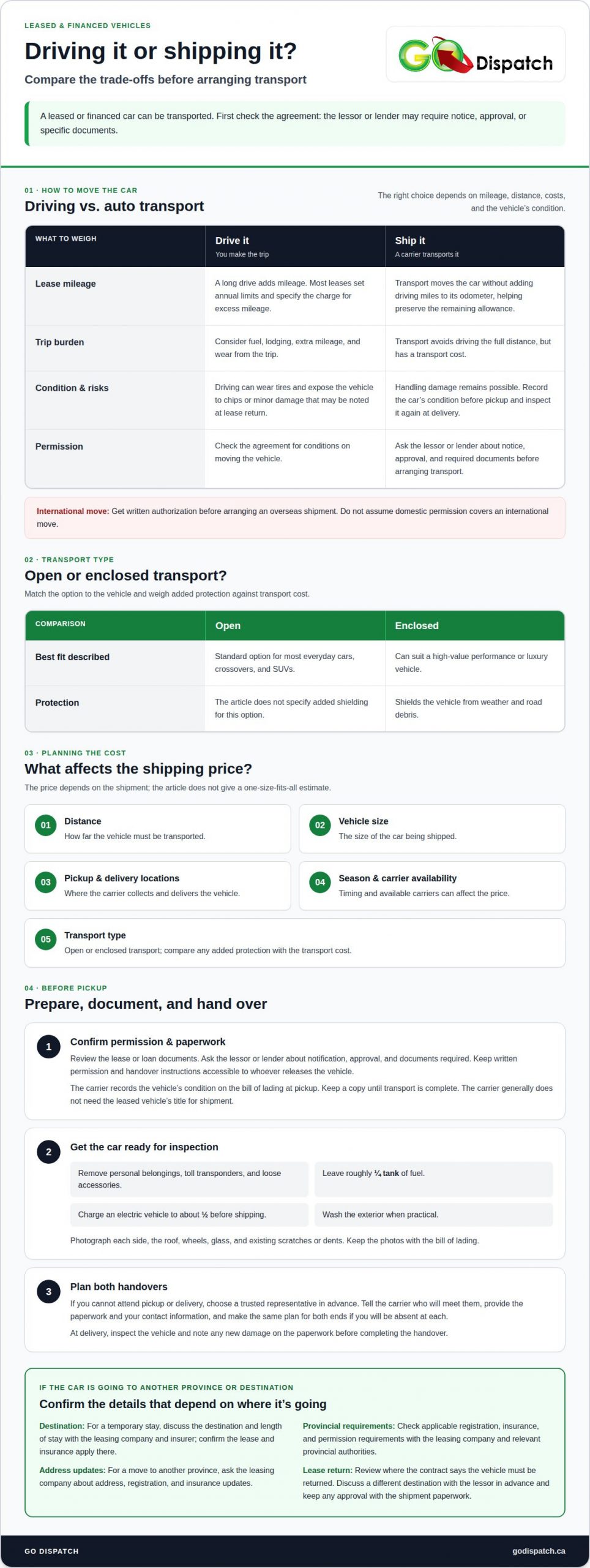
Yes, a leased or financed vehicle can be transported, but the agreement and any permissions required by the lender or lessor matter. Shipping avoids adding driving mileage, although handling damage and lease-related fees remain possible risks.
Confirm title ownership and transport permissions
Review your lease or loan documents before arranging transport. The lessor owns a leased vehicle, while a lender may have a financial interest in a financed one. Your agreement may set conditions for moving the car, so review it before arranging transport.
- Contact the lessor or lender about notification, approval, and any documents required for the move. Ask specifically about transporting the vehicle outside Canada. Get written authorization before arranging an overseas shipment, and don’t assume domestic permission covers an international move.
- Choose a transport type that suits the vehicle. Open transport is the standard option for most everyday cars, crossovers, and SUVs. Enclosed transport can suit a high-value performance or luxury vehicle by shielding it from weather and road debris. Compare the added protection with the transport cost.
Consider mileage limits and shipping risks
Compare shipping with driving before deciding how to move the car. Most leases set annual mileage limits, and your agreement specifies the charge for excess mileage. A long drive can also wear tires and expose the vehicle to chips or minor damage that may be noted when you return the lease.
- Use the lease’s mileage allowance and excess-mileage terms to estimate the impact of driving. Auto transport moves the car without adding driving miles to its odometer, which can help preserve the remaining allowance.
- Weigh the full driving burden, including fuel, lodging, extra mileage, and wear, against arranging transport. Before pickup, record the vehicle’s existing condition and keep the transport documents. At delivery, inspect the car and note any new damage before completing the handover.
Preparing the vehicle and documenting its condition
Prepare the car before pickup so the carrier can inspect it clearly. Keep the condition record and transport paperwork together until delivery.
-
Gather pickup and shipment documents
If your leasing company requires approval, keep its written permission with your booking details and any handover instructions. Make these documents accessible to the person releasing the vehicle. At pickup, the carrier records the vehicle’s condition on the bill of lading. Keep a copy until transport is complete. The carrier generally doesn’t need the leased vehicle’s title for shipment.
-
Check transport documentation requirements
Ask what transport paperwork will be completed at pickup and delivery, and keep both records with your lease documents. The bill of lading is the key record of the car’s condition when the carrier takes possession. Registration, insurance, and permission requirements can depend on the route and destination. For a move between provinces, confirm applicable requirements with the leasing company and relevant provincial authorities rather than assuming the same rules apply everywhere.
-
Prepare the vehicle for inspection
Remove personal belongings, toll transponders, and loose accessories before the carrier arrives. Leave roughly a quarter tank of fuel; charge an electric vehicle to about half before shipping. Wash the exterior when practical, then photograph each side, the roof, wheels, glass, and any existing scratches or dents. Clear images make the vehicle’s starting condition easier to compare with its arrival condition. At delivery, inspect it again and note any new damage on the paperwork before completing the handover. Keep your photos and bill of lading together. For help organizing vehicle transport, review vehicle transport arrangements.
Arranging an authorized person to release or receive the vehicle
If you can’t attend pickup or delivery, choose a trusted representative and make the arrangement before shipment. Tell the carrier who will meet them.
- Arrange authorization with the leasing company. Tell the lessor who will release or receive the leased vehicle, and ask whether it requires written authorization. Share the carrier’s pickup or delivery details with your representative. Give them the paperwork and your contact information so they can coordinate the handover and reach you if questions arise. Make the same plan for both ends of the route if you’ll be absent at pickup and delivery.
- Match the shipment to your reason for moving the car. Relocation, a seasonal stay, or a work assignment can make driving the full distance impractical. For a temporary stay, discuss the destination and length of the stay with the leasing company and your insurer. Confirm the lease and insurance apply there. If another person receives the car, brief them on where it’s going and what to do if delivery arrangements change.
- Plan for provincial registration and lease return. If you’re moving to another province, ask the leasing company about address, registration, and insurance updates for your destination. Requirements can depend on where you’ll live, so don’t assume your current paperwork covers a permanent move. Also review the lease’s return terms before shipping the vehicle elsewhere. The contract may specify where it must be returned; if the destination differs, discuss the plan with the lessor in advance. Keep the return location and any approval with your shipment paperwork.
For an electric or luxury leased vehicle, brief your representative on any handling or delivery instructions before pickup. This clarifies their role, whether they’re releasing the car to the carrier or receiving it at the destination.
How Much Does Shipping a Leased Car Cost?
The price depends on the shipment and is provided after a quote request. Distance, vehicle size, pickup and delivery locations, season, carrier availability, and transport type all affect the cost. When planning how to ship a leased car, compare these factors with your timing needs before booking.
After booking, prepare the vehicle for pickup, review its condition with the driver, and keep the bill of lading. Inspect the car again at delivery and record any new damage on the paperwork.
- Request a current quote and set your dates. Provide the origin, destination, vehicle details, and preferred timing. A current quote reflects changing market conditions better than a static estimate. Flexible pickup and delivery windows can give routing more options and make pricing more predictable. If your relocation date is fixed, share that constraint when requesting the quote.
- Book ahead and plan around the pickup window. A common planning window is 7 to 30 days before your first available pickup date. This is a booking guideline, not a promised arrival date. Carrier availability, route, season, and your flexibility influence scheduling. Keep your phone accessible as pickup approaches, and make sure your authorized representative knows the agreed window.
- Prepare for the driver’s arrival. Remove personal items and loose accessories, leave roughly a quarter tank of fuel, and make the car accessible for inspection. Take photos of existing marks before pickup. At handover, walk around the vehicle with the driver and compare its condition with the bill of lading. Keep your copy of the paperwork.
- Inspect again at delivery. Meet the driver or arrange for your authorized person to be present. Check the exterior, glass, wheels, and interior against the pickup photos and bill of lading. Record any new damage on the delivery paperwork before completing the handover, then keep the documents with your lease records. A clear plan for how to ship a leased car includes knowing who will inspect it at both ends.
Ready to plan pickup and delivery for your leased vehicle? Request a transport quote.
GO DISPATCH
GO DISPATCH’s one-stop transport dispatching service connects customers with suitable auto carriers and manages the logistics. Once your lessor has approved the move, GO DISPATCH can coordinate the shipment from planning through delivery, while you focus on lease paperwork and handover arrangements.
GO DISPATCH arranges transport for cars, trucks, SUVs, and vans. Share your vehicle details, route, and timing needs to start planning. Your lessor’s permission and any required documents remain part of your preparation, so have those details ready when arranging the move.
Contact GO DISPATCH to discuss your vehicle transport needs.
Make your next move easier
A vehicle move is also an opportunity to coordinate transport with your relocation, lease obligations, and schedule. Once your lessor or lender has addressed any permission requirements, plan the shipment and decide who will manage each handover. Knowing how to ship a leased car means more than arranging a carrier. It means making sure the shipment fits your agreement and the practical needs of your move.
GO DISPATCH arranges transport for cars, trucks, SUVs, and vans. Share your route and timing needs to start planning the logistics. A clear plan gives you a straightforward next step while you manage the lease-related arrangements.
Contact GO DISPATCH about shipping to discuss your vehicle transport needs and take the next step with confidence.
Frequently Asked Questions
Do I need permission from my leasing company to ship the car?
Check your lease and contact the leasing company before booking. Some lessors require notice or approval, especially if the vehicle’s destination or registration will change. Provide the route and explain whether the move is temporary or permanent. Keep the response with your lease records so you can refer to the agreed conditions if questions arise during transport or at lease return.
Does my personal auto insurance cover a leased vehicle while it is on a transport carrier?
Don’t assume your personal auto policy covers the vehicle while it’s on a carrier. Personal insurance and a carrier’s cargo coverage are separate, and coverage depends on the policies involved. Ask your insurer whether your policy applies during transport, and review the carrier’s insurance information before shipment. Clarify what applies between pickup and delivery, not only while you’re driving.
Why ship instead of drive?
Shipping can preserve your lease mileage allowance because it doesn’t add driving distance to the odometer. That can matter if a long relocation would use miles you need for the rest of the lease. Driving adds road exposure and wear, while shipping requires you to arrange pickup and delivery. Compare the lease’s excess-mileage terms with the practical demands of the trip before deciding.
Can you ship a leased car in Canada, and do you need the leasing company’s permission?
Yes, a leased car can be transported within Canada. Permission depends on your lease terms, as some leasing companies require notice or approval before the vehicle moves. A move to another province may also involve registration or insurance changes based on the destination. Before scheduling transport, tell the lessor where the vehicle is going and whether the relocation is temporary or permanent.
What documents are required to ship a leased car within Canada?
Have your transport booking details and any written authorization from the leasing company ready for pickup. The carrier records the vehicle’s condition on a bill of lading, so keep your copy with the lease paperwork. Carriers generally don’t need the leased vehicle’s title for shipment. If someone else is handling pickup, give them the relevant documents and shipment details.
How do you get written authorization from a leasing company to transport a leased vehicle?
If your agreement requires approval, contact the leasing company and request it in writing. Include the vehicle details, origin, destination, planned transport dates, and whether the move is temporary or permanent. Ask whether the lessor needs information about the person releasing or receiving the car. Keep the written response and any conditions with your lease documents, then share relevant instructions with your representative.