
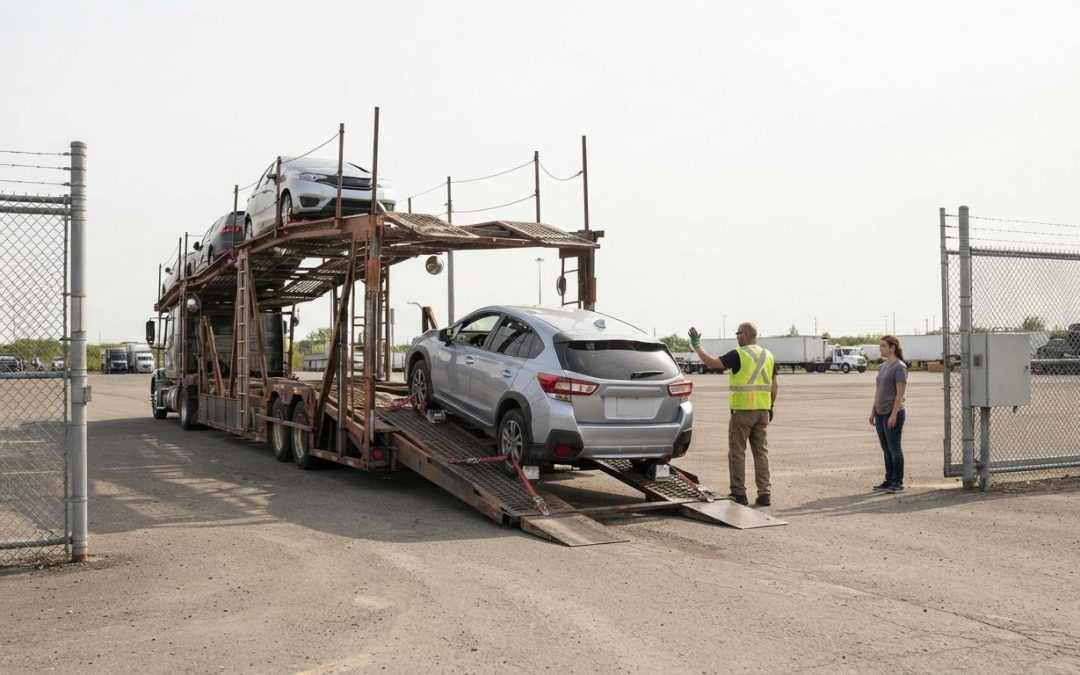
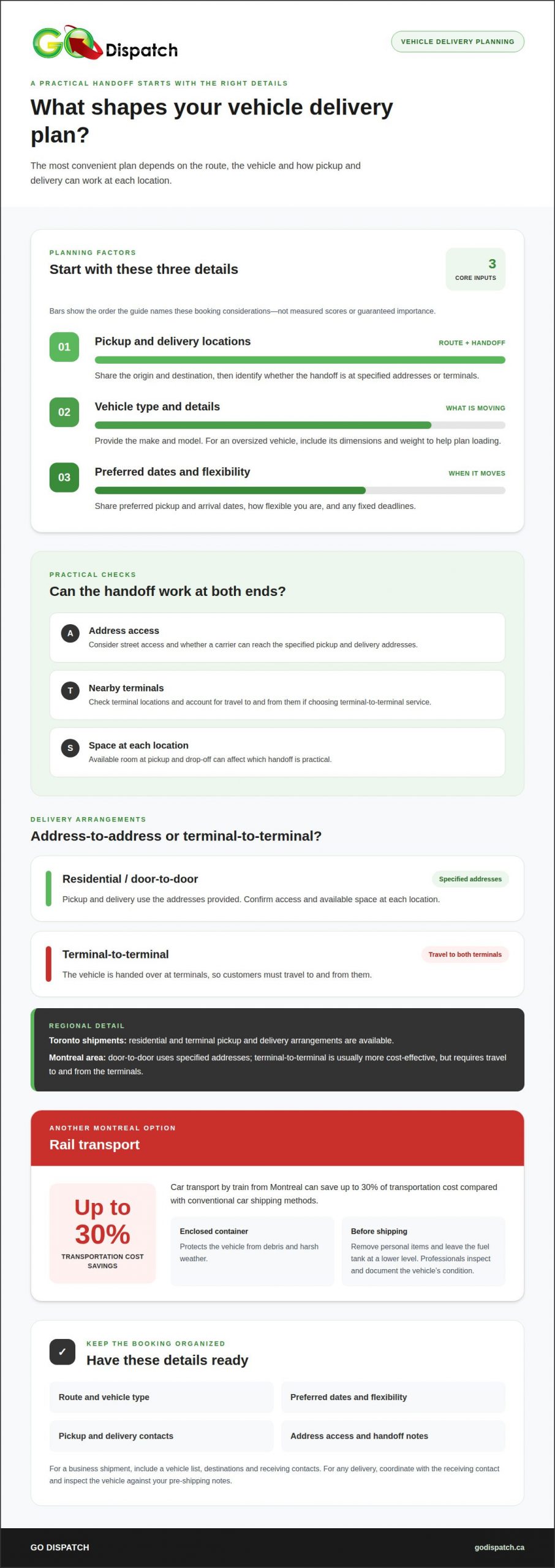
The most convenient vehicle delivery plan isn’t always the one that brings a carrier to your door. Flexible vehicle delivery options can include residential or terminal pickup and delivery; for Toronto shipments, both arrangements are available. In the Montreal area, door-to-door service uses specified addresses, while terminal-to-terminal service means travelling to and from the terminals.
Choose an arrangement based on your pickup and drop-off locations, vehicle, and schedule. Address access, nearby terminals, and available space at each location all affect which handoff is practical.
This guide explains how to book personal or commercial vehicle transport, request a quote and prepare for pickup. You’ll also learn what to expect when following delivery progress and how urban and suburban logistics can affect the plan. Whether you’re moving one vehicle or coordinating transport for a business, clear details about the route, vehicle and preferred handoff help keep the process organized from pickup through delivery.
Key Takeaways
- Share your route, vehicle details and timing needs to shape a practical transport booking.
- Plan personal and business shipments around vehicle type, handoff preferences and delivery schedule.
- Prepare the vehicle and record its condition before pickup, then compare it with the delivery inspection.
- For urban or suburban handoffs, consider street access, terminal locations and the space available at each address.
Booking and scheduling vehicle transport
Start with the pickup and delivery locations, vehicle type, and preferred dates. These details help shape a transport plan around the route and handoff.
Shipment timing
Scheduling depends on the route, pickup arrangements, delivery location, and carrier schedule. Share your preferred pickup and arrival dates, and explain how much flexibility you have. A short local route and a longer interprovincial shipment can involve different access and scheduling needs. Confirming the handoff details early helps organize the plan.
Advance booking
Booking ahead gives more room to coordinate vehicle readiness, pickup access, and delivery timing. First, provide the origin and destination, the vehicle’s make and model, and your preferred dates. Then identify any fixed deadlines, such as a worksite opening or a planned vehicle handover. For a route involving Kingston, note its location on Highway 401 when discussing route details. Share changes promptly so the schedule can reflect updated plans.
Corporate booking and fleet services
For a business shipment, gather vehicle details and pickup locations before requesting transport. A fleet coordinator can group vehicles by destination, readiness date, and handoff requirements. For example, vehicles going to separate sites around Markham and Vaughan may need distinct delivery instructions because their highway access differs. A clear vehicle list helps organize the booking and reduces back-and-forth over individual units. Include a business contact for coordinating each pickup and receiving location.
Booking details to prepare
Use a short booking checklist: route, vehicle type, preferred dates, pickup contact, delivery contact, and address access notes. Say whether the shipment is a fleet move or a one-time personal transport. If a business is moving several vans, list each vehicle and its destination in the same request. These details help coordinate scheduling and handoffs for one vehicle or several.
Personal and commercial vehicle transport
Personal shipments often involve one vehicle and a specific handoff. Commercial moves may involve several vehicles travelling to different sites. Route, vehicle size, delivery arrangement, and receiving access shape the transport plan. For Ontario shipments, most deliveries are completed within 1 to 5 days, depending on the route and transport schedule.
For example, London connects along Highway 401 to Toronto and Windsor. Businesses can organize vehicles by destination and receiving contact, while personal customers can plan around their own handoff. These route and delivery details help set practical expectations for both shipment types.
Transit tracking and unloading
Keep the pickup, transit, arrival, and unloading milestones clear. Coordinate with the receiving contact so someone is prepared at the destination. After delivery, inspect the vehicle and compare its condition with your pre-shipping notes. Record any differences to create a clear handoff record, whether the vehicle belongs to an individual or a business fleet.
Rail transport from Montreal
Rail is another option for moving a vehicle from Montreal. Car transport by train in Canada can save up to 30% of transportation cost compared with conventional car shipping methods. The vehicle travels in an enclosed container, which protects it from debris and harsh weather. Montreal terminal-to-terminal shipping is usually more cost-effective than door-to-door service, but customers must travel to and from the terminals. Before shipping, remove personal items and leave the fuel tank at a lower level. Professionals inspect the vehicle and document its condition before transport.
Oversized vehicle transport
For an oversized vehicle, provide its dimensions and weight when arranging transport. Those details help determine a suitable loading approach and plan the pickup. Top-load vehicle transportation in Canada can accommodate cars of different sizes and weights. This can be relevant when a business is moving a varied fleet, or an individual is shipping a larger vehicle. Matching vehicle details to the transport plan helps coordinate loading, transit, and unloading.
Quote, payment, pickup preparation and tracking process
A clear quote starts with the route, vehicle details, and handoff method. These details also help organize pickup, transit updates, and delivery.
Quotes and payment
Provide the pickup and delivery locations, vehicle type, and preferred handoff when requesting a quote. The cost depends on the shipment, including its route, vehicle, and delivery arrangements. Review the quoted service and payment instructions before proceeding. Keep the quote and shipment details together so pickup and receiving contacts have the same information.
Pickup and delivery methods
Residential pickup or delivery uses an address, while terminal-to-terminal transport requires travel to and from the terminals. Door-to-door service brings pickup and delivery to specified addresses. In the Montreal area, terminal-to-terminal service is usually more cost-effective than door-to-door, but requires travel to both terminals. Compared with collecting a vehicle at a dealership, transport can bring it to a chosen handoff point instead of requiring you to make the trip. For delivery, share the receiving contact and shipment details; have identification and relevant vehicle paperwork available to help identify the recipient and vehicle.
Provincial requirements can affect registration, taxes, and insurance when a vehicle moves between provinces. Handle these as separate steps for the destination province, since delivery itself does not complete them.
Transit updates and delivery
Keep the shipment details and contact information handy during transit. Use updates to coordinate with the receiving contact and prepare the delivery location. At handoff, inspect the vehicle and compare its condition with your pre-shipping notes. If delivery is delayed or the vehicle arrives damaged or incorrect, document the issue and promptly contact the transport coordinator with the shipment details. Clear notes and a timely report help establish what happened at delivery.
Delivery options in urban and suburban areas
In Canada, flexible vehicle delivery options include residential pickup or delivery, terminal handoffs, and door-to-door service. Toronto shipments can use residential and terminal pickup and delivery. Markham offers terminal and door-to-door arrangements, giving customers different ways to plan the handoff.
In urban areas, choose the handoff around the exact address and nearby access. In Markham, Highways 404 and 407 connect the area, while Vaughan has access to Highways 400 and 407, with Highway 401 nearby. Share the full pickup and delivery addresses, plus instructions for finding each location. If a street or property offers limited room for a carrier, a suitable nearby handoff point can make coordination more practical.
Suburban deliveries also depend on the receiving address and how the vehicle will be handed over. A residence with accessible space may suit residential delivery; a terminal can work when meeting at an address is difficult. For example, someone in Toronto can weigh a residential handoff against travelling to a terminal. Decide who will receive the vehicle and provide clear arrival instructions before scheduling.
Compare options by considering convenience, travel to a terminal, address access, and the receiving contact’s availability. Door-to-door service brings pickup and delivery to specified addresses. Terminal-to-terminal requires travel to and from the terminals. A combination of residential and terminal handoffs may suit a shipment where only one end needs an address-based delivery. The right fit depends on the route and practical access at each location.
For an urban or suburban shipment, start with both locations and your preferred handoff. Then share access details and receiving instructions to help organize the delivery plan. Arrange vehicle transport around the locations and handoff that work for your shipment.
GO DISPATCH
GO DISPATCH helps coordinate vehicle transport by matching your route, vehicle, schedule, and delivery handoff with a suitable auto carrier. Its GO DISPATCH ONE-STOP TRANSPORT DISPATCHING SERVICE manages carrier selection, scheduling, and delivery logistics, so you can focus on your personal or business priorities.
Share your pickup and delivery locations, vehicle details, timing needs, and preferred handoff. This information helps shape the transport plan, whether you’re arranging delivery to a residence or coordinating a business shipment. GO DISPATCH arranges transport for cars, trucks, SUVs, vans, and more, and handles the logistics from carrier selection through delivery.
Contact GO DISPATCH to discuss your vehicle transport needs.
Plan your next vehicle move with confidence
Plan vehicle transport alongside your other commitments. For a business, consider how vehicle moves fit around site operations, staff responsibilities, and inventory changes. For a personal shipment, think about how delivery fits with travel or a change of address. Sharing these details early helps organize the transport plan.
The most useful flexible vehicle delivery options are the ones that suit the shipment’s real priorities. Those priorities may change between moves, so keep the plan adaptable instead of relying on one routine. If you coordinate transport regularly, record what worked and what you’d adjust next time. That practical reference can help you organize future shipments without starting from scratch.
Ready to discuss your vehicle delivery needs? Contact GO DISPATCH about vehicle delivery and take the next step with a clear plan. Your next move can start with a straightforward conversation.
Frequently Asked Questions
Can I choose a delivery date and time when buying a vehicle in Canada?
Share your preferred delivery date and timing when arranging transport. Scheduling also depends on the route, pickup readiness, and carrier arrangements, so explain any deadline early. If you need a vehicle before starting a new job, include that in the planning details. Treat a requested arrival window as a scheduling preference, not a guaranteed appointment.
Do Canadian dealerships offer home or workplace vehicle delivery?
Dealerships may arrange home or workplace delivery, or buyers may collect vehicles at the dealership. The arrangement depends on the sale and delivery plan. If a vehicle is being moved from another location, transport can save you making the trip yourself. For a workplace handoff, consider carrier access and whether someone can receive the vehicle during business hours.
How much does vehicle delivery cost in Canada, and what fees may apply?
Vehicle delivery costs vary by shipment, so there isn’t one price that applies across Canada. Route distance, vehicle type, pickup and delivery locations, and the handoff method can affect a quote. Ask for the transport price and any applicable fees to be clearly itemized before payment. This makes it easier to understand what the quote covers and account for the full delivery arrangement.
Can I arrange vehicle delivery from another city or province in Canada?
Yes, vehicle transport can be arranged between Canadian cities or provinces. The route, vehicle details, pickup access, and destination handoff all shape the shipment plan. For an interprovincial move, organize the sale, delivery, and vehicle-receiving arrangements separately. GO DISPATCH coordinates transport by connecting customers with auto carriers, including for shipments with pickup and delivery locations far apart.
What steps are required to schedule and prepare for vehicle delivery in Canada?
Gather the pickup and delivery locations, vehicle details, preferred dates, and contact information for both handoffs. Request a quote and review the service and payment instructions. Before pickup, remove personal items and make the vehicle available to the carrier. At delivery, confirm the vehicle’s identity, inspect its condition, and record any differences from your pre-shipping notes.