
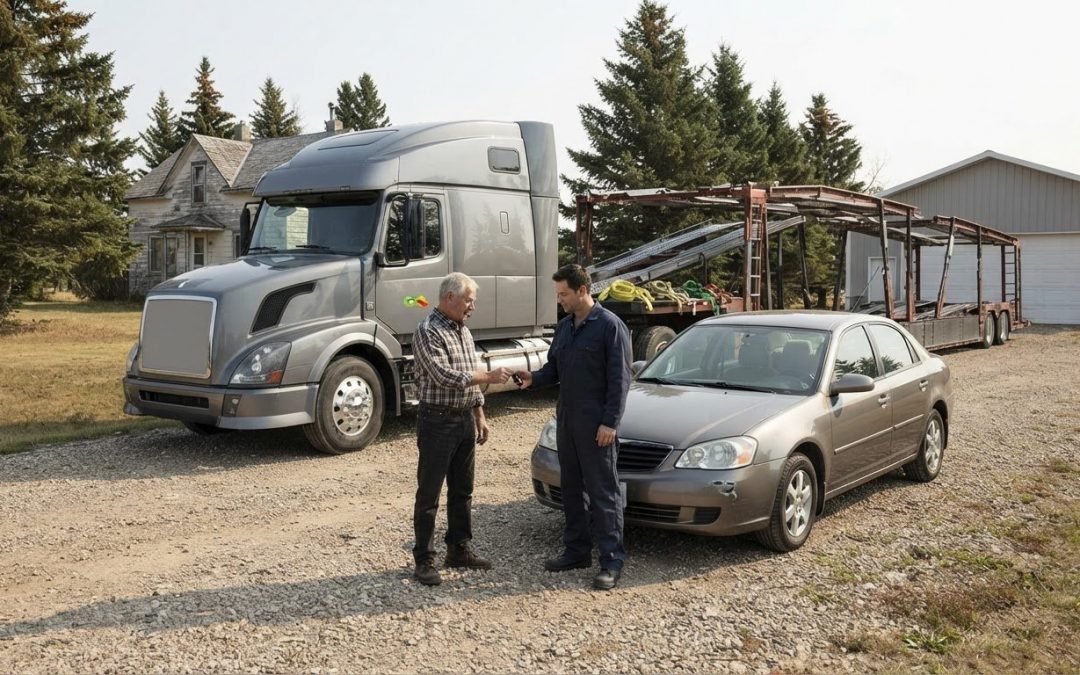
A smooth vehicle handoff starts with clear responsibilities: the seller prepares the vehicle, the carrier coordinates pickup and delivery, and the recipient confirms where and how to receive it. When coordinating shipping with a private seller, agree on the booking details, required documents, insurance arrangements, and who will handle a claim before the vehicle moves.
A private vehicle sale already involves plenty of details, and transport adds another layer of coordination. This guide explains what the seller, carrier, and recipient each handle so you can plan the booking, share accurate information, and prepare for pickup and delivery. It also shows how dispatch support can simplify the process when several people need to stay aligned.
Key Takeaways
- Set the pickup window, rescheduling terms, and responsibility for sharing ETA changes before booking.
- Prepare the vehicle and handoff details in advance so the carrier can collect it without avoidable delays.
- Agree in writing on who pays for transport and how insurance questions or damage claims will be handled.
- Build a shipping estimate around the route, vehicle, pickup and delivery access, and transport requirements.
Booking rules and documentation
Before booking, the buyer, seller, and carrier should agree on pickup timing, delivery location, and who will share schedule changes. When coordinating shipping with a private seller, keep the booking details in one written record so everyone works from the same accurate information.
Start with the vehicle and route details. Give the carrier the year, make, model, pickup and delivery addresses, and contact information for both handoff points. Include the vehicle’s condition, whether it runs, and any access limits at either address. A narrow driveway or a seller who can only meet at a nearby parking lot may affect the pickup plan.
Then confirm the booking terms. Record the pickup window, delivery expectations, rescheduling process, and who will communicate any ETA changes. Ask the seller to confirm the vehicle will be ready during the agreed window. Carrier planning depends on the details provided, so updates should reach the buyer, seller, and carrier promptly.
- Booking confirmation: Keep the route, dates or time windows, contacts, and agreed responsibilities together.
- Vehicle information: Match the description and condition details across booking records and handoff paperwork.
- Communication plan: Name who passes along schedule changes and how the other parties will receive them.
Check that names, addresses, and vehicle details match across the booking confirmation and any sale or transport documents. If the seller changes the pickup address, update the carrier’s instructions before collection. This helps prevent the driver from arriving at the wrong location or relying on outdated details.
A private sale between Canadian provinces does not involve an international customs crossing. For an international shipment, customs requirements and possible charges depend on the destination and transaction. Agree in advance who will arrange the paperwork and handle payment.
Follow the agreed booking plan and confirm the pickup window before collection. Keep copies of the sale record, booking confirmation, and handoff documents accessible to the buyer and seller. These records give everyone a clear reference if timing changes or a claim later needs supporting details.
Seller preparation and handoff responsibilities
Before pickup, the seller should confirm that the vehicle is ready and someone can meet the carrier. A completed sale does not mean the shipment can move immediately. Loading access, pickup timing, and the seller’s availability all affect the handoff. If the vehicle is parked in a restricted area, agree on an accessible meeting point before booking.
Have the seller prepare a practical handoff checklist:
- Clear the vehicle: Remove personal belongings and items that aren’t part of the sale.
- Share access details: Explain gate codes, parking limits, or other instructions the driver needs.
- Confirm readiness: Tell the buyer and carrier if the vehicle won’t be available during the agreed pickup window.
- Document condition: Take dated photos of the exterior and interior before loading, then compare them with the handoff record.
At collection, the seller and driver should review the vehicle’s visible condition together. Note existing scratches, dents, or other damage on the transport paperwork before signing. The seller should keep a copy or photo of the completed record, and the buyer should retain it for delivery and any later claim. Clear responsibilities make handoffs easier to manage, even when several vehicles or orders require coordination.
What payment methods are safest when coordinating shipping with a private seller? Use a traceable method, such as a bank transfer or e-transfer, and keep the written agreement and transaction record. For transport charges, use the payment method and recipient shown in the booking details, not an unexpected account supplied in a last-minute message.
The buyer should confirm who will be present at delivery and share that person’s name and contact details with the seller and carrier. If the recipient changes, update the handoff instructions before arrival. Keep pickup changes, delivery updates, and photo records in one shared message thread.
For vehicle moves with several people coordinating timing and handoffs, a clear transport dispatch plan can help keep responsibilities organized.
Who pays for shipping when buying from a private seller?
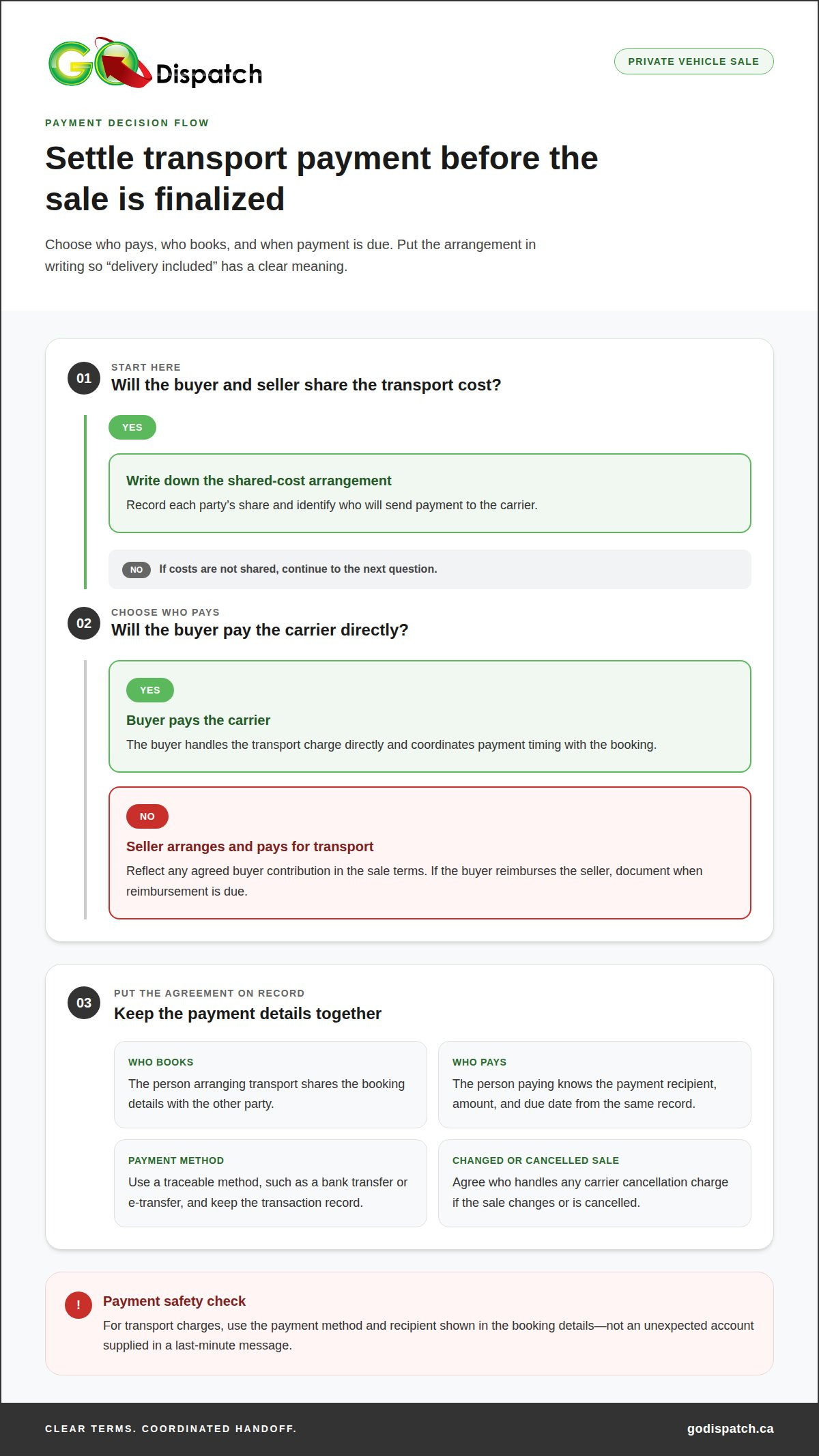
The buyer and seller should agree on shipping payment before finalizing the vehicle sale. There is no single arrangement for every private transaction. The buyer might pay the carrier directly, or the seller might arrange transport and include the agreed cost in the sale terms. Record who pays, who books, and when payment is due.
Keep the vehicle price and transport charge clear. For example, a buyer purchasing a vehicle from another province could agree to pay the carrier separately. Alternatively, the seller could arrange transport, with the buyer paying an agreed total for the vehicle and delivery. State which arrangement applies rather than leaving “delivery included” open to interpretation.
Booking and payment are separate responsibilities. The person arranging transport should share the booking details with the other party. The person paying should know the payment recipient, amount, and due date from that same record. If the seller pays first and the buyer reimburses them, document when reimbursement is due and keep the transaction record.
- Buyer pays the carrier: The buyer handles the transport charge directly and coordinates payment timing with the booking.
- Seller pays the carrier: The seller arranges and pays for transport, with any agreed contribution reflected in the sale terms.
- Costs are shared: Write down each party’s share and who sends payment to the carrier.
Also decide how a changed or cancelled sale affects the transport booking. If the buyer withdraws before pickup, for example, the agreement should explain who handles any carrier cancellation charge. Keep that responsibility separate from payment for the vehicle. A clear written record helps both parties understand what they agreed to pay and why.
Before making a payment, compare the sale agreement with the carrier’s booking confirmation. Check that the named payer, payment recipient, and transport arrangement match. If either person changes the plan, get the revised terms in writing and share them with the other party. This helps prevent disagreements about whether shipping was included or owed separately.
How can I estimate shipping costs for a private sale in Canada?
Start with the exact pickup and delivery locations, not just the provinces. A longer route differs from a short local transfer because route details affect transport planning. Share both addresses, or the nearest accessible meeting points, when requesting an estimate.
Next, provide the vehicle details: its year, make, model, and whether it runs. These details help determine its size and loading requirements. Describe access at both ends, too. A narrow residential street, restricted parking, or limited loading access can affect the pickup and delivery plan.
- Route: Give accurate origin and destination details, including access limitations.
- Vehicle: Identify the model, condition, and any loading considerations.
- Timing: Share the preferred pickup window and any flexibility around scheduling.
Use the same information when requesting and comparing estimates against your sale budget. Check what the quoted amount covers, who pays, and whether the booking terms identify possible extra charges. For example, changing a residential pickup to a more accessible meeting point may alter the coordination required. Keep any revised details in writing.
The price depends on the case and is provided after a quote request; key cost factors include the route, vehicle, access conditions, and timing. A specific estimate is more useful than a general amount because it reflects the actual shipment requirements. Don’t treat an early estimate as final if the pickup address, vehicle condition, or schedule changes.
Before agreeing with the seller, compare the estimate with the written sale terms. Confirm whether the buyer or seller pays, and whether transport is included in the vehicle price or listed separately. This keeps the total purchase cost clear and makes payment responsibilities easier to follow.
Share your route and vehicle details to request a tailored transport estimate for the private sale.
McKinsey research indicates data-driven logistics can reduce transport costs and improve on-time performance when data quality and integration are well managed. That is another reason to keep shipment details accurate and consistent.
GO DISPATCH: Car Transport
GO DISPATCH helps coordinate car transport when a private sale leaves the buyer and seller managing carrier arrangements. Its GO DISPATCH ONE-STOP TRANSPORT DISPATCHING SERVICE finds the right auto carrier and manages the logistics for vehicle delivery. A live person handles vehicle order intake in real time, helping keep pickup timing, delivery details, and communication aligned.
Share the vehicle and route details, then use the agreed booking information to keep the seller, carrier, and recipient aligned. GO DISPATCH coordinates transport for cars, trucks, SUVs, vans, and more.
For a private-sale vehicle move, contact GO DISPATCH to discuss transport, or visit godispatch.ca.
Make the Next Move With Confidence
A private vehicle purchase doesn’t have to end at the seller’s driveway. Treat transport as the final part of the transaction, with a clear handoff plan that continues through delivery. That makes coordinating shipping with a private seller easier if schedules shift or receiving arrangements change.
For your next step, decide who will organize the move and share the vehicle and route details with everyone involved. GO DISPATCH coordinates transport for cars, trucks, SUVs, vans, and more through its one-stop dispatching service. Book a transport carrier with GO DISPATCH to coordinate the logistics.
Ready to plan the vehicle’s journey? Contact GO DISPATCH to discuss shipping. A clear plan helps you move forward with the purchase and prepare for the handoff.
Frequently Asked Questions
How do I arrange shipping with a private seller in Canada?
Choose one booking contact and give the other party a copy of the confirmed plan. When coordinating shipping with a private seller, agree who can approve changes and who will receive the vehicle. If the buyer can’t attend delivery, name an alternate recipient and share their contact details with the carrier. Keep schedule-change messages in the same conversation thread.
What are the buyer’s and seller’s responsibilities if an item is lost or damaged in transit?
The person who booked transport should promptly notify the carrier, while both buyer and seller keep relevant records. If a vehicle arrives damaged, the recipient should note the issue on the delivery paperwork and take clear photos before moving it. The seller can provide pre-pickup condition records, and the buyer can share delivery evidence. The booking terms guide the carrier’s claim process and required documents.
How do I verify shipping costs and tracking with a private seller?
Request an estimate with the exact pickup and delivery locations, vehicle details, access conditions, and preferred timing. Confirm what it covers and who pays. Keep the amount, payment recipient, due date, booking details, and responsibility for sharing ETA changes in a written record shared with the seller and carrier.