
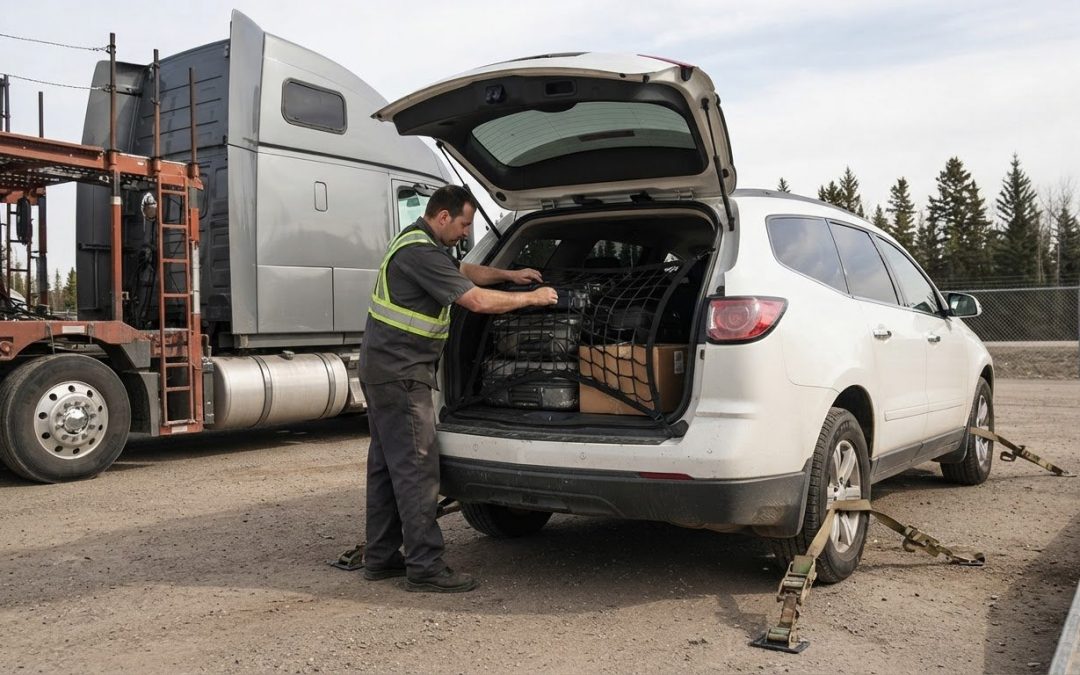
You can sometimes put personal items in a car being shipped, but the carrier’s rules set the limit. Some companies allow around 100 pounds of belongings, but that isn’t a universal allowance. Even when items can travel, damage or theft may not be covered by the carrier’s insurance in most cases.
It’s understandable to want to use the empty space in your car, especially when you’re already coordinating a move. But belongings can shift during transport, damage the interior, or arrive broken, creating more to deal with at delivery.
This article explains what affects permission and cost, how to reduce the risk of damage, and what auto transport insurance may cover. You’ll also learn when a few secured items may be practical and why household goods are often better moved separately.
Key Takeaways
- Tell the carrier or broker about belongings before pickup, since policies and weight limits vary and excess items can delay transport.
- Pack permitted items in closed bags or boxes and secure them in the trunk or cargo area to reduce shifting.
- Don’t assume auto transport insurance covers personal belongings; clarify what protection applies before the vehicle is shipped.
- Consider moving household goods separately when the load is too large or valuable to risk inside the car.
Can You Ship a Car with Personal Items Inside it?
Sometimes. Whether you can put personal items in a car being shipped depends on the carrier’s policies, the weight, and the route. Before booking, tell the carrier or broker what you plan to leave inside.
Carrier Policies and Booking Confirmation
The carrier’s policy sets the conditions for belongings, and the booking confirmation records what has been agreed for your shipment. A carrier may allow items with restrictions, charge extra, or prohibit them entirely.
Describe the items and where you’ll store them, then ask for the carrier’s allowance and restrictions to be recorded in the booking confirmation. For example, a carrier might allow a small amount in the locked trunk but not on the seats. The driver may inspect the vehicle at pickup and ask you to remove prohibited or excess belongings, which can delay loading.
For a Canada-US shipment, disclose any luggage before booking and have the accepted contents recorded. Don’t assume a domestic allowance applies to a cross-border route. The carrier’s rules for that shipment must account for the route and its requirements.
Personal-Item Weight Allowances
A weight allowance is the amount of personal property a carrier permits inside the vehicle. It matters because extra weight can affect the shipment’s cost, acceptance, and loading.
These figures describe different carrier policies, not one standard allowance for every car or shipment.
Open and enclosed car carriers may have different rules because each sets its own policy. The carrier type alone doesn’t establish a standard allowance, so have the specific limit recorded before shipping your car.
Keep valuable or prohibited belongings out of the vehicle. If you exceed the carrier’s limit, remove items before pickup. Otherwise, the shipment may be delayed until the car meets the carrier’s requirements.
Can Personal Belongings Increase Car Shipping Costs?
Belongings can travel inside a vehicle only if they meet the carrier’s policies, and extra weight may affect the shipment. Packing and placement matter too: loose items can shift and damage the car’s interior.
Packing and Securing Belongings
Packing and securing means placing permitted belongings in closed containers and keeping them from shifting. This helps prevent damage to both the items and the vehicle’s interior. Clear loose objects such as sunglasses, chargers, and small tools from the passenger area and compartments. Keep the driver’s seat empty, as the car may need to be driven onto the transport truck. Extra weight may also lead to a fee, a request to remove excess items, or a reduced load.
Suitcases, Boxes, and Travel Bags
Suitcases, moving boxes, and travel bags keep belongings contained rather than loose inside the vehicle. Close each bag or box, then position it so it cannot slide during transport. A soft travel bag can fit the shape of a cargo area, while a closed box helps keep smaller belongings together. Avoid packing valuables or anything the carrier prohibits. Car shipping companies set their own limits, so a container’s size alone doesn’t determine whether its contents are accepted.
Placing Belongings in the Vehicle
Put accepted belongings in the locked trunk or cargo area and secure them so they can’t shift significantly. This keeps them away from the driver’s seat and passenger area, where loose items could interfere with handling or move around. In a vehicle without a trunk, items may be stacked up to the window line. Keep the driver’s view clear, and don’t leave objects loose in compartments.
Extra weight can affect the vehicle’s shipment, since limits depend partly on its make and model. A goods-in-car service may add a cost, while exceeding the carrier’s limit can mean removal or delay. For a large household load, packing it separately can avoid treating the car as a freight container. If you’re coordinating a vehicle move, transport dispatch support can help manage its logistics.
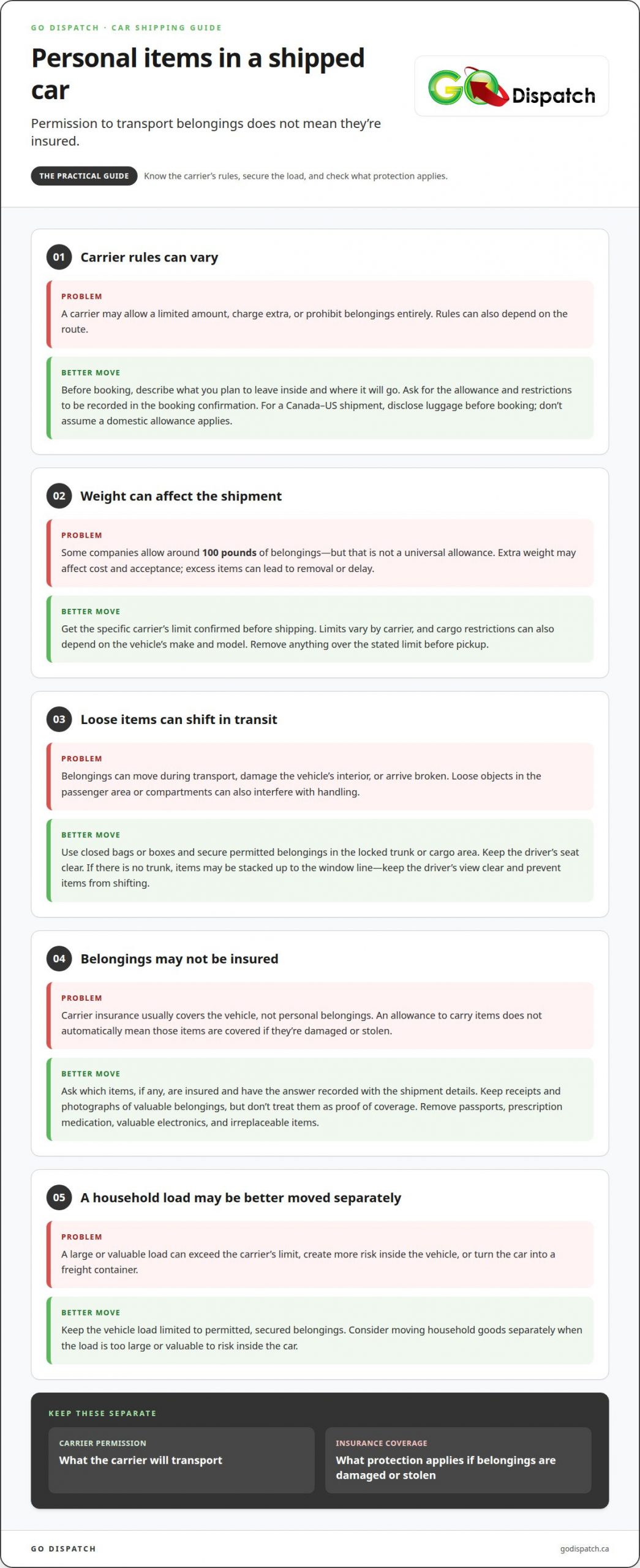
Are Personal Items Covered by Auto Transport Insurance?
Usually, the carrier’s insurance covers the vehicle, not belongings stored inside it. If a suitcase is damaged or stolen during transport, you may have to absorb the loss. An allowance for items in the car doesn’t automatically mean those items are insured.
Treat the vehicle’s condition and the condition of its contents as separate matters. A claim for a dent in the car and one for a broken tablet inside it may be handled differently. Before loading anything, ask which items are insured and have the answer recorded with the shipment details. Keep receipts and photographs of valuable belongings, but don’t assume these records prove the carrier covers them.
Weight Limits and Extra Fees
Personal-item weight limits determine what the carrier will transport, while cargo restrictions also depend on the vehicle’s make and model. Exceeding the permitted load can lead to an extra fee, a request to remove items, or a rejected shipment.
That is a carrier-specific threshold, not a standard allowance for every shipment. The amount of cargo, its placement, and the vehicle’s capacity all matter. Keep the driver’s seat clear and avoid loading belongings above the window line, where they could obstruct visibility or shift into the passenger area.
What Insurance May Leave Out
Carrier insurance generally doesn’t cover personal belongings damaged or stolen during transport. This may include clothing, electronics, or household items, even if the carrier allowed them in the vehicle. Permission to transport belongings and insurance protection for them are separate questions.
Before loading, make a clear list of what’s inside and ask which items, if any, are insured. Remove passports, prescription medication, valuable electronics, and other irreplaceable belongings rather than relying on auto transport coverage. If the carrier permits a load, keep its weight within the stated limit and secure it in the cargo area. A carrier’s acceptance doesn’t mean every item is protected if damage occurs.
Damage to personal items
Items inside a vehicle can shift during transport, even when packed neatly. A suitcase may slide into a door panel, while a small box can tip and spill. Loading ramps and bumps along the route add movement, potentially damaging belongings, scratching the trim, or both.
This risk matters during a move because permission to carry personal items doesn’t prevent breakage. The transport company may also exclude belongings from its insurance, leaving you responsible for damage or theft. For example, a cracked tablet in an accepted bag can be a separate loss from damage to the car.
Reduce the chance of damage before the shipment begins:
- Remove fragile, valuable, irreplaceable, or perishable items from the vehicle.
- Close bags and boxes, then secure them in the cargo area so they can’t slide.
- Clear loose objects from the passenger area and compartments, including sunglasses and charging cables.
- Photograph the vehicle’s exterior condition before pickup, so you have a record of existing marks.
Keep the driver’s seat and the area needed to operate the vehicle clear. An unsecured object may shift while the car is driven onto the transport truck, then move again during the shipment. Don’t assume a closed trunk keeps delicate contents safe. Packing can prevent spills, but it can’t eliminate vibration or jolts.
For a small, approved load, closed luggage secured in the cargo area is more practical than loose household goods. For a large household move, arrange separate transport for those belongings rather than treating the car as a freight container. This reduces the amount of property exposed to movement inside the vehicle.
Planning a vehicle shipment? Coordinate your transport plans with the contents and damage risks in mind.
GO DISPATCH: Car Transport
GO DISPATCH coordinates car transport by connecting you with a suitable auto carrier and managing the logistics. Its one-stop transport dispatching service can help when you’re arranging a vehicle shipment and need support coordinating the move.
Before pickup, share the carrier’s rules for personal items, the weight allowance, and what you plan to leave inside. This helps keep the shipment details aligned with the agreed arrangements. GO DISPATCH also handles truck, SUV, and van transport, so you can coordinate different vehicle types through one dispatching service.
For help coordinating your vehicle transport, contact GO DISPATCH.
Make Your Vehicle Shipment Plan
Use the booking stage to decide what travels with the vehicle and what should move separately. That choice affects how you prepare for pickup, what you bring with you, and how you organize the rest of your move. If you’re wondering whether you can put personal items in a car being shipped, consider each item’s value and importance, not just whether it fits.
Once you’ve decided what to pack, keep your transport details organized in one place. A clear plan helps you focus on the vehicle’s arrival and your next steps. GO DISPATCH coordinates car, truck, SUV, and van transport, bringing vehicle logistics together around your move.
Start planning your vehicle transport with GO DISPATCH, and take the next step with a clearer plan.
Frequently Asked Questions
Can I ship my car with stuff in it?
Yes, you can ship a car with belongings inside if the carrier accepts them under its shipment rules. Before packing, make a short inventory with descriptions such as “one small suitcase” or “two sealed boxes.” This gives you a record of what you placed in the vehicle and helps you compare the contents at delivery.
Can You Put Boxes in the Trunk When Shipping a Car?
Yes, boxes can go in the trunk if the carrier permits personal belongings and they fit safely. Choose sturdy, closed boxes that won’t collapse under light pressure, and avoid packing breakable or irreplaceable items. For example, a box of linens is more practical than one of glassware. Keep a note of each box’s contents for your records.
Can you put stuff in your car when it gets shipped?
Yes, but the carrier’s rules determine what can travel. A few non-valuable, non-fragile belongings pose a different risk from a vehicle full of household goods. Keep anything you’ll need immediately at your destination with you, such as work documents or a change of clothes. That way, an arrival delay won’t leave you without essentials.
Do Car Shipping Companies Check Inside Your Vehicle?
The carrier may inspect the vehicle at pickup and identify belongings that exceed its allowance or breach its policy. Make the contents visible and describe them accurately before loading. Don’t conceal bags under seats or in compartments. If an item needs to be removed, you’ll have time to handle it before the car is loaded, rather than discovering the issue later.
How Much Can You Pack and Where Should You Put It?
The permitted amount depends on the carrier’s allowance and the vehicle’s weight restrictions. Put accepted belongings in the trunk or cargo area, and keep them below the window line if required. Leave the driver’s seat clear. A securely packed travel bag, for example, is easier to manage than loose items spread across the passenger area.
How do I get my car ready for shipment?
Start by removing valuables, fragile belongings, and loose objects from the cabin. Photograph the exterior to record its condition before pickup. Then confirm the vehicle’s contents and agreed allowance are clear in the shipment details. Keep your inventory and photos accessible until delivery so you can compare the vehicle and its contents on arrival.