
For a representative Alberta-to-BC route, shipping a car from Alberta to BC typically takes 2-5 days in transit. The full timeline includes both the wait before departure and the time the vehicle spends in transit, so pickup and delivery locations can affect when it arrives. Carrier cargo insurance covers the vehicle while it’s in transit.
It’s natural to want a clear arrival window, especially when a move or a new vehicle depends on it. A route estimate is a useful starting point, but weather, seasonal demand, holidays and terminal hand-offs can add time. Personal belongings left inside the vehicle aren’t insured and may cause delays or violations.
This guide explains what can affect the schedule, how pickup and delivery work between Alberta and British Columbia, and what to know about carrier service and cargo insurance. You’ll also learn how to prepare your vehicle and plan for the difference between door-to-door and terminal transport, so you can set expectations with less guesswork.
Key Takeaways
- Plan for both the wait before departure and the time your vehicle is moving; weather, holidays and carrier hand-offs can shift the schedule.
- Choose pickup and delivery points with the route in mind, since remote locations may require a terminal transfer before the vehicle continues.
- Compare door-to-door and terminal transport based on the locations and timing that work for your move.
- Know what carrier cargo insurance covers during transit, and remove personal belongings because they aren’t insured and may delay transport.
Cargo insurance and carrier service
For an Alberta-to-British Columbia shipment, the carrier’s cargo insurance covers the vehicle while it’s in transit, not personal belongings left inside. Remove loose items before pickup to avoid uninsured belongings and possible delays or violations.
Before booking, gather the details the carrier needs to identify the shipment: your vehicle’s make, model, year and condition, plus the pickup and delivery addresses. Keep the booking confirmation and have the keys ready. At pickup, review the vehicle’s condition with the carrier and keep a copy of the transport paperwork, including the condition record and bill of lading when provided.
Moving a vehicle from Alberta to British Columbia is an interprovincial move, not an international import. The carrier’s transport paperwork supports the shipment, while registration, inspection and tax requirements relate to using the vehicle in its destination province. Don’t assume requirements are identical across provinces.
Prepare the car before handover. Remove personal items, take clear photos of existing damage and make the vehicle accessible for loading. Tell the carrier about the vehicle’s condition, including whether it runs, and disclose any vehicle parts or belongings you expect to travel inside. Clear communication helps the carrier plan the handling and keeps shipment details accurate.
Assess the carrier using written, verifiable details rather than verbal promises. Record its legal business name and licence information, then compare those details with applicable public records. Read recent customer feedback for recurring concerns about communication or vehicle handling. Before booking, review the cancellation terms, including deadlines, charges and the process for changing dates. Keep those terms with your booking confirmation.
At pickup and delivery, compare the vehicle with the condition record and note any new damage before signing the final paperwork. Keep copies of the records and report concerns promptly through the carrier’s stated claims process. These steps make the insurance terms, shipment documents and handover responsibilities easier to follow.
Factors that can affect shipping timelines
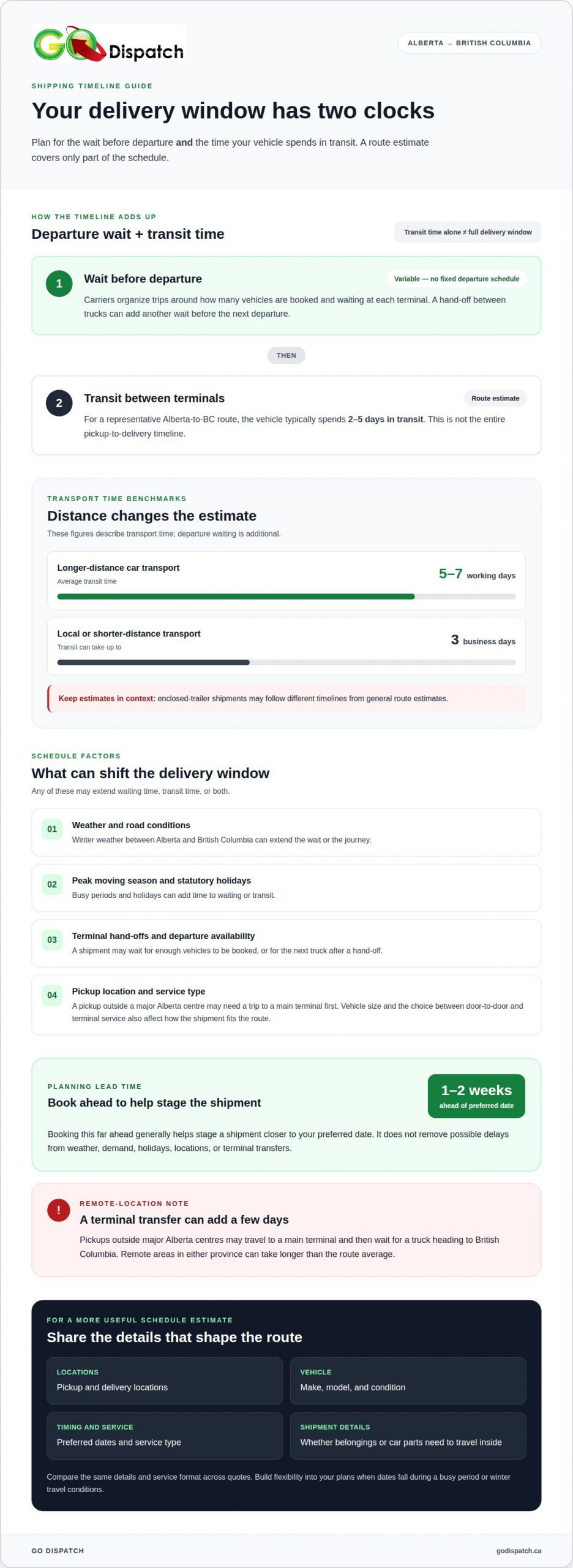
Total shipping time has two parts: waiting for departure and transit between terminals. Longer-distance car transport averages 5 to 7 working days, while local or shorter-distance transport can take up to 3 business days. The vehicle’s wait before loading adds to the schedule, so transit time alone doesn’t show the full delivery window.
Departures don’t follow a fixed schedule. Carriers organize trips based on how many vehicles are booked and waiting at each terminal. A truck hand-off can also add a wait before the next departure. Vehicle size and the choice between door-to-door and terminal service affect how the shipment fits into the route.
Season and road conditions matter between Alberta and British Columbia. Winter weather, peak moving season and statutory holidays can extend waiting or transit time. Enclosed-trailer shipments may follow different timelines from general route estimates. Build flexibility into your plans if your preferred dates fall during a busy period or winter travel conditions.
Booking 1-2 weeks ahead generally helps stage a shipment closer to your preferred date. Pickups outside major Alberta centres may first travel to a main terminal, then wait for a truck heading to British Columbia. That transfer can add a few days. Include the pickup location and preferred dates when planning your schedule.
Driving has different trade-offs: road time, vehicle use and changing conditions all become part of your plans. Shipping puts the vehicle’s journey on a carrier’s schedule, which can help if you need to travel separately or avoid adding a long drive to moving day.
To get useful quotes, provide the pickup and delivery locations, vehicle make and model, condition, preferred dates, and service type. Share whether belongings or car parts need to travel inside, since shipment details affect planning. Compare the same details and service format across quotes. For help organizing a route, plan your vehicle shipment around your preferred timing and locations.
Pickup and delivery locations
The route’s endpoints shape how a vehicle moves between Alberta and British Columbia. Calgary to Vancouver is a straightforward city-pair example, but a rural pickup or destination adds coordination. Provide the complete street address and postal code at both ends. Accurate locations help map the shipment and plan hand-offs.
Door-to-door service aims to collect and deliver the vehicle near the addresses you provide. Make sure each location offers a practical place for the carrier to meet and load the vehicle. If a residential street is difficult to access, agree on a nearby meeting point, such as a suitable open area. Share clear directions with the person handing over or receiving the car.
With terminal service, pickup and delivery arrangements can differ from address-to-address service. It can suit a move between major centres if you can bring the vehicle to a terminal and collect it at the other end. Include the terminal locations in your plans, especially if reaching either one requires extra travel.
British Columbia destinations outside Vancouver and Richmond may involve another transfer. The vehicle can travel to the nearest terminal, then wait for a truck to complete the journey. Remote areas in either province can take longer than the route average. For example, a vehicle travelling from Fort McMurray to Victoria typically passes through Edmonton and Richmond.
Before booking, compare the pickup and delivery arrangements with your schedule. Confirm who will be present at each address, how the driver will reach the vehicle, and where the receiver can meet the carrier. If your destination is outside a major centre, allow extra flexibility for terminal transfers. These details help you plan practical handovers without assuming every address follows the same route.
What auto transport options are available between Alberta and BC?
For an Alberta-to-BC shipment, compare services by how the vehicle is collected, carried and delivered. Door-to-door service arranges pickup and delivery near the addresses you provide. Terminal-to-terminal service means you bring the vehicle to one terminal and collect it at another. Calgary-to-Vancouver has multiple door-to-door departures per week, while terminal-to-terminal service is listed weekly.
The right arrangement depends on your locations and schedule. Door-to-door service can reduce travel to terminals, but access at either address may shape the handover plan. Terminal service suits people who can reach both terminals and arrange collection themselves. For a destination outside Vancouver or Richmond, a terminal transfer may be needed before the vehicle completes its journey.
Trailer type is another choice. Standard carrier transport and enclosed car transport are options on the Calgary-to-Vancouver route. Enclosed transport carries the vehicle inside a trailer, which may suit a vehicle that needs added protection from road and weather exposure. General route timelines may not apply in the same way to enclosed-trailer transport.
Match the service to the vehicle and your practical needs. For example, a car moving between central Calgary and Vancouver may suit a direct door-to-door plan. A pickup outside a major centre may involve terminal staging. Describe a larger vehicle, such as an SUV or van, accurately so the transport plan reflects its dimensions.
Before choosing, compare the same details for each option: origin and destination, vehicle type, pickup method, delivery method and preferred timing. Ask how terminal hand-offs fit the route, and review the carrier’s cargo-insurance terms for transit. This makes the differences clear without comparing unlike services.
Need help arranging the right option for your route? Arrange Alberta-to-BC car transport with dispatch support for carrier coordination.
GO DISPATCH: Car Transport
GO DISPATCH arranges car transport between Alberta and British Columbia through its one-stop transport dispatching service. It connects your shipment with a suitable auto carrier and coordinates the logistics, giving you one point of support throughout the transport process. This can help when you’re comparing pickup options, planning a terminal transfer or organizing delivery beyond a major centre.
Share your vehicle type, pickup and delivery locations, and preferred timing to get the process moving. GO DISPATCH also arranges truck, SUV and van transport, so you can coordinate suitable vehicle hauling through the same dispatch service.
For help planning your vehicle shipment, visit godispatch.ca.
Make your transport plan work for your move
When shipping a car from Alberta to BC, plan around when you need the vehicle and who can receive it. Set your preferred pickup window, confirm the delivery address and choose someone who can be available for the handover. These decisions give your shipment a clear starting point and help keep the move organized.
Then match the transport plan to your vehicle and broader logistics. GO DISPATCH arranges car, truck, SUV and van transport, with one-stop dispatching to coordinate vehicle hauling. It’s a practical next step if you want help arranging transport without managing every logistics detail yourself.
Share your route and vehicle details to begin a conversation about your shipment. Contact GO DISPATCH about your car shipment, and take the next step with a plan that fits your move.
Frequently Asked Questions
How long does it take to ship my car from Alberta to British Columbia?
For Calgary to Vancouver, carrier transit typically takes 2-5 days, with pickup wait time added before departure. Shipping a car from Alberta to BC on another route can take longer because distance, terminal connections, and endpoint access differ. Treat the Calgary-to-Vancouver estimate as a route example, not a province-wide schedule, and plan around the full shipment window.
Do I need to be there for pickup and delivery?
No, you don’t have to attend both handovers if you arrange a representative. Choose someone who can provide the vehicle and keys at pickup, then receive it at delivery. Give them the shipment details and make sure they can reach the agreed meeting point. This works if work, travel or a move keeps you away from either location.
How Long Does Vehicle Transport from BC to Alberta Take?
A longer-distance shipment from BC to Alberta averages 5 to 7 working days in transit. The overall schedule also includes the period before departure, so a terminal transfer or remote pickup can extend the plan. If you’re moving to Calgary or Edmonton, coordinate the vehicle’s arrival with your own travel and destination collection arrangements.
Is it safe to ship a car through the Rocky Mountains in winter?
Carrier transport means you don’t drive your own vehicle over the mountain route, but winter conditions can still affect the shipment. Routes between Alberta and BC cross at least one major mountain pass, and Rogers Pass can close for avalanche control. Snow, road conditions and closures can interrupt movement or shift arrival timing, so leave flexibility in your plans.
What can affect my shipping timeline?
Schedule changes can result from route conditions and timing, including winter weather, peak moving season, statutory holidays, terminal departures and truck hand-offs. A remote Alberta pickup may need a transfer to a main terminal, while some BC destinations need another truck. Vehicle size and enclosed-trailer service can also affect timing. Multiple connections may require extra flexibility in your schedule.
What’s the difference between wait time and transit time?
Wait time is how long the vehicle sits before departure; transit time is how long it spends moving between terminals. For example, a car may be ready at an Alberta terminal before its next BC-bound truck departs. The time spent waiting at the terminal counts as wait time, while travel between terminals counts as transit. Include both when planning.