
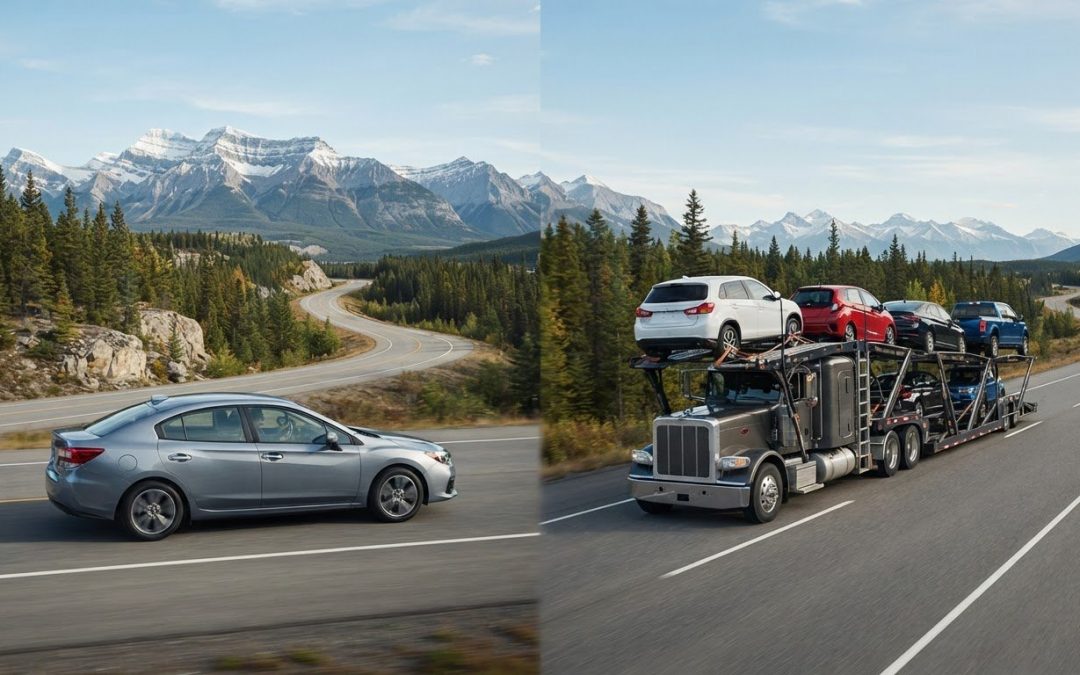
Driving is usually cheaper for trips under 500 miles, while shipping often costs less beyond 1,500 miles when you include the full cost of driving. So, is it cheaper to drive or ship a car? The answer depends on distance, fuel, overnight stops and the value of your time.
It’s easy to compare fuel costs with a shipping quote and assume that settles it. But a long drive can also mean meals, lodging, road wear and days spent travelling, while shipping lets you focus on the rest of your move.
This guide explains how the costs compare, why distance can change which option offers better value, and what to consider when planning a move in Canada. Use the practical comparison and decision guide to weigh affordability and convenience against your route and priorities.
Key Takeaways
- Count lodging, meals, tolls, depreciation and wear, not just fuel, when estimating the cost of driving.
- Compare the full cost of a road trip with a shipping estimate to see which option better fits your budget and schedule.
- Use distance as a starting point: driving often costs less on shorter trips, while shipping can become more practical over long distances.
- Weigh convenience alongside cost, including travel time, overnight stops and how much driving you want to take on during your move.
What are the costs of driving your car when you move?
Open-carrier transport is generally less expensive than enclosed transport. Enclosed car shipping is estimated to cost 30 to 60% more than open transport. September through November are generally the cheapest months to ship a car, so timing can affect the comparison.
Driving costs go beyond fuel. Estimate your route distance, then use your vehicle’s fuel economy and fuel prices along the way to calculate fuel spending. Add lodging for overnight stops, meals, tolls and road fees. Account for depreciation and wear on tyres, oil and brakes, too. These costs build with each kilometre, even when they don’t appear as separate charges during the trip.
| Option | Fuel | Lodging and food | Depreciation and wear |
|---|---|---|---|
| Drive your vehicle | You pay for fuel used on the route. | You cover overnight stays and meals. | The trip adds distance and wear. |
| Open transport | No road-trip fuel for the vehicle. | You arrange your own travel needs. | The vehicle isn’t driven for the move. |
| Enclosed transport | No road-trip fuel for the vehicle. | You arrange your own travel needs. | The vehicle isn’t driven for the move. |
For a practical estimate, map the full Canadian route and note the distance between overnight stops. Multiply the planned distance by your vehicle’s fuel use per kilometre and local fuel prices. Then add lodging, food and tolls. A shorter drive may not require an overnight stay, while a longer trip can mean several nights and more meals. Include the added mileage on your vehicle when comparing the total with shipping.
Compare like with like: add every driving expense, then weigh the total against a transport estimate for the same route and vehicle. Open and enclosed transport have different costs, while your driving total varies with fuel economy, route, travel pace and overnight plans. A fuel-only estimate won’t show the full cost of driving.
Compare the complete driving budget with a shipping estimate, then consider how much time you can spend travelling.
Should I drive or ship my car cross-country?
Driving gives you control over the route and schedule, while shipping moves your vehicle separately. Compare the full travel budget, route conditions and time required before choosing.
Driving cross-country
When you drive, you manage fuel, meals, lodging and added mileage yourself. For an Ontario-to-British Columbia move, map the route and plan overnight stops before estimating fuel from distance and your vehicle’s fuel economy. Weather, road conditions and fatigue matter, too. A tight schedule can make long driving days difficult, especially when conditions change. Driving suits people who want the car during the trip and can manage the travel time.
Shipping cross-country
Shipping moves your vehicle separately, so you can travel without driving the full route. Distance, vehicle size, route access, and pickup and delivery locations affect the transport estimate. Enclosed transport is another option to compare. To arrange transport, prepare the vehicle details, pickup and delivery information, and authorization for release. Provincial registration or insurance steps after arrival are separate and depend on the destination province.
There’s no fixed cost to drive across Canada: fuel, meals and lodging depend on the route, vehicle efficiency and overnight plans. Estimate the total by mapping the distance, calculating fuel use, and adding planned meals and lodging. Compare that complete budget with a transport estimate for the same vehicle and route. Transport pricing depends on the route, vehicle size, method, and pickup and delivery locations. Request a quote for a route-specific estimate.
For shipping between provinces, prepare accurate vehicle and handover details for the booking; destination-province requirements apply separately after delivery. To compare your options, set your driving budget beside cross-country car transport for the same route.
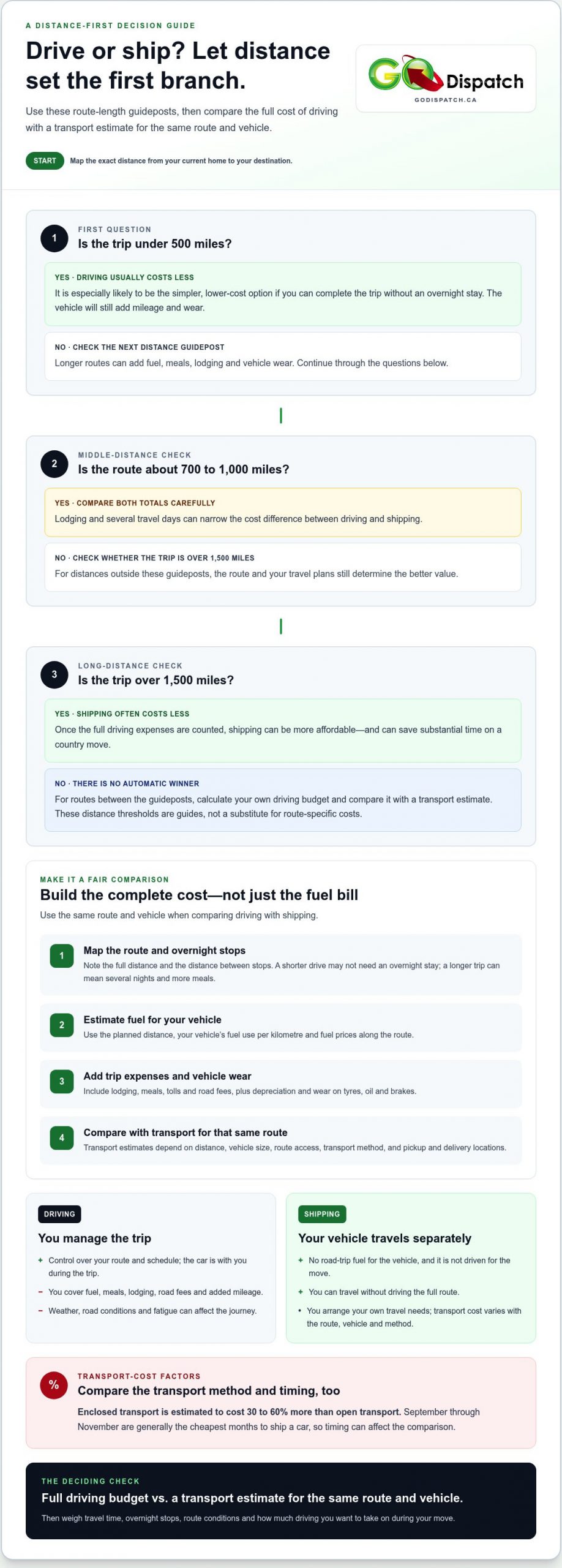
Distance thresholds for choosing a method
Distance affects the balance between driving and auto transport. In Canada, start with the route length, then account for overnight stops, vehicle wear and how soon you need to arrive.
For a shorter trip, driving can be the simpler choice if you can complete it in one day. As distance grows, fuel, lodging, meals and added mileage accumulate. Beyond 700 to 1,000 miles, the time and wear of driving often approach the cost of shipping. For trips over 1,500 miles, shipping can cost less once the full driving expenses are included.
- Under 500 miles: Driving usually costs less, especially if you can travel without an overnight stay. A friend can help share the driving, but the vehicle still accumulates mileage and wear.
- About 700 to 1,000 miles: Compare both totals carefully. A route that requires lodging and several travel days can narrow the cost difference between driving and shipping your car.
- Over 1,500 miles: Shipping often becomes more affordable when you count the complete driving budget. It can also save substantial time on a country move.
These thresholds are guides, not a substitute for calculating costs for your route. A direct highway route differs from one with remote stretches, detours or costly overnight stops. Vehicle fuel economy, fuel prices along the route, passenger count and lodging needs all affect the driving estimate. For auto transport, the estimate depends on distance, vehicle size, route and transport method.
To decide, map the exact distance between your current home and destination. Estimate fuel and overnight costs, then consider the value of the time spent driving. Compare that total with a transport estimate for the same vehicle and route. If driving fits your budget and schedule, you’ll have the car with you. If the move makes travel costly or difficult, shipping can leave you free to focus on other moving tasks.
Either option can be more cost-effective, depending on the circumstances. Choose based on the full trip cost, route demands and when you need the vehicle to arrive.
Comparing convenience and affordability
The lowest direct expense isn’t always the easiest choice. Compare travel time, effort and the full route budget before deciding.
Driving convenience and affordability
Driving gives you control over departure, stops and arrival, and it can suit a route under 500 miles. You keep your vehicle with you, but you also manage fuel, meals, lodging and road conditions. On longer routes, the time behind the wheel and overnight planning add effort. Driving works best when the route fits your schedule and the total travel costs remain manageable.
Shipping convenience and affordability
Shipping lets you travel separately while a carrier transports your vehicle. Distance, route, vehicle size and transport type affect quotes; enclosed transport is estimated to cost 30 to 60% more than open transport. This option can reduce driving time and road-trip planning, but you’ll need to coordinate pickup and delivery. For a long move, compare the convenience gained with the transport estimate.
Cross-country car shipping usually takes 7 to 10 days. Driving time depends on the route, travel pace and stops, so compare the delivery schedule with the days you can set aside for the trip.
Season can also affect convenience and affordability. September through November are generally the cheapest months to ship a car. If your move date is flexible, use this seasonal window as one factor when comparing transport options.
Compare at least three estimates, then weigh each against your driving budget and available time. Under 500 miles, driving usually costs less; beyond 1,500 miles, shipping often costs less when you include driving’s full expenses. The best fit depends on whether saving time or limiting direct costs matters more for your move.
Request a car transport estimate to factor transport into your move plans.
GO DISPATCH: Car Transport
GO DISPATCH coordinates car transport by connecting you with an auto carrier and managing the transport logistics. It’s a practical next step when a long drive would add too much travel time or planning to your move.
Share your vehicle and route details with GO DISPATCH to arrange transport. The company also handles truck, SUV and van transport, as well as one-stop transport dispatching, so the logistics are managed in one place.
If you’re ready to plan your vehicle’s move, contact GO DISPATCH.
Make your next move easier to plan
The choice between driving and shipping also affects what you can focus on after arriving. If you’ll need your vehicle right away, coordinate its arrival with your travel and move-in plans. If driving would add strain to an already busy move, arranging transport can free your attention for other priorities.
When deciding whether it is cheaper to drive or ship a car, consider more than the immediate expense. Think about the time and energy you want to spend on the road, and how you’ll manage the vehicle’s journey alongside your other moving tasks.
GO DISPATCH offers car transport, truck transport, and SUV and van transport to support vehicle moves. If transport fits your plans, take the next step and contact GO DISPATCH about car shipping.
A clear plan for your vehicle can help you move forward with confidence and focus on settling into your new home.
Frequently Asked Questions
Are car transport services worth the price?
Car transport can be worthwhile when you want to avoid planning a long drive around work, family plans or move-in dates. It can also help when more than one household vehicle needs to reach the destination. Compare the transport estimate with your personal travel costs, then consider the time and coordination each option requires. The best value includes the convenience you need.
How much does cross-country car shipping cost?
Cross-country shipping costs depend on the route, vehicle size, transport type, season, and pickup and delivery locations. A larger vehicle or enclosed transport can change the estimate, as can differences in carrier access along the route. For a useful comparison, request a quote with your exact origin, destination and vehicle details. Use that route-specific figure to compare with your moving budget.
How much does it cost to ship a car?
There’s no fixed price for every shipment. The cost depends on the vehicle, route, transport method and timing, and you’ll receive an estimate after requesting a quote. Include the pickup and delivery points and your vehicle’s make and model. If your plans are flexible, compare available dates, too, since season can affect shipping costs.
Ship a Car or Drive It: Which Option Saves You Time & Money?
Shipping can save driving time, while driving may reduce direct costs on a shorter route. To decide whether it’s cheaper to drive or ship a car, compare the full road-trip expenses with the transport estimate, then account for your time away. For example, someone starting a new job soon may value arriving without spending days on the road, even if shipping costs more upfront.
Should I drive or ship my car when relocating for work?
Choose the option that best fits your start date, travel schedule and need for the vehicle after arrival. If driving would require time off or disrupt work, shipping separates the car’s journey from yours. If you need the vehicle for the trip or can fit the drive comfortably into your plans, driving may be more practical. Consider when the vehicle will arrive in relation to your first days at work.
The Breakeven Point: At What Distance Does Shipping Win?
Shipping often becomes more competitive beyond 700 to 1,000 miles, and can cost less for trips over 1,500 miles when full driving expenses are counted. These are comparison guides, not a universal cutoff. A route with overnight stops changes the driving total, while vehicle size and route affect the transport estimate. Compare both options using your actual route and travel plans.