
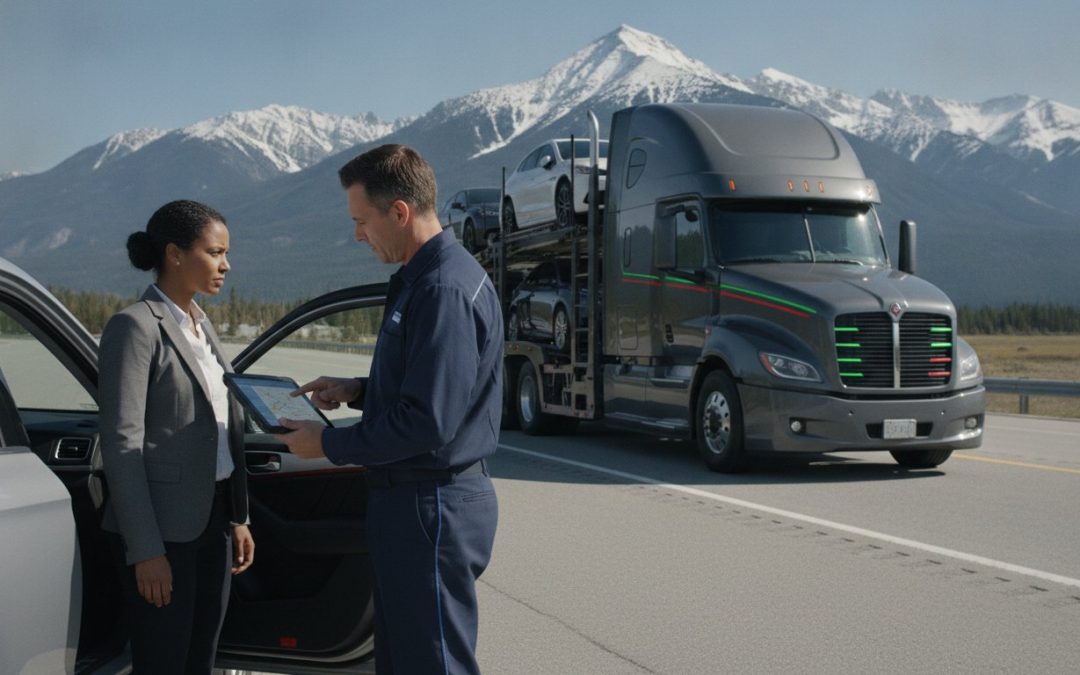
The lowest quote you receive for hauling your car across Canada is often the most expensive mistake you’ll make this year. In 2026, a transport estimate that ignores the new $75,000 broker bond or the FMCSA Motus registration system isn’t just a bargain; it’s a significant legal risk. You deserve to know that your vehicle is in safe hands and that the price you’re quoted is the price you’ll actually pay. We understand the anxiety of handing over your keys, especially when you’re worried about hidden fees or vague delivery windows. Knowing the right questions to ask a vehicle transport company helps you organize your move with confidence and protect your peace of mind.
Mastering the vetting process ensures a damage-free delivery and a transparent, all-in price. This article provides the definitive list of 10 critical questions to ask a vehicle transport company to protect your investment. We’ll show you how to verify a carrier’s medical compliance through their digital Motor Vehicle Record and how to spot a reliable partner. This guide breaks down everything from insurance minimums to modern logistics technology. It gives you the tools to move your car, truck, or SUV without the administrative headache or the stress of the unknown.
Key Takeaways
- Learn the essential questions to ask a vehicle transport company to identify reputable partners and avoid legal risks or hidden surcharges.
- Verify critical licensing and National Safety Code ratings to ensure your car, truck, or SUV is protected by professional carriers with legitimate credentials.
- Secure a transparent, “all-in” price by uncovering potential fuel surcharges or brokerage fees before you sign any transport contract.
- Protect your vehicle with proper Bill of Lading documentation and clear inspection protocols for a damage-free delivery across Canada.
- Discover how a one-stop dispatching service simplifies your logistics by vetting every carrier on your behalf to save you time and administrative effort.
The Importance of Vetting: Why Your Questions Matter
Vetting your transport partner is more than a checklist; it’s a critical risk-mitigation strategy for your high-value assets. When you move a car, truck, or SUV, you aren’t just paying for a tow. You’re investing in a complex logistical operation. The complexity of vehicle delivery logistics canada cannot be overstated when moving across vast distances. One minor oversight can lead to thousands of dollars in damage or weeks of frustration. Professional vetting ensures that your vehicle remains safe, your costs stay predictable, and your legal liabilities are covered.
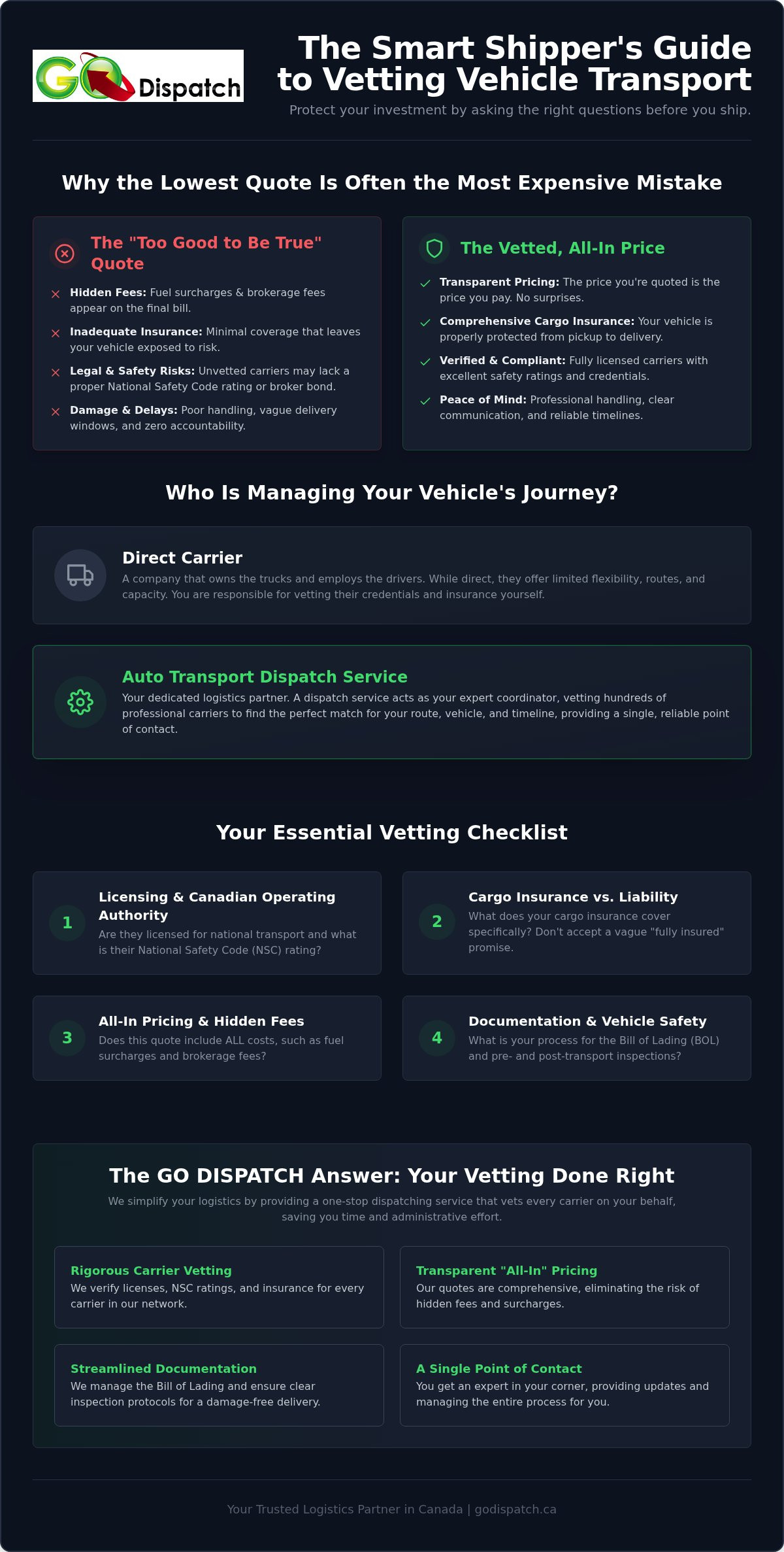
The questions to ask a vehicle transport company are your first line of defence against unprofessionalism. In 2026, the industry standard has shifted toward higher financial transparency and digital safety verification. Choosing a “cheap haul” from an unverified source often results in hidden fees or inadequate insurance coverage. A professional logistics coordinator prioritizes accountability over the lowest possible price. These questions set a high standard for your transport experience, ensuring every detail is handled with precision and care.
Dispatcher vs. Carrier: Who are you actually talking to?
You need to know exactly who is responsible for your vehicle. A direct carrier owns the trucks and employs the drivers. Many people ask, What is an auto transport broker? and how they differ from a dispatcher. An auto transport dispatch service provides significantly more flexibility and vetting power than a single carrier. They have the capacity to filter through hundreds of professional carriers to find the perfect match for your specific route and vehicle type.
For businesses moving multiple units, the value of professional auto carrier dispatch is even higher. Dispatchers act as your dedicated logistics department. They handle the administrative heavy lifting while ensuring every carrier meets the latest 2026 safety regulations. This one-stop approach reduces your workload and provides a single point of contact for your entire inventory. It’s about having an expert in your corner who knows how to spot a reliable operator from a mile away.
The Risks of Unvetted Transport
Unvetted transport is a dangerous gamble. You might encounter carriers with outdated equipment, insufficient insurance, or even “ghost” companies that disappear after taking a deposit. These operators often lack the financial stability required by modern regulations, such as the $75,000 broker bond mandate. Asking the right questions acts as a filter. It identifies carriers who maintain their equipment and prioritize safety. In the context of Canadian transport, carrier authority is the legal permission granted by provincial or federal governments to transport goods for profit while meeting strict safety and insurance standards.
Essential Questions About Licensing and Insurance
Legal compliance is the foundation of a safe transport experience. You need to ensure the company handling your vehicle isn’t just a website with a phone number. These specific questions to ask a vehicle transport company will help you separate professional logistics experts from amateur operators. It’s about protecting your car, truck, or SUV from the moment it leaves your driveway. Professionalism starts with a valid licence and ends with comprehensive coverage that gives you total peace of mind.
Verifying Canadian Operating Authority
Start by asking if the company is licensed for national transport within Canada. A professional company must have the legal authority to move vehicles across provincial borders. You should also ask for their National Safety Code (NSC) rating or equivalent. This rating reflects their safety performance and adherence to federal regulations. Many “fly-by-night” operators avoid these details because they lack the necessary registration to operate legally on a national scale. Verifying these credentials ensures you’re working with a compliant partner who respects Canadian road safety laws and maintains high operational standards. It’s an easy way to filter out those who aren’t serious about their business.
Understanding Cargo Insurance vs. Liability
Never assume that a verbal promise of being “fully insured” covers every scenario. You must ask exactly what their cargo insurance covers. General liability insurance protects the business against third-party claims, but cargo insurance is what protects your specific vehicle during transit. Ask if the coverage includes weather damage, theft, or loading accidents. It’s also vital to verify an auto carrier’s insurance for specific deductible responsibilities. If an incident occurs, you need to know if you’re responsible for the first $1,000 of the claim or if the carrier covers it all. Transparency here prevents expensive surprises later.
Always request a Certificate of Insurance (COI) that names you as the certificate holder for the duration of the trip. This document proves the policy is active and valid for your specific shipment. These are the essential questions to ask a vehicle transport company to protect your peace of mind. While Canadian regulations are strict, it’s often helpful to verify a company’s license through official safety databases to ensure their records are current. A legitimate company will provide this documentation without hesitation. If you want to avoid the administrative burden, you can partner with a professional dispatcher who vets every carrier for you. This ensures your vehicle is always moved by a fully insured, professional team.
Asking the Right Questions About Costs and Fees
Price transparency is the backbone of a reliable transport experience. When you look at an estimate, you aren’t just looking for the lowest number. You’re looking for an honest one. Many people fall for “low-ball” quotes that eventually balloon with hidden costs once the vehicle is already in transit. These essential questions to ask a vehicle transport company will ensure you stay within your budget without sacrificing the safety of your car, truck, or SUV.
The “All-In” Quote Checklist
Start by asking Question 5: Is this quote “all-in,” or are there potential surcharges for fuel or brokerage? A professional quote should clearly include fuel, tolls, insurance, and dispatching fees. You should be wary of any estimate that feels too good to be true. These often lead to “bait-and-switch” tactics where the price increases after your vehicle is loaded onto the trailer. Understanding how car transport brokerage fees are structured provides the transparency you need to make an informed decision. For additional peace of mind, you can consult FMCSA’s Protect Your Move to learn how to identify common pricing scams and fraud.
Question 6 covers your payment terms and accepted methods. Ask when the payment is due and if there’s a deposit required. Reputable companies rarely demand a full payment upfront via non-traceable methods like wire transfers or cryptocurrency. Professional dispatchers use secure, standard payment systems that protect your financial information. Clarity here ensures there’s no confusion when it’s time to settle the bill at the delivery point.
Door-to-Door vs. Terminal Logistics
Question 7 focuses on the physical delivery: Are there extra fees for door-to-door service versus terminal-to-terminal? While door-to-door is the most convenient choice, you must ask if the carrier can actually access your residential street. Large multi-car haulers often struggle with tight corners or low-hanging branches in residential areas. If a hauler can’t reach your door, you might need to meet them at a nearby commercial centre or large parking lot. This is often more efficient than using a central terminal hub, which may involve additional storage fees.
Finally, ask Question 8: Is there a cancellation fee if my plans change? You need to know the financial impact if your vehicle isn’t ready on time or if your move is delayed. A clear cancellation policy is a sign of a professional operator who respects your schedule. Using a one-stop dispatching service simplifies these logistical hurdles. They handle the carrier coordination and terminal details, allowing you to focus on your move while they manage the administrative workload behind the scenes.
Operational Questions: Timelines and Vehicle Safety
Once you’ve confirmed the legal and financial details, you need to understand the physical journey of your vehicle. These operational questions to ask a vehicle transport company help you manage your schedule and protect your asset. Transporting a car across Canada involves unpredictable variables like mountain passes and changing weather. Clarity on timelines and safety protocols is essential for a stress-free experience. You deserve to know exactly how your vehicle is handled and when it will arrive at its destination.
Managing Delivery Expectations
Ask Question 9: What is the estimated window for pickup and the firm delivery date? There is a major difference between the “pickup window,” which is the range of days the driver might arrive, and the actual time spent on the road. A professional hauler provides a realistic range rather than a vague promise. You should also ask how the company communicates delays caused by severe weather or road closures. A dedicated dispatcher plays a vital role in ensuring timely and safe vehicle delivery by monitoring routes and keeping you informed. They act as the bridge between you and the driver, providing regular updates throughout the journey.
The Inspection Process
Question 10 focuses on documentation: How do you handle vehicle inspections and Bill of Lading (BOL) documentation? A thorough pre-transport inspection report is your best protection. You and the driver must document every existing scratch or dent before the vehicle is loaded. Use the Bill of Lading to record these details clearly. This document is a legal contract that proves the condition of your vehicle at the start and end of the trip. We recommend taking clear, high-resolution photos of your vehicle from all angles immediately before it is loaded. This evidence is indisputable if you need to file a damage claim later. It ensures accountability and gives you peace of mind during the entire process.
Inquire about the specific equipment used for your move. Most vehicles travel on an open hauler, but you might prefer enclosed hauling for high-value or classic cars. Ask about the communication process during transit. Will you have a direct line to the driver, or will the dispatcher provide status reports? Knowing how and when you’ll receive updates reduces the anxiety of waiting. If you’re ready to secure a spot with a vetted carrier, book your national vehicle transport today to start your journey with confidence.
Why GO DISPATCH is the Answer to Your Vetting Questions
Identifying the right questions to ask a vehicle transport company is only the first step in a successful move. The real challenge lies in the time and expertise required to verify every answer provided by a carrier. GO DISPATCH acts as your professional filter and logistics partner. We handle the comprehensive vetting of carriers on your behalf so you don’t have to spend hours on hold or chasing insurance certificates. Our team ensures that every car, truck, SUV, or van is matched with a professional carrier that meets the highest safety standards in 2026. We take the administrative burden off your plate, allowing you to focus on your core business or your own relocation.
Professional Dispatching: Your Logistics Safety Net
Having a dedicated partner provides a logistics safety net that a single carrier simply cannot offer. We source the right auto carriers for your specific needs across our national Canadian network. GO DISPATCH ensures all carriers meet strict safety and insurance requirements before they ever touch your keys. We don’t just take a company’s word for it; we verify their credentials through the latest 2026 digital systems and Motor Vehicle Records. This proactive approach prevents delays and protects your high-value assets from the risks of unvetted or unprofessional transport operators.
For dealership and corporate clients, managing the move of multiple inventory units is a massive workload. We provide a single point of contact for all your transport needs, whether you are moving one SUV or a fleet of trucks. You get the benefit of human connection and professional coordination without the headache of managing individual drivers or complex schedules. We pride ourselves on being a stress-relief solution that delivers tangible results. Our national coverage means we can organize your transport anywhere in Canada with professional efficiency and speed.
Ready to Move? Let Us Handle the Questions
We understand that the list of questions to ask a vehicle transport company can feel overwhelming when you’re already managing a busy schedule. Choosing a professional dispatch service saves you time and significantly reduces your financial risk. You won’t have to worry about hidden “brokerage” fees or vague delivery timelines because we’ve already done the heavy lifting for you. We provide transparent, “all-in” quotes that give you peace of mind from start to finish. Our commitment to reliability ensures your vehicle arrives safely, legally, and without the stress of the unknown.
Our human-centric approach means you always have an expert to talk to if your plans change or if you need an update. We realize that your vehicle is a major investment, and we treat it with the respect it deserves. Let us handle the complex logistics and carrier vetting while you enjoy a streamlined and dependable service. Contact GO DISPATCH for your professional vehicle hauling needs and let our team manage the details of your next national transport move.
Secure Your Vehicle’s Journey with Confidence
Vetting a carrier is the only way to ensure your vehicle arrives safely and without hidden fees. You’ve learned that checking for national licensing, understanding cargo insurance specifics, and demanding all-in quotes are non-negotiable steps. In 2026, the complexity of logistics requires more than just a quick search. It requires a partner who understands the latest safety standards and regulatory shifts. Having a definitive list of questions to ask a vehicle transport company empowers you to make informed decisions for your car, truck, or SUV.
GO DISPATCH provides the national Canadian logistics expertise you need to move your assets without the stress. We professionally vet all third-party carriers to guarantee reliability and safety on every route. Whether you’re a dealership moving inventory or a family relocating, our one-stop dispatching service simplifies the entire process. You don’t have to manage these complex details alone. We’re ready to get your vehicle moving safely across Canada right now. Get a Professional Quote from GO DISPATCH Today and experience a truly streamlined transport service.
Frequently Asked Questions
What is the most important question to ask a car transport company?
The most important question is asking for their National Safety Code (NSC) rating and a current Certificate of Insurance. This proves they are legally authorized to operate across Canadian provinces and have the financial backing to cover your asset. Verifying these details protects you from unprofessional operators who lack proper authority. It is the foundation of a safe transport experience. Knowing these specific questions to ask a vehicle transport company ensures you only partner with legitimate professionals.
How do I know if a vehicle transport quote is legitimate?
A legitimate quote is transparent, detailed, and includes all potential surcharges like fuel and tolls. You can identify a real estimate by the absence of high-pressure sales tactics or requests for untraceable payments like wire transfers. Professional companies provide a written breakdown of costs before asking for any commitment. If a quote is significantly lower than the industry average, it might be a “low-ball” offer designed to increase after the vehicle is loaded on the trailer.
What documents do I need to provide for vehicle shipping in Canada?
You need to provide a copy of the vehicle’s registration, proof of insurance, and a signed Bill of Lading. The registration proves ownership, while the insurance documentation is necessary for the carrier’s records. The Bill of Lading is the most critical document, acting as the legal contract and condition report for the move. Ensure all personal identification is ready for the driver at the time of pickup to avoid any logistical delays or administrative hurdles during the process.
Is a transport broker the same as a carrier?
No, a transport broker or dispatcher is not the same as a carrier. A carrier owns the trucks and performs the physical hauling, while a dispatcher like GO DISPATCH manages the logistics by connecting you with a vetted carrier. This distinction is one of the top questions to ask a vehicle transport company because dispatchers offer more flexibility and greater vetting power. They act as your logistics department to ensure your car is moved by the best professional available nationwide.
Can I leave personal items in my car during transport?
You should not leave personal items in your vehicle during transport for safety and insurance reasons. Carriers are licensed to transport vehicles, not household goods, and their cargo insurance typically does not cover personal belongings. Extra weight from items can also cause the truck to exceed legal weight limits at highway scales. It is best to remove all valuables, electronics, and loose items to ensure your vehicle is transported safely and stays within legal hauling requirements for Canada.
What happens if my vehicle is damaged during hauling?
If damage occurs, you must note it immediately on the Bill of Lading at the time of delivery before the driver leaves. Take high-resolution photos of the new damage and compare them to your pre-transport inspection photos. You should then contact the transport company to initiate a claim through their cargo insurance provider. Having clear, documented evidence from both the pickup and delivery points is the only way to ensure a successful and professional claim resolution for your vehicle.
How long does it typically take to ship a car across Canada?
Shipping a car across Canada typically takes between 7 and 14 days, depending on the total distance and road conditions. Cross-country moves from the Atlantic provinces to the West Coast naturally take longer than shorter inter-provincial trips. Factors like mountain passes, seasonal weather, and driver rest requirements influence the final timeline. A professional dispatcher will provide a realistic delivery window and keep you updated on any delays caused by external factors like traffic, construction, or severe weather conditions.
Do I need to pay a deposit before my vehicle is picked up?
Paying a small deposit is common in the industry, but you should never pay the full amount upfront before pickup. The deposit usually secures your spot on a carrier’s trailer and covers the initial dispatching work. Final payment is typically due upon delivery or once the vehicle is loaded, depending on the specific terms of your contract. Always use secure payment methods and avoid companies that demand cash-only transactions or non-traceable digital transfers before the professional service actually begins.